
Invasion of Darfur (1916)
An aircraft dropped leaflets over al-Fashir on 12 May 1916, written in Arabic, promising the town that if Sultan Ali Dinar could be removed, there would be religious freedom, justice for all, and an end to repression. The leaflets were the British Empire's calling card in a country the size of France that did not want to be called on. Darfur, which means land of the Fur, had been an independent sultanate for most of its recorded history, including the stretch since 1899 when Ali Dinar had resumed the throne as a British-sanctioned ruler paying annual tribute to Khartoum. In April 1915 he had renounced that allegiance. The leaflets, the aircraft, the two thousand Anglo-Egyptian troops who followed them, and the six-month campaign that killed Ali Dinar on 6 November 1916 ended Darfur's independence for more than a century.
A Sultan and His Kingdom
Ali Dinar became sultan in 1899 after the British-Egyptian victory over the Mahdist state. Lord Kitchener, the Sirdar in Cairo, approved Dinar's installation on the condition of annual tribute. Rudolf Carl von Slatin, the Inspector-General who had spent years as a captive in Sudan and knew Darfur intimately, kept the relationship working. Dinar ruled a country with a population of just under a million, served by what the British called a slave army of about ten thousand men. This was a Fur state in the center surrounded by smaller tribal territories, including the Rizeigat in the southwest who were often openly hostile to the sultan. When the Ottoman Empire declared war on Britain in November 1914 and issued its jihad proclamation, Dinar shifted his loyalties. In April 1915 he wrote formally that he no longer recognized the Sudan government. He declared himself pro-Ottoman, made contact via the Senussi brotherhood, and within months Darfurian forces were raiding into French Chad, British Borno in northern Nigeria, and the Kordofan region.
The Field Force
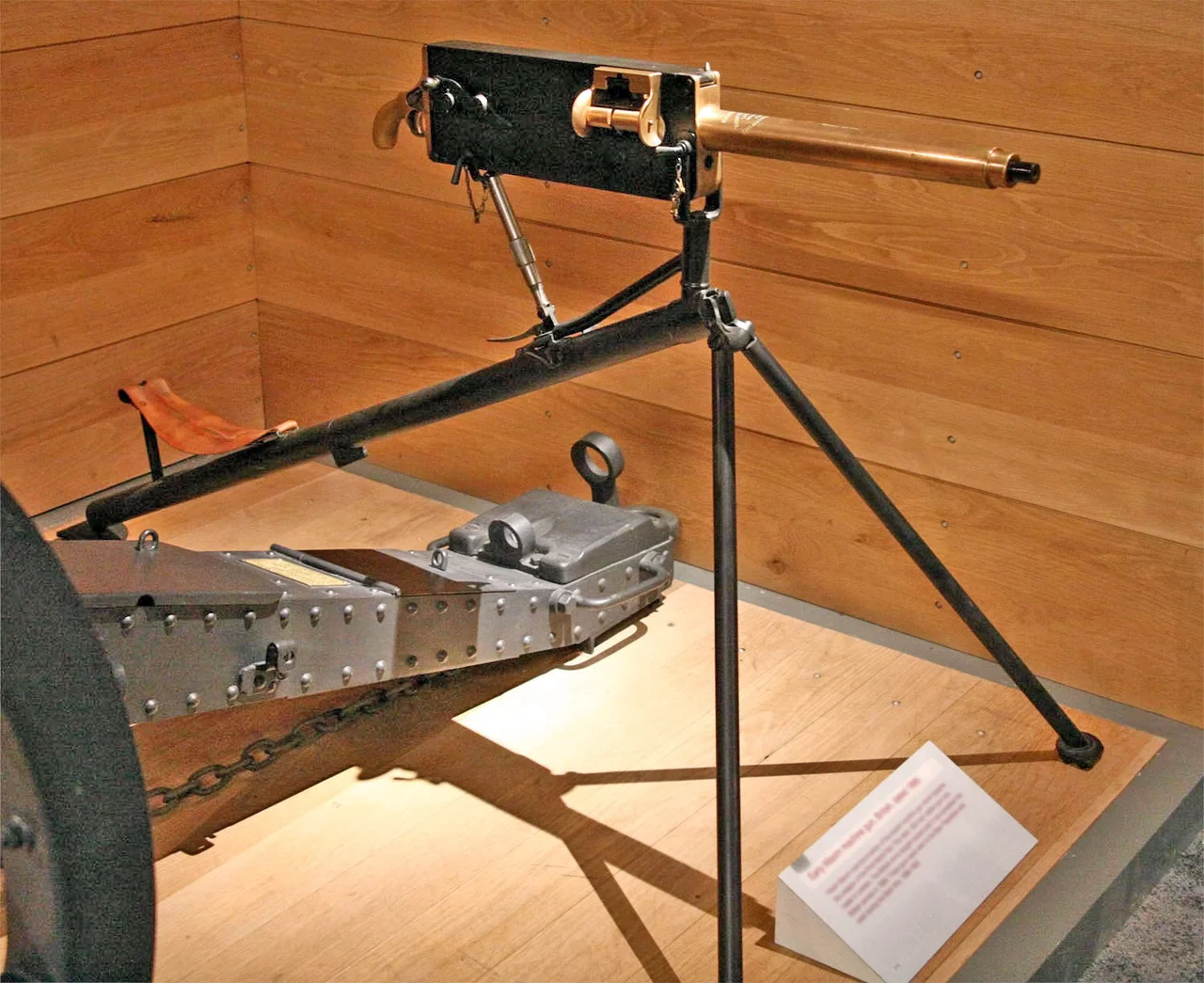
Sirdar Reginald Wingate gathered the Darfur Field Force at Nahud in March 1916. Command went to Lieutenant Colonel Philip Kelly of the 3rd King's Own Hussars, on secondment to the Egyptian Army. The force mustered roughly two thousand men across two companies of mounted infantry, five camel companies, six companies of Sudanese infantry, two Arab Battalion companies, two companies of Egyptian infantry, two twelve-pounder artillery batteries with Maxim machine-guns, and a separate Maxim battery. Water, not enemy action, was the binding constraint. The only permanent supplies on the road to al-Fashir sat at Jebel el Hella and Um Shanga; Kelly's force entered Darfur on 16 March and spent weeks piecing together a logistical chain of water points, supply dumps, and observation posts. Friendly Darfurians, 260 of them issued with Remington rifles, watched the frontier. Two hundred Kababish tribesmen occupied Jebel Meidob to watch for Senussi movement from the north.
The Battle of Beringia
On 22 May 1916 the Anglo-Egyptian advance met the Fur Army at Beringia. The Fur commander Ramadan Ali had built a crescent-shaped trench concealed by a wadi, planning to ambush the column close enough that the larger Fur force could overrun artillery and machine-guns before they did real damage. The plan failed in the way plans often failed against artillery in the First World War era. Anglo-Egyptian guns opened on the trench line. A Camel Corps company under Major Huddleston exceeded its orders, entered the village, came out the south under heavy Fur fire, and as it fell back, its pursuers exposed themselves to machine-gun fire from the main square. The rest of the Fur army left its trenches and attacked the square. Their charge lasted about forty minutes and stopped short. Kelly counter-attacked and the Fur broke. Casualties reveal the asymmetry of the weapons: 231 Fur dead, ninety-six seriously wounded, another thousand less seriously wounded, out of a force of over 3,600. Anglo-Egyptian casualties were five dead, four officers and eighteen other ranks wounded. Ali Dinar, hearing of the defeat at Beringia, left the capital.
To Jebel Marra
Kelly entered al-Fashir on 23 May. The city was almost empty; some women remained. The captured stores amounted to four artillery pieces, fifty-five thousand rounds of small arms ammunition, and four thousand rifles. Ali Dinar withdrew to the Jebel Marra mountains with about two thousand men. Kelly could not pursue immediately: his troops were exhausted and his supplies thin. Through the summer the sultan sent feelers about surrender, but by 1 August Kelly judged that the talks were a delaying tactic and broke them off. Dinar's followers were leaving him. By autumn he had about a thousand men. On 3 November Huddleston occupied Dibbis, southwest of al-Fashir, against a Fur force of 150 riflemen and 1,000 men with spears, and defeated it quickly. Dinar himself had fled further west to Kulme. Huddleston took Kulme almost without resistance, capturing several hundred prisoners and most of the remaining stores. Members of Dinar's immediate family surrendered. The sultan pushed on to Jebel Juba.
Death of a Sultan
On 5 November Huddleston set out from Kulme with 150 men, a field gun, and four Maxims mounted on captured horses. He reached Dinar's camp on the morning of 6 November. When fire opened, the Fur troops fled. The pursuers found the body of Ali Dinar shot through the head. He had not surrendered. He had resisted, in the end, in the manner he had always resisted: at distance, with what men and weapons remained to him, in country he knew. His body was photographed where it fell, the image preserved in the archives. Darfur was incorporated into Sudan on 1 November 1917. The £500,000 cost of the campaign was billed to Egyptian taxpayers. Wingate became British High Commissioner for Egypt. Kelly became the first British Governor of Darfur Province, working from Ali Dinar's throne room until May 1917. A century later, Darfur would be at the center of the 2003 genocide and the 2023-present civil war that eventually reached El Fasher itself. Ali Dinar's final resistance is a story Darfuris have not forgotten.
From the Air
The 1916 Darfur campaign played out across what is now North Darfur state, centered on al-Fashir at 13.63 degrees north, 25.35 degrees east. Beringia and Meliet are villages northwest of al-Fashir on the route from Abiad; Kulme lies further west in the Jebel Marra region. El Fasher Airport (HSFS) was not operating for civilian flights as of early 2026 due to the current civil war. Jebel Marra rises to about 3,042 meters at Deriba Caldera, visible from altitude as an isolated volcanic massif in western Sudan.
Nearby Stories
- 2025 Tarasin landslide 28 km away
- Zamzam and Abu Shouk refugee camp massacres 39 km away
- Ain Farah 124 km away
- 1987 Dhein massacre 142 km away
- Wad Banda 248 km away
- Central African Republic–Chad border 269 km away
- Central African Republic–Sudan border 312 km away