
2025 Tarasin landslide
The second wave was the cruelty of it. The first landslide came at around 5 p.m. on 31 August 2025, sweeping through the village of Tarasin in the Marrah Mountains of Central Darfur. Neighbors from higher up the slope rushed down through the rain to dig out survivors, to pull children from the mud, to do what mountain villages have always done for each other. A few hours later, the second slide came and buried them too. By the time the Sudan Liberation Movement reached the site, the village was simply no longer there.
A Village at 5 p.m.
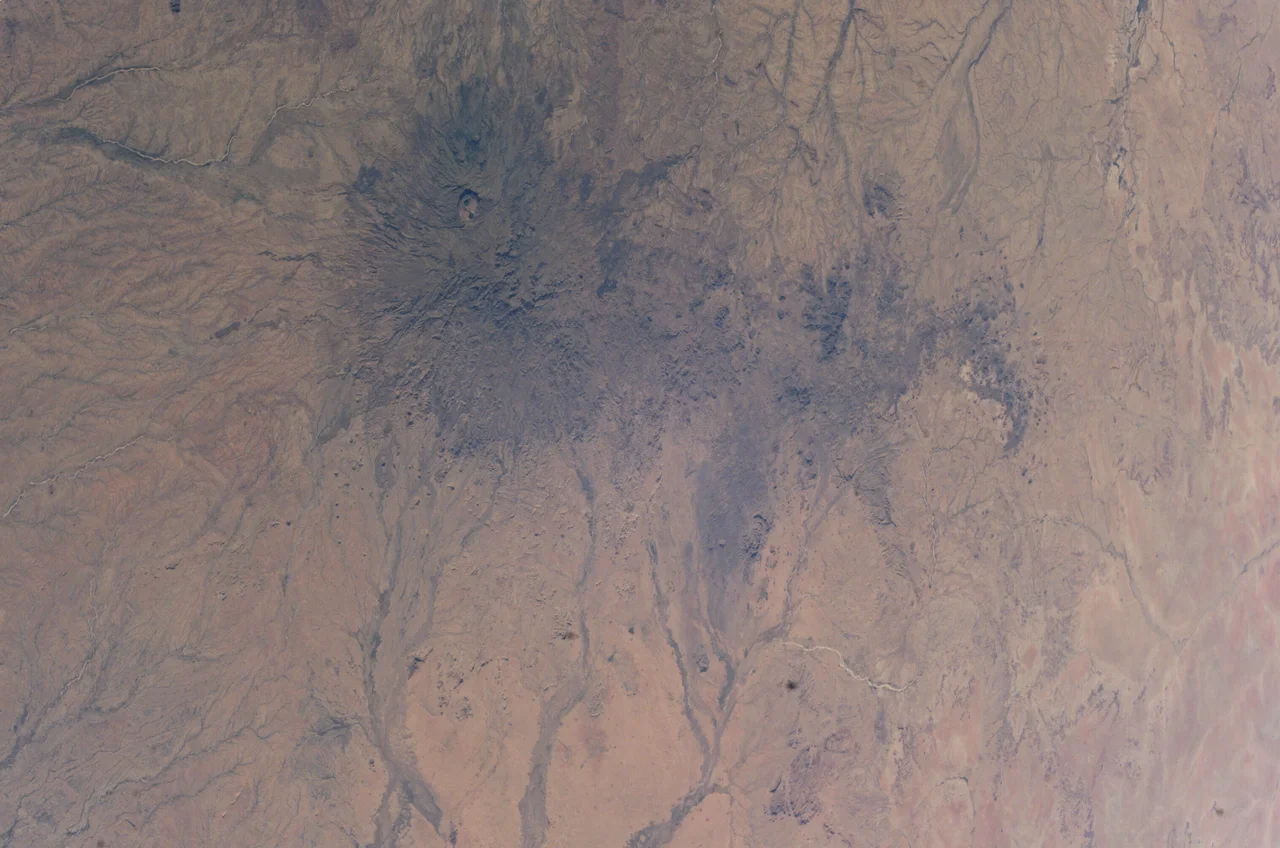
Tarasin, sometimes written Tarseen or Tarsin, sat in a fold of the Jebel Marra range, the volcanic massif that rises from the semi-desert of western Sudan. It was a farming village of stone and mud houses, livestock, and the terraced fields that have fed families in these hills for generations. Save the Children later said that as many as 200 of the dead were children. The Sudan Liberation Movement, which controls much of the area, put the initial death toll around 1,000 and described its early assessment bluntly: the death of all village residents. By 5 September, 375 bodies had been recovered. Fifteen hundred homes, more than 5,000 livestock, gone. Two hundred children. These are not statistics in a report. These were the children walking home from the fields when the rain grew heavier than anyone remembered it being.
Why the Mountain Let Go
The Sudanese Ministry of Minerals blamed the heavy rains of late August, which saturated the mountain slopes until gravity took what friction had held for centuries. Jebel Marra is a young volcano geologically speaking, its flanks built of loose pyroclastic debris and weathered basalt. When that material drinks too much water too quickly, entire hillsides can move at once. But the disaster was not purely geological. Doctors Without Borders noted what everyone on the ground already knew: the ongoing Sudanese civil war made every rescue harder. Roads were blocked. Fuel was scarce. The area was accessible only on foot or by donkey. A six-hour trek from Golo was the fastest way in.
The Scale They Couldn't Reach
The SLM appealed to the United Nations and to every international organization it could reach, pleading for help simply to recover the dead. Accusations flew: SLM officials blamed elements of the former al-Bashir regime, embedded in the rival SAF-aligned government in Port Sudan, of spreading disinformation to minimize the disaster. Later the United Nations would revise its potential death toll down to "scores," for reasons it did not explain. An inter-agency assessment team, including UN personnel, finally reached the area on 8 September, eight days after the mountain fell. In a functional country, helicopters would have come within hours. Here, amid the world's largest displacement crisis, it took more than a week to walk in.
A Ceasefire No One Honored
Both warring governments, the Sudanese Armed Forces and the Rapid Support Forces, pledged aid. The African Union called for a ceasefire to allow humanitarian access. On 2 September, the SAF-aligned government announced it would keep the Adre border crossing with Chad open through year's end, a small concession that acknowledged how many survivors had nowhere to go except across a frontier. The International Organization for Migration counted 150 people displaced from what was left of Tarasin. Displaced from what, though? The village they had known was under several meters of mountain. A relative of one survivor described him in a coma, both legs broken, head injuries severe. He was among the lucky ones.
What Remains
In Sudan's terrible year, Tarasin became one more place name added to a litany already too long: El Fasher, Khartoum, the villages of West Darfur. Unlike those, the landslide was not a human act. The Marrah Mountains did not take sides in a civil war. They simply slipped, as mountains sometimes do when the rain comes hard and the ground has been stripped of the tree cover it once had. The survivors are scattered now, among Golo, among the camps in Chad, among relatives in whatever village still stands. The dead are still mostly in the mountain. In time, perhaps, the goz grasses will grow back over what was Tarasin. Until then, the hillside is a grave for a village that tried, for those few hours between the first wave and the second, to save itself.
From the Air
Tarasin lies at approximately 13.04°N, 24.39°E in the Marrah Mountains of Central Darfur, western Sudan. The Jebel Marra massif rises to Deriba Crater at about 3,042 meters. Nearest airports include Nyala (IATA: UYL, ICAO: HSNN) and El Fasher (IATA: ELF, ICAO: HSFS). The region is remote, with the village accessible primarily on foot or by donkey from Golo. Recommended viewing altitude 10,000-14,000 ft AGL to appreciate the volcanic terrain.
Nearby Stories
- Conquest of Darfur (1873–1874) 12 km away
- Zamzam and Abu Shouk refugee camp massacres 41 km away
- West Darfur 82 km away
- Zamzam Refugee Camp 96 km away
- Kreinik massacre 111 km away
- 1987 Dhein massacre 198 km away
- Central African Republic–Chad border 239 km away
- Central African Republic–Sudan border 271 km away