.png)
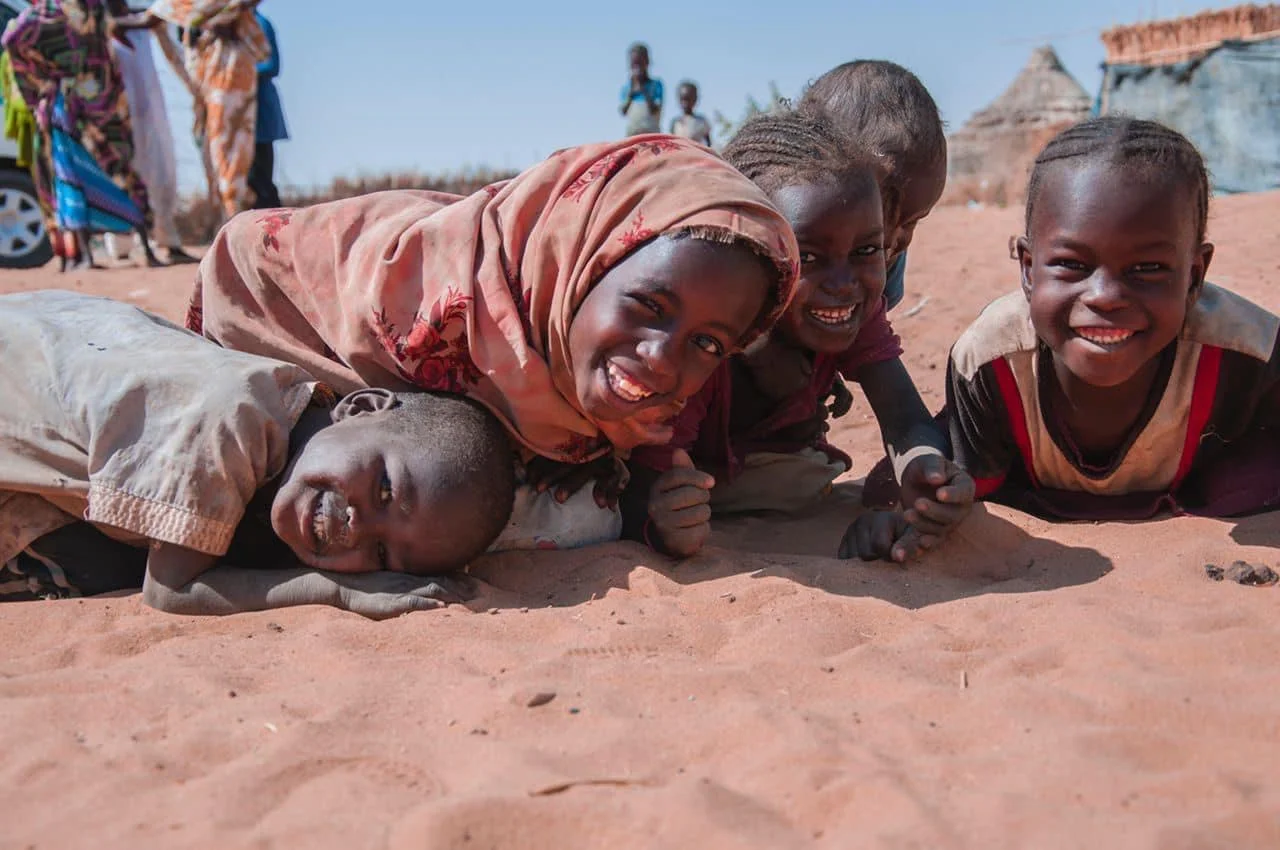
Zamzam Refugee Camp
The camp took its name from the sacred spring in Mecca, the one that Hagar, lost in the desert with her thirsty son, was said to have found when the angel showed her water. The founders meant the name kindly. In 2004, when survivors of the Darfur genocide stumbled out of burning villages and onto this patch of ground fifteen kilometers south of El Fasher, they needed a place to believe water would appear. Within twenty years, Zamzam had grown into one of the largest displacement camps in the world, a city of roughly half a million people, and the water had turned out to be a promise the world did not keep.
Built by Survivors
The Darfur war erupted in 2003 when the Sudanese government armed Arab militias known as the Janjaweed to fight rebel groups claiming African identity. What followed was ethnic cleansing: the deliberate destruction of Fur, Zaghawa, and Masalit villages, with more than two and a half million people forced from their homes by United Nations estimates. Zamzam opened in 2004 as one of the larger settlements for those who fled. The first families arrived with almost nothing. They built shelters of sticks and dried mud, then walls, then neighborhoods. Over the years the camp developed streets, names, and routines. Labado and Ahmadai became neighborhoods. Saloma Square and Ammar Jadid became places people met. A Relief International clinic and a Medecins Sans Frontieres hospital anchored what passed for a health system.
A City of the Displaced
By 2025 Zamzam's population had swelled to approximately five hundred thousand, more than most state capitals in Sudan. The economy was informal: small traders, subsistence agriculture wherever the ground allowed, dependence on international food convoys. Nubian and Masalit women cooked in the adapted style of their home villages. Children were born who had never seen the places their parents came from. Mental health services barely existed, and families lived with the accumulated trauma of genocide, displacement, and chronic hunger. The malnutrition rates at Zamzam ran higher than in the rest of Sudan. Experts from the World Food Programme called what was happening here man-made and preventable, which was another way of saying that the suffering was a choice someone was making on purpose.
Famine Declared
When civil war broke out in April 2023 between the Sudanese Armed Forces and the Rapid Support Forces, the already-strained supply lines to Zamzam broke. The RSF, successor militia to the Janjaweed that had driven many Zamzam residents from home in the first place, encircled El Fasher and the camps on its flanks. Food convoys were blocked. In 2024, Zamzam became the first place in Sudan where the United Nations formally declared famine since the current IPC classification system came into use. Children died of hunger in a camp whose name meant water. The camp held approximately 755,000 people by some humanitarian assessments, and the population kept growing as new waves of displaced arrived from surrounding villages under attack.
The Fall of the Camp
On April 12, 2025, RSF fighters launched a ground assault on Zamzam that killed or wounded hundreds in a single day. On April 13, the RSF announced it had taken the camp. Reuters reported that up to four hundred thousand people were displaced by the takeover, fleeing on foot toward Tawila and El Fasher and wherever else they could reach. On April 29, an RSF-allied militia abducted forty aid workers and about fifty civilians who were trying to evacuate. By May, what remained of Zamzam had been converted into military barracks by the RSF, and satellite imagery showed systematic arson across the settlement. The Guardian later reconstructed the siege in a long investigation titled 'They slaughtered us like animals,' built from survivor testimony.
What Names Survive
The people who lived in Zamzam were the people genocide had already once tried to erase. They rebuilt lives in a camp because they had nothing left. When the camp itself was erased, what remained was again the work of rebuilding memory: the advocacy groups collecting names, the aid workers who stayed as long as they could, the journalists who kept publishing the dates of each shelling, the survivors who insisted the world learn what happened here. Zamzam now means two places at once. It means the spring in Mecca that saved a mother and child. It means a patch of ground at 13.49 north where, for twenty-one years, the displaced people of Darfur made a city out of almost nothing, and where the world watched it burn.
From the Air
Located at 13.49 N, 25.31 E in North Darfur, Sudan, 15 km south of El Fasher. Nearest airport: El Fasher Airport (ICAO HSFS). Darfur airspace is currently dangerous for civilian overflight due to active combat and anti-aircraft fire. From high-altitude routes across the Sahel in clear weather, the remnants of the camp's street grid are still faintly traceable in bare ground; the El Fasher urban area lies to the north.
Nearby Stories
- Conquest of Darfur (1873–1874) 25 km away
- 2025 Tarasin landslide 29 km away
- Marrah Mountains 66 km away
- Ain Farah 69 km away
- Kutum 76 km away
- 1987 Dhein massacre 198 km away
- Wad Banda 250 km away