
La Bastida de les Alcusses
Someone rolled the lead sheet tight, tucked it beneath a grinding stone in a back room, and never came back for it. More than two thousand three hundred years later, archaeologists carefully unrolled the little plaque and read a kind of ledger: a column of names, a quantity beside each, and many of them struck through. A debt paid, perhaps, or a debt collected. It survived because the Iberian town that produced it, high on a ridge near Moixent in Valencia, died young and left almost everything behind.
A Town on the Ridge
La Bastida de les Alcusses crowns the southwest end of the Serra Grossa, 741 metres above the sea and 200 metres above the valley floor, where anyone approaching could be seen from a long way off. The settlement sprawled over four hectares, a long thin footprint some 650 metres by 150, ringed by a defensive wall more than three metres thick at its weakest points. Four gates pierced the circuit, three clustered at the western end near the main entrance, guarded by two projecting towers and gatehouses fitted with stone benches. The lower courses of stone still stand; the mud-brick upper walls and their walkway are long gone. Today pine forest and scrub have reclaimed the hill, and a road brings visitors to a quiet archaeological park.
The New Pompeii
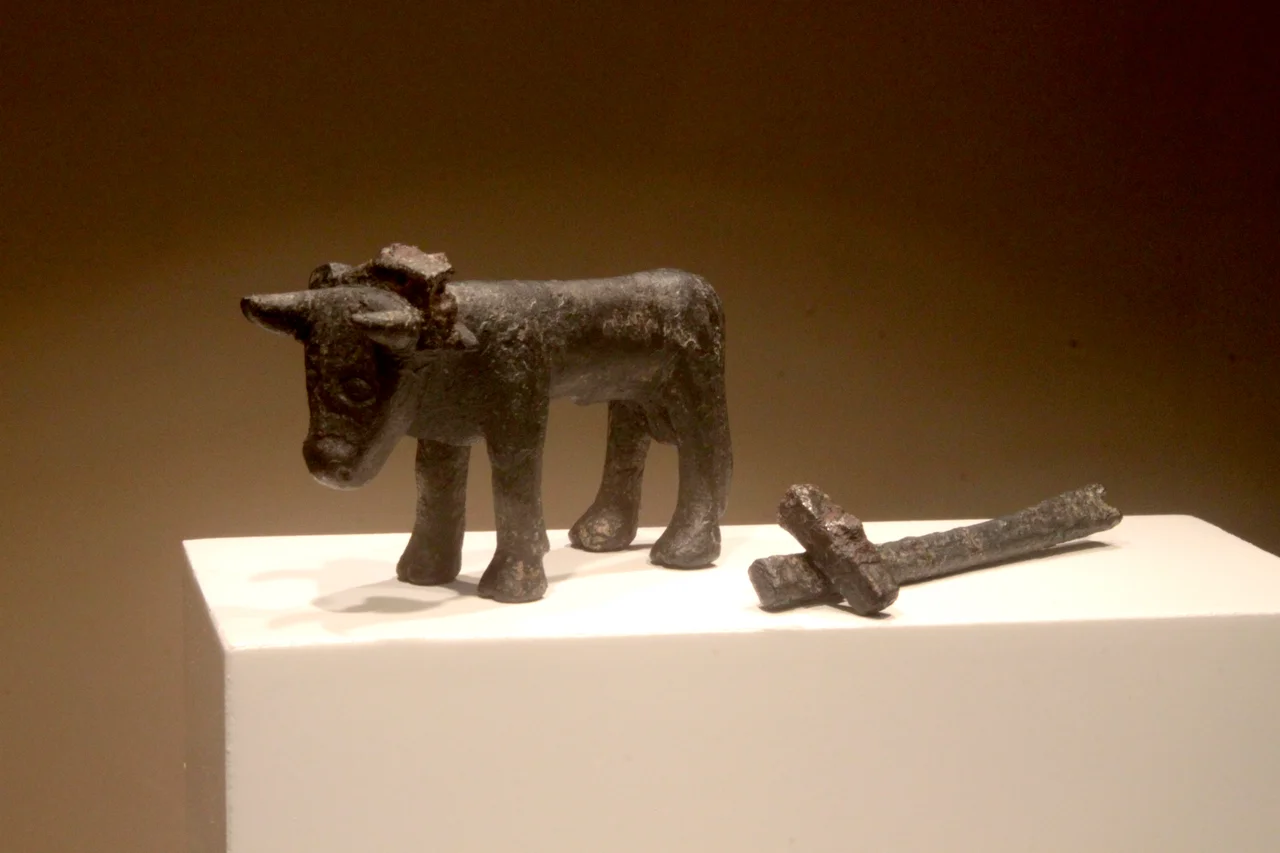
Luis Tortosa first described the site in 1909, but the real work began in 1928, when the newly formed Servicio de Investigacion Prehistorica mounted four campaigns over three years. Diggers cleared some 250 rooms and pulled from the earth a startling haul of weapons, jewellery, and inscribed lead plaques written in the southeastern variant of the Iberian script. Newspapers of the day reached for a comparison and found one: a new Pompeii. The name stuck because it was apt. Frozen at the moment of catastrophe, the town preserved not monuments but the texture of daily life. In 1931, a workman named Vicente Espi lifted from Department 218 a bronze figure barely seven centimetres tall, the Guerrero de Mogente, which would become the emblem of the whole site.
Hearth, Street and Granary
Inside the walls, a single street ran east to west through the heart of the town, with lesser lanes branching off at right angles and a communal granary standing near the centre. Roughly ninety to a hundred and twenty houses crowded the slope, home to somewhere between 450 and 840 people. The homes ranged from cramped single rooms to substantial dwellings, all built the same way: mud brick on a stone base, whitewashed and sometimes painted, roofed flat and gently sloped so the roof itself could be used. At the centre of each house sat the hearth, the symbol and gathering point of family life. Back rooms held food, tools, and the equipment for grinding grain, while others sheltered the smoke and clatter of metalworking and weaving.
Fields, Flocks and Distant Trade
These were farmers first. They raised barley, wheat and millet without irrigation, along with broad beans, peas, olives, vines, almonds and figs, and they worked the ground with wooden ploughs tipped in iron. The billhooks, sickles, hoes and rakes recovered here form one of the most complete sets of pre-Roman farm tools known anywhere in Spain. Sheep and goats grazed the hills; hunters took deer, boar and hare; fish hooks show that the nearby Canyoles river fed the town too. Yet La Bastida was no isolated village. Weights, balances and small silver ingots point to lively commerce, and the shelves held goods from far away: amphoras of salted fish carried from the Strait of Gibraltar, and fine plates and cups imported from Athens, so admired that local potters copied them.
The Warrior and the Fall
This was a society of ranks. Wealth showed itself in jewellery, in the size of a house, in imported luxuries. The little bronze warrior stands naked to signal his heroism, gripping the curved Iberian falcata and a small round shield, a tall plume rising from his helmet, and offerings of weapons buried at the main gate suggest the sword carried deep symbolic weight. Then, around 330 BC, after only three or four generations, it all ended at once. Two gates had been hastily blocked. Fire scorched the buildings. Weapons and personal belongings lay scattered in the streets where they fell. The attackers were most likely other Iberians, fighting over the trade road to the interior or the good farmland in the valley below. Whoever they were, they left behind a town of ordinary people, caught mid-life, whose abandoned things still tell us how they lived.
From the Air
La Bastida de les Alcusses lies at 38.81 degrees N, 0.80 degrees W, on a pine-covered ridge of the Serra Grossa above the Canyoles valley near Moixent, inland from the Costa Blanca. From the air, look for the long, narrow walled outline running along the crest of the hill, roughly 200 metres above the farmland and the A-35 corridor threading the valley below. Best seen from 2,500 to 5,000 feet in the clear light of morning, when low sun rakes the stone foundations. Valencia (LEVC) is about 70 km to the northeast; Alicante-Elche (LEAL) about 80 km to the southeast. Summer heat haze rising off the valley can blur detail by midday.
Nearby Stories
- Monastery of Santa Maria de la Valldigna 4.5 km away
- Cuevas de la Araña 9.7 km away
- Aitana (mountain) 13 km away
- Agost 22 km away
- Castle of Alarcon 82 km away
- 2011 Lorca Earthquake 90 km away
- Castle of Lorca 123 km away
- German submarine U-602 188 km away