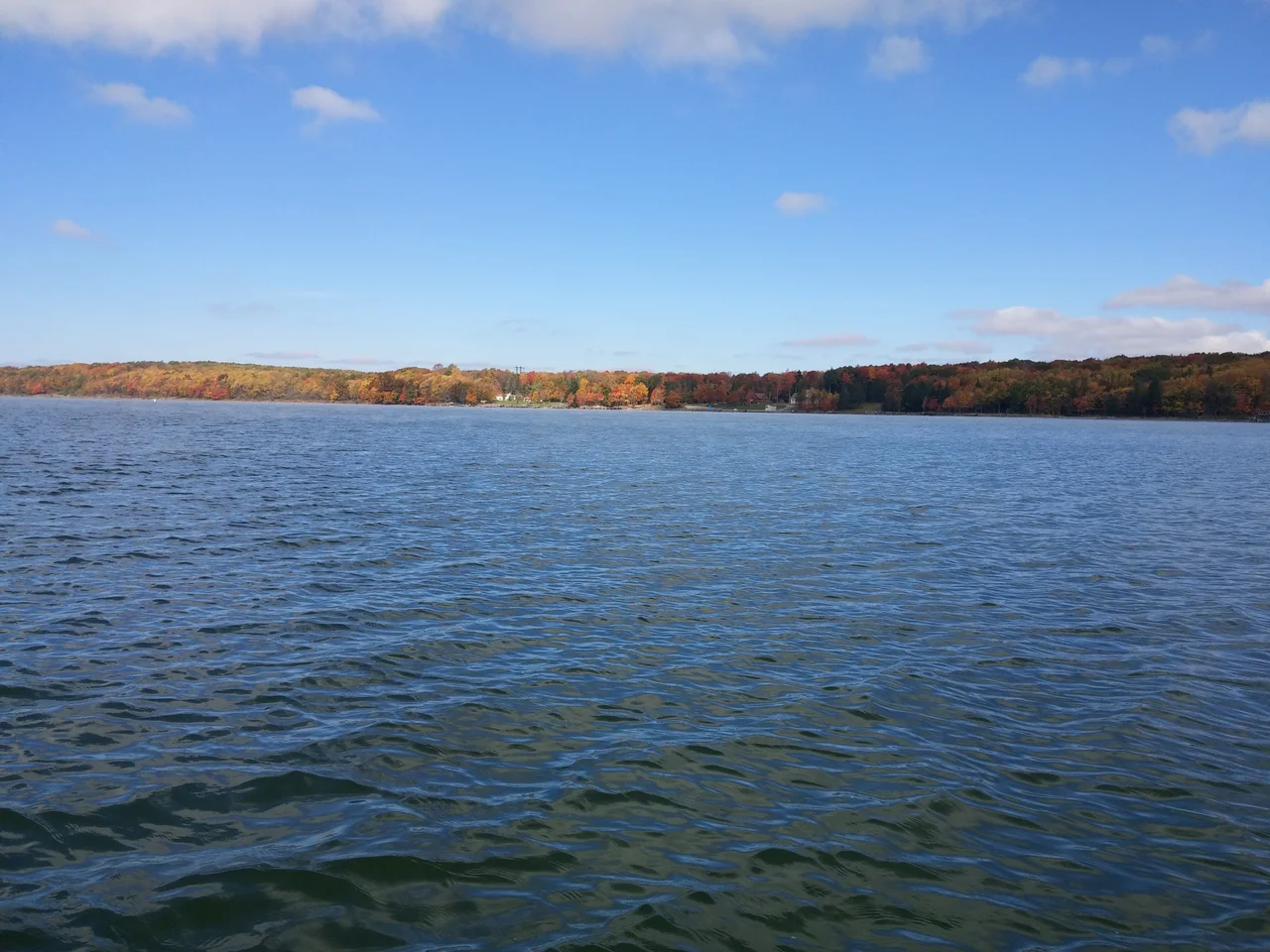

Mount Storm Power Station
The water in Mount Storm Lake rarely drops below 60 degrees Fahrenheit, even when the air above it is well below freezing. That is because the entire 1,200-acre reservoir gets pumped through a power station and back roughly every two and a half days. The result is one of the strangest swimming holes in Appalachia: a warm-water lake in the high mountains of West Virginia, used by scuba divers and bass fishermen in February, surrounded by the coal-burning machinery that keeps it warm.
Three Units on a Ridge
The Mount Storm Generating Station sits on the west bank of Mount Storm Lake, two miles from Bismarck in Grant County, West Virginia. Three coal-fired generating units, built in 1965, 1966, and 1973, draw their fuel from the Appalachian coalfields, run high-pressure steam through turbines, and then push the spent steam through condensers cooled by lake water. Dominion Energy owns and operates the plant. At full output the station is one of the largest coal-fired plants in West Virginia. Its emissions controls have been upgraded over decades to meet tightening federal regulations. The flue gas desulfurization scrubbers - the smokestack-side technology that removes sulfur dioxide - consume about 700 tons of limestone per day to capture up to 95 percent of the SO2 produced by the coal.
The Lake That Heats Itself
Mount Storm Lake was created along the Stony River specifically as the power station's cooling pond. The plant withdraws roughly 234,000 gallons of water per minute, runs it through the condensers to absorb heat from spent steam, and discharges the warmed water back into the lake. Do the math and the entire 1,200-acre reservoir is recycled in about 2.5 days. The thermal load of that cycle keeps the lake unusually warm year-round. Even in winter, surface temperatures often stay above 60 degrees Fahrenheit, attracting scuba divers, ice-free anglers, and boaters at a time when every other body of water in the central Appalachians is locked up. Some visitors are wary of the proximity to a coal plant. Others find the warmth and the consistent stocking irresistible. Dominion maintains restrictions on permitted activities.
Thermal Pollution and the Food Chain
The same heat that makes the lake a winter attraction also disrupts its biology. Heated discharge raises water temperatures above what local aquatic species evolved for, a phenomenon ecologists call thermal pollution. Warmer water holds less dissolved oxygen than cold water, and oxygen is what fish, invertebrates, and aerobic plants need to live. Algae and bacteria also thrive in warmer conditions, which can drive bloom events that further deplete oxygen. Beyond simple availability of oxygen, warmer water raises the metabolic rate of cold-blooded animals, meaning fish and invertebrates burn through their energy reserves faster and need to eat more just to stay alive. The cumulative effect can rearrange a lake's food web, shifting which species thrive and which struggle. Mount Storm Lake's stocked sport fishery is sustained partly by human management - native cold-water species would have a much harder time.
Part of a Bigger Energy Story
Mount Storm sits at one of the more interesting energy crossroads in the eastern United States. The same ridge that hosts the coal-fired station also carries the NedPower Mount Storm Wind Project - 132 turbines spread across twelve miles of the Allegheny Front crest, generating up to 264 megawatts of wind power for the same mid-Atlantic grid that the coal plant serves. The contrast is sharp: one of the largest concentrations of fossil-fuel generation in West Virginia and one of the largest wind installations in the state, occupying the same square miles of high country. The Allegheny Front's prevailing westerlies make both possible - one by blowing across blades, the other by allowing tall stacks to disperse their plumes downwind. For now, both keep running.
From the Air
Located at 39.20 degrees north, 79.26 degrees west, near Bismarck in Grant County, West Virginia. From 6,000 to 9,000 feet AGL the station is unmistakable: three large stacks rising from a complex on the west shore of the 1,200-acre Mount Storm Lake, with the NedPower wind farm strung along the ridge to the south. Nearest airports include Grant County (W99) at Petersburg and Greater Cumberland Regional (KCBE). Expect plumes of warm vapor from the cooling system in cold weather and significant power-line corridors leading away from the plant.
Nearby Stories
- Smoke Hole Caverns 4.3 km away
- Senator Stephen Benton Elkins House 11 km away
- International Mother's Day Shrine 19 km away
- Willa Cather Birthplace 37 km away
- Belle Grove Plantation 39 km away
- Battle of Fort Necessity 40 km away
- Gravity Hill 54 km away
- Whiskey Rebellion 73 km away