
Navarro River Redwoods: The Park That Won Its Beach in Court
In 1959, the King family bought a stretch of Mendocino coast that included the beach at the mouth of the Navarro River. They blocked the dirt road, ending decades of free public access. The Dietzes sued. The case climbed all the way to the California Supreme Court, where it was decided alongside Gion v. City of Santa Cruz in 1970, establishing a precedent that a century of public use creates a public right-of-way. The beach at the end of Navarro River Redwoods State Park has been open ever since -- one of those rare places where legal history, natural beauty, and the stubbornness of beachgoers converged to shape California law.
Eleven Miles of River and Regrowth
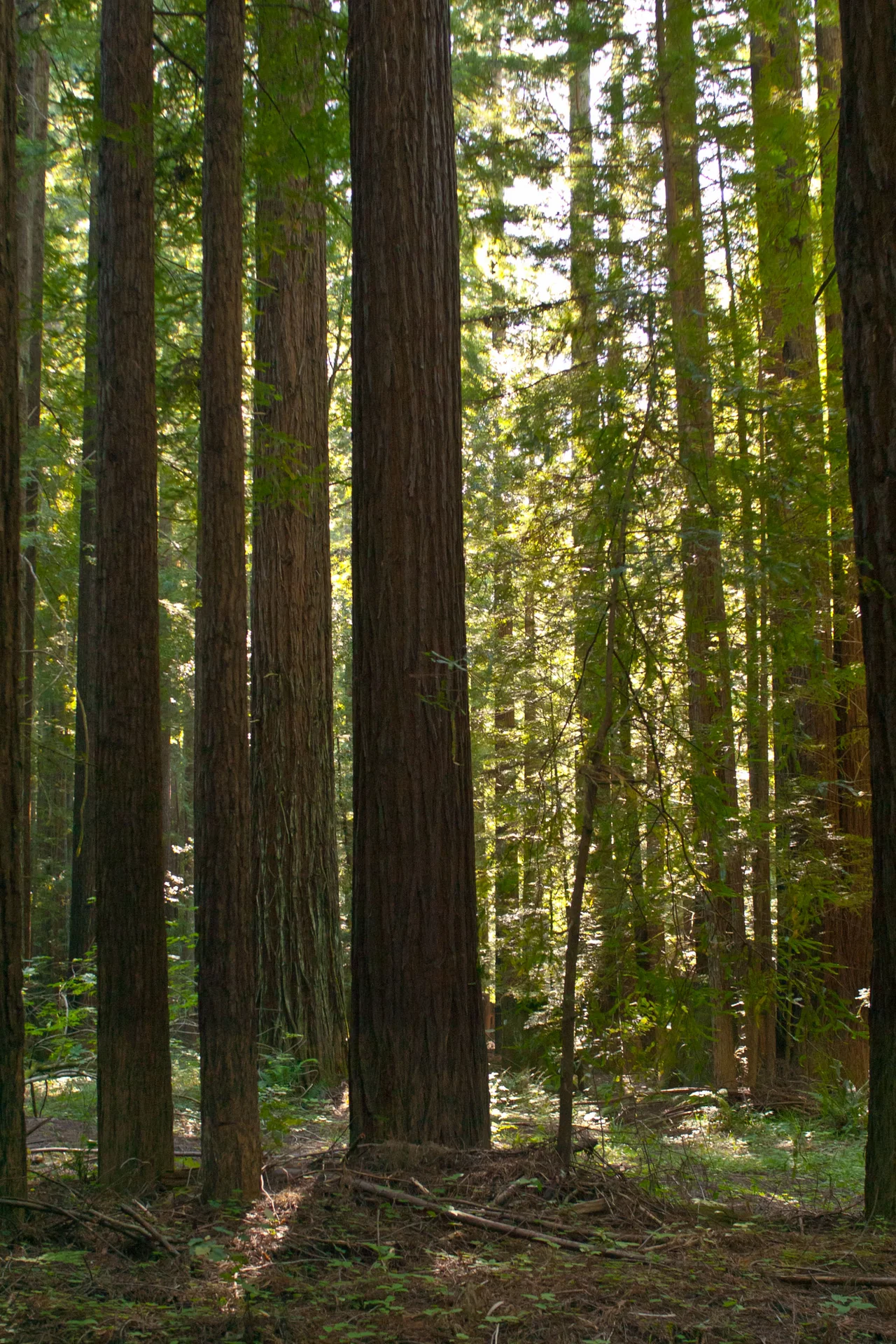
Navarro River Redwoods State Park is not a single destination but a corridor -- 660 acres of second-growth redwood forest stretching 11 miles along both banks of the Navarro River, from the inland town of Navarro to the Pacific Ocean. The trees here are second-growth because 19th-century loggers stripped the original forest bare. What stands now is the comeback: a forest that has been rebuilding itself for over a century, tall enough to shade the river but still centuries away from matching the ancient groves upstream at Hendy Woods State Park. The distinction between old-growth and second-growth tells the story of this coast in two words. Nearly everything was cut.
A River Full of Life
The Navarro River supports an ecosystem that belies the narrow, linear shape of the park. Coho salmon and steelhead trout run the river, their populations a barometer for the health of the watershed. River otters hunt the pools. Along the banks, great blue herons stand motionless in the shallows, while kingfishers, loons, and osprey work the water from above. Raccoons and black-tailed deer move through the forest understory. At the river's mouth, where fresh water meets the Pacific, the world shifts: gray whales pass during migration, and harbor seals haul out on the rocks. It is a park best understood as an artery, connecting inland forest to open ocean and sustaining different communities at every point along its length.
The Towns Called Navarro
Confusion has followed the name Navarro along this river for over a century. A mill town sat at the river's mouth until it burned in 1902. G.C. Wendling rebuilt a new mill upstream on the North Fork, and by 1905 a town called Wendling had grown around it. In 1914, the Navarro Lumber Company bought the mill, and Wendling became Navarro Mill, then simply Navarro. The original coastal settlement, needing a way to distinguish itself from its inland usurper, cycled through names: Old Navarro, Navarro Ridge, Navarro-by-the-Sea. The hotel there -- Fletcher's Inn, later the Navarro-by-the-Sea Hotel -- became central to the beach access lawsuit. The state parks department bought it in 1996 for $300,000, and in 1998 the National Trust for Historic Preservation named it a Save America's Treasures project.
Dietz v. King
The legal battle over beach access had roots stretching back a hundred years. Since at least the mid-1800s, the public had walked freely to the beach at the Navarro's mouth. Around 1949, the hotel owners started charging a 50-cent toll on the dirt access road, though not everyone paid. When the King family purchased the land in 1959 and sealed off access entirely, they were challenging a tradition as old as the settlement itself. The Dietzes filed suit in 1966. The California Supreme Court's decision, handed down in 1970, examined the long history of public use -- uninterrupted except during World War II, when the U.S. Coast Guard commandeered the beach for patrols -- and concluded that the access road was a public right-of-way. The ruling reshaped beach access law across the state.
Preserved in Pieces
The park came together gradually. Paul M. Dimmick State Park, a 12-acre site named after a superintendent at the Albion Lumber Company, was established in 1928 and now forms part of the larger park. The surrounding land was purchased by the Save the Redwoods League in 1987 on behalf of the state park system. It is a park assembled from the leftovers of the lumber industry: land that was cut, regrown, cut again, and finally set aside. The memorial groves established by the Save the Redwoods League within the park mark the places where donors chose to remember the dead among the living -- an appropriate gesture in a forest that is itself a monument to recovery. Drive Highway 128 from the Anderson Valley to the coast, and the road threads through the park's entire length, the second-growth redwoods closing in overhead like a green tunnel leading to the sea.
From the Air
Located at 39.17°N, 123.68°W along the Navarro River corridor in Mendocino County. From altitude, the park appears as a narrow band of redwood forest following the river from the Anderson Valley to the Pacific coast. The river mouth is visible as a break in the coastal bluffs. Highway 128 parallels the river through the park. Nearest airports include Little River Airport (KLLR), about 8 miles north along the coast, and Ukiah Municipal Airport (KUKI), approximately 30 miles northeast. Coastal fog frequently obscures the western end of the park while the inland sections remain clear, illustrating the microclimate gradient along the river corridor.
Nearby Stories
- Gualala River 9.5 km away
- Robinson Rancheria: The Tribe That Came Back 12 km away
- Cyrus 20 km away
- The Asbill Massacre 54 km away
- August Complex Fire 54 km away
- SS Camden 824 km away
- Westport, Washington 865 km away
- Red Sand Beach 3646 km away