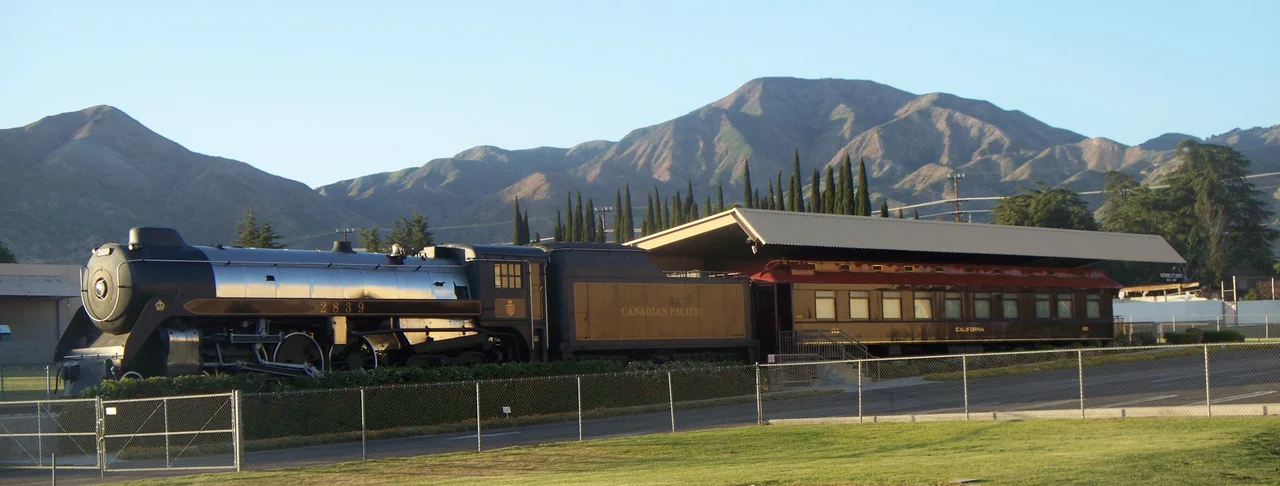

Nethercutt Collection
J.B. Nethercutt came to Sylmar looking for warehouse space. He had been accumulating cars — Duesenbergs, Bugattis, Rolls-Royces, Packards — for years, and the collection had outgrown wherever it had been stored before. He owned Merle Norman Cosmetics, which he ran as CEO and Chairman after co-founding it with his aunt, and he needed a facility near the new Merle Norman manufacturing plant. What he built instead of a warehouse was a six-floor, ten-story Art Deco tower with Louis XV dining rooms, a pipe organ, mechanical orchestrions, and enough space to display the finest private car collection in the United States.
The Tower and What It Holds
The San Sylmar estate opened in 1971 as one of the largest private residences in the United States — 60,000 square feet — and operated as a free museum whenever Nethercutt was not in residence. The lower floors of the tower, known as the Lower and Grand Salon, displayed Nethercutt's vehicles in a setting calibrated to match their magnificence: chandeliers, marble floors, period furniture. The upper floors housed the music collection: dozens of mechanical instruments, massive orchestrions that filled the rooms with synchronized brass and percussion, player pianos, music boxes. A Mighty Wurlitzer theatre organ was installed with full pipe works. Visitors came to a palace, not a garage.
Two Hundred and Fifty Cars
The automobile collection spans American and European marques across more than a century of automotive history: Aston Martin, Austin-Healey, Bentley, Bugatti, Cadillac, Duesenberg, Ferrari, Lincoln, Maybach, Mercedes-Benz, Porsche, Rolls-Royce. The collection includes a Bugatti Type 51 Dubos, a unique one-off coupe body by the Dubos brothers of Paris. Vehicles in the collection were previously owned by Kuwait's ruler Abdullah Al-Salim Al-Sabah, cereal heiress Marjorie Merriweather Post, and comedian Roscoe 'Fatty' Arbuckle. In 2000, a 40,000-square-foot museum building opened adjacent to the estate, expanding the self-guided exhibition. The Nethercutt Collection holds the record for most Best of Show wins at Pebble Beach, with six victories: 1958, 1959, 1969, 1970, 1980, and 1992 — and has also won at major concours events in Las Vegas, Dana Point, La Jolla, Kirkland, and Rodeo Drive.
After J.B.
J.B. Nethercutt died in 2004. Until his death, he hosted an annual picnic tour of the collection for invited guests. The museum continues to operate, free of charge, as it always has been. From 2008 to 2010, cars from the collection served as the lead vehicles and Grand Marshal transports for the Rose Parade, carrying Emeril Lagasse, Cloris Leachman, and Chesley Sullenberger — the pilot who landed US Airways Flight 1549 on the Hudson River — in procession through Pasadena. The automotive research library Nethercutt assembled is available to researchers. The Merle Norman manufacturing plant still operates next door. The tower still stands above the floor of the San Fernando Valley, holding the things one man spent his life collecting.
From the Air
Located at 34.3067°N, 118.464°W in Sylmar, in the northern San Fernando Valley near the 210 freeway. The distinctive tower of the San Sylmar estate is visible from the air among the industrial and residential landscape of Sylmar. Van Nuys Airport (KVNY) lies approximately 10 miles to the southeast; Bob Hope Airport (KBUR) lies approximately 14 miles to the east. The terrain rises sharply to the north into the Santa Susana Mountains.
Nearby Stories
- Hollyhock House 0.6 km away
- Fillmore and Western Railway 8.5 km away
- War Eagle Field 10 km away
- Silverado Fire 41 km away
- San Bernardino Train Disaster 47 km away
- Channel Islands: The California That Cars Never Reached 54 km away
- Bakersfield: The Oil Town Where Country Music Got Its Sound 85 km away
- Calico: The Ghost Town Walter Knott Saved 90 km away