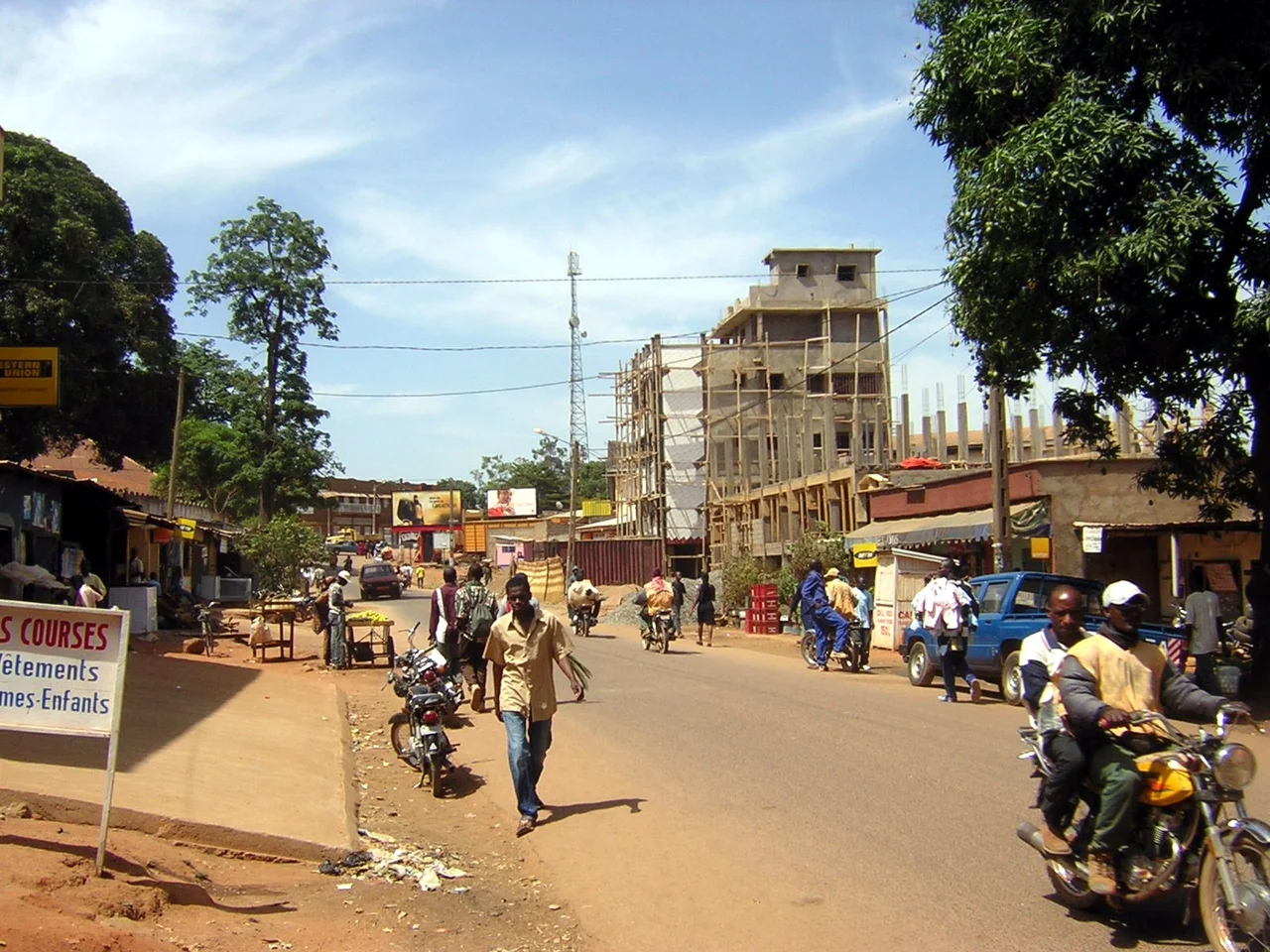

Ngaoundéré
The name means navel mountain. In the Mbum tongue, ngaou is mountain and ndare is navel, and the city of Ngaoundéré takes its name from a rocky peak on the surrounding plateau, crowned by a great stone that the Mbum saw as the navel of the highlands. Today this is the capital of Cameroon's Adamawa Region, a high, breezy crossroads where the country's only railway from the south comes to its end and the Sahel begins to assert itself in the dust and the cattle and the call to prayer.
End of the Line
Ngaoundéré is, above all, a terminus. The Camrail line from Yaoundé climbs north for hundreds of kilometers and simply stops here, and so the whole logistics of a region pile up around the station. Bananas and fruit arrive from the forested south; cotton and cattle come down from the Sahel and Chad to be loaded for the journey back. The central station is, in the words of one description, always sprawling with life. When the railway was completed in 1974, the city's population swelled with newcomers, and a project to extend the rails another 700 kilometers to Chad has long been studied. For now, the trains end where the high plateau meets the dry north.
The Lamido's Court
At the heart of the old city stands the palace of the Lamido, the Fulani ruler whose dynasty has presided here since the city was founded around 1835 by the Fulani leader Ardo Njobdi of Boundang. The palace is not a museum piece but a living institution, the social and spiritual center of the community, its entrance guarded by attendants in bright robes and watched over by the Lamido Grand Mosque nearby. Inside, the rhythms of a traditional court continue, audiences and ceremonies and the daily business of a ruler who still commands deep respect. The rules of succession reveal the city's layered identity: the ruler must descend from the founding Fulani family on his father's side, but he is also expected to claim Mbum ancestry through his mother, so that he embodies both peoples at once. It is a constitutional arrangement carried not in any document but in blood and custom.
Two Peoples, Two Markets
The Mbum were here first, farming the plateau long before the nineteenth-century Fulani arrival reshaped the region. Under the arrangement that followed, the Mbum became a protected people, woven into the political order rather than erased by it. That dual heritage still shows in the marketplaces, in what one observer called an ironic dichotomy. The Grand Marché sits beside the Grand Mosque, the domain of long-established local merchants. To the northwest sprawls the much larger Petit Marché, its stalls run largely by families who came north from Cameroon's southern regions. The names invert the reality, the small market dwarfing the grand one, a quiet monument to how thoroughly migration has remade the city. Walk between the two and you cross, in a few minutes, much of Ngaoundéré's history of arrival and exchange, the older Muslim north of the country meeting the Christian south that the railway carried up to the plateau.
A Refuge on the Plateau
Sitting at altitude, Ngaoundéré enjoys a milder climate than the lowlands around it, with the long wet-and-dry rhythm of the tropical savanna. In recent years it has become something else as well: a refuge. As violence in the Central African Republic pushed people across the border, and as the threat of Boko Haram unsettled the far north, the city has absorbed wave after wave of newcomers, growing far beyond its official census figures. The Sawtu Linjiila radio station broadcasts to Fulani listeners across the region, and on the edge of town, Lake Tison and the navel mountain itself still mark the place where the plateau looks out over the drylands to come.
From the Air
Ngaoundéré sits at roughly 7.32 degrees north, 13.58 degrees east, on the Adamawa Plateau of northern Cameroon at an elevation of about 1,100 meters. Its own field is Ngaoundéré Airport (ICAO FKKN, IATA NGE), with a 1.6 km strip historically able to handle Boeing 737-class aircraft, though scheduled traffic is now sparse. From altitude, look for the rocky bulk of Mount Ngaoundéré with its summit boulder, the rail line threading in from the south, and the dense old city around the Lamido's palace and grand mosque. The tropical savanna climate brings a pronounced rainy season; the December-to-February dry months offer the clearest, if dustiest, viewing.
Nearby Stories
- Palace of Rey Bouba 125 km away
- Battle of Banjo 134 km away
- Mambilla Plateau 142 km away
- Lagdo Reservoir 151 km away
- Mbam Djerem National Park 159 km away
- Bouba Njida National Park 162 km away
- Yola 191 km away
- Dzanga-Sangha Special Reserve 473 km away