.jpg)
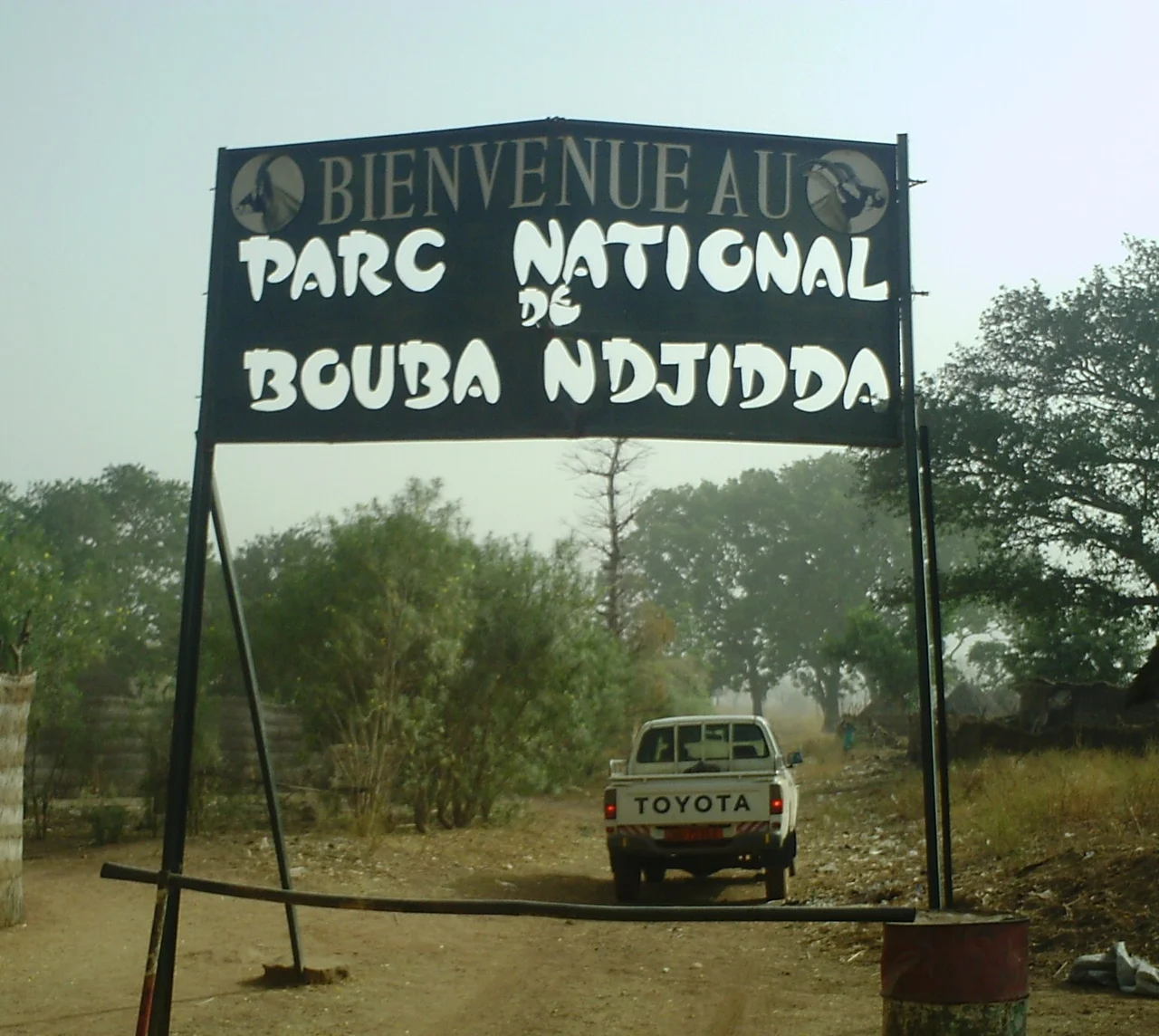
Bouba Njida National Park
In the early months of 2012, the dry-season grass of Bouba Njida filled with bodies. Horsemen had come down out of Chad and Sudan, perhaps a hundred of them, heavily armed and provisioned for a long campaign - they brought their own cattle and camels. Over roughly three months they hunted the park's elephants for their tusks, leaving the great carcasses to rot where they fell. By the time it ended, estimates of the dead ran from more than 300 to as many as 650, at least half and by some accounts the large majority of every elephant in the park. It was, by any count, a slaughter.
The Park Before
Bouba Njida spreads across 2,200 square kilometers of northern Cameroon, a swath of wooded savannah first set aside as a reserve in 1932 and elevated to full national park in 1980. This is classic Sudano-Sahelian bush country - tall grasses, scattered trees, seasonal rivers that swell and shrink with the rains. The park is famous for its antelope, with some 23 species recorded within its borders, an extraordinary concentration. Among the rarest residents is the African wild dog, the painted hunting dog whose tan-and-black coat looks splashed on by hand. Endangered across the continent, the species clung on here, part of a Cameroon population numbered in the dozens around the turn of the century. Bouba Njida was, in other words, exactly the kind of place worth protecting.
The Massacre
What happened in 2012 was not opportunistic poaching but an organized military-scale operation. The raiders crossed hundreds of kilometers of borderland to reach Bouba Njida, drawn by surging global ivory prices and a park too remote and too lightly guarded to defend itself. They shot elephants from horseback, took the tusks, and moved on. Cameroon eventually deployed soldiers - 150 at first, later hundreds more, backed by helicopters - but the response came late and thin, arriving after most of the killing was already done. Wildlife officers who reached the scene afterward walked among ranks of decaying elephants, the worst single concentration of elephant deaths the region had ever recorded. More than half of the park's elephants were gone, perhaps far more, in a matter of weeks.
Why It Happened Here
The massacre at Bouba Njida was a symptom of forces far larger than one park. A boom in demand for ivory had pushed prices to levels that turned elephants into walking currency, and across Central Africa armed groups had learned to fund themselves with tusks. The raiders who struck Cameroon belonged to that economy of conflict, where poaching, smuggling, and instability feed one another along the seams of weak borders. The park's isolation, once its protection, became its vulnerability: there was no one nearby to stop a hundred mounted gunmen. What died at Bouba Njida was not just wildlife but the illusion that distance alone could keep a place safe.
What Endures
The elephants of Bouba Njida have not recovered to anything like their former numbers, and they may never fully return. But the park itself remains - its antelope herds, its rare wild dogs, its long horizons of grass and thorn under a hard northern sun. In the years since 2012, the massacre became a rallying point, a grim shorthand invoked whenever conservationists argue for harder borders, better-armed rangers, and an ivory trade choked off at the source. Bouba Njida endures as both a living wilderness and a warning. To stand in its quiet today is to feel the weight of an absence - and to understand exactly what is at stake in every place like it.
From the Air
Bouba Njida National Park is centered near 8.62°N, 14.66°E in Cameroon's North Region, a 2,200 km2 expanse of wooded savannah along the seasonal Mayo Lidi and bordering watercourses, close to the frontier with Chad. Garoua International Airport (ICAO: FKKR) lies roughly 160 km to the west and is the practical regional gateway. The historic Palace of Rey Bouba sits just to the west of the park. From the air the landscape reads as a mosaic of golden grassland and gallery forest tracing the rivers; relief is gentle. Dry season (December to March) offers the clearest views and the best chance of spotting wildlife concentrated near shrinking water, though harmattan dust can soften the horizon.
Nearby Stories
- Lagdo Reservoir 32 km away
- Battle of Ngaundere 135 km away
- Ngaoundéré 166 km away
- 2014 Mubi Bombing 169 km away
- The Pipeline That Promised Prosperity 191 km away
- Mandara Mountains 199 km away
- Zakouma National Park 539 km away
- Dzanga-Sangha Special Reserve 573 km away