.jpg)
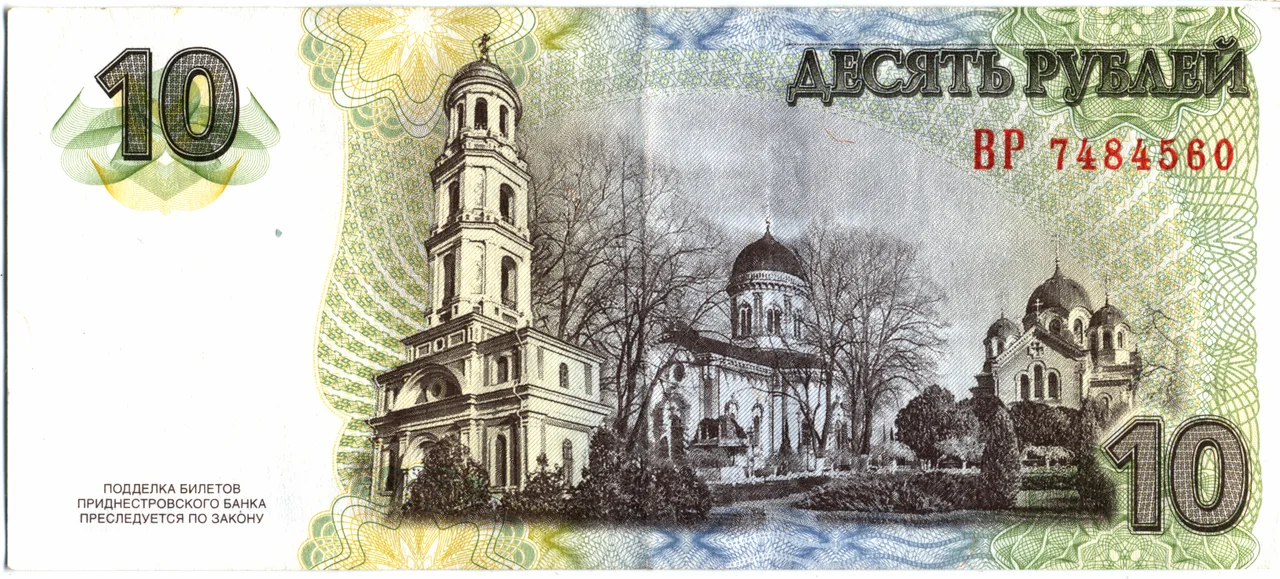
Noul Neamț Monastery
The monks did not come here by choice so much as by refusal. In 1861, a group of them left the ancient Neamț Monastery rather than accept new rules being imposed across the border, and they carried their tradition east across the Dniester to a village called Chițcani. There, within reach of Bender and Tiraspol, they built Noul Neamț, the 'New Neamț,' a living continuation of a medieval house of prayer. The monastery has since outlasted the Russian Empire, survived closure by the Soviets, and found itself, through no design of its own, standing in a breakaway state that appears on no official map.
A Monastery Born of Protest
The name itself is a statement of lineage: Noul Neamț means New Neamț, declaring the monastery a successor to the Neamț Monastery of medieval Moldavia. Its founding in 1861 was an act of quiet defiance. In the United Principalities of Romania, authorities had moved to confiscate monastery estates and to forbid the use of the Slavonic language in worship, and rather than submit, several monks departed and re-established their community at Chițcani. At that time, Chițcani, like all of Bessarabia, had belonged to the Russian Empire since 1812, so the monks were in effect crossing from one imperial world into another to keep their liturgy intact. What began as a walkout thus became a foundation, a new monastery raised to preserve an old way of praying.
Closed, Then Reborn
The twentieth century nearly ended the community. On 16 May 1962, Soviet authorities closed the monastery, and its consecrated buildings were repurposed as a hospital, one of countless religious sites across the Soviet Union turned to secular use during decades of official atheism. The bells fell silent for a generation. Then, as the Soviet grip loosened, the monastery began to return to life. Its church was reopened in 1989, and in 1991 a Romanian-language school for Orthodox priests was established there under the leadership of Wincenty Morari, the bishop of Bender. The rhythm of monastic life resumed in the same walls that had once held hospital beds, a revival that mirrored the broader reawakening of faith across the region as one era gave way to another.
Faith in an Unrecognized Land
History was not finished rearranging the map beneath the monastery's feet. Since 1992, the town of Chițcani has been controlled by the internationally unrecognized state of Transnistria, and so this Moldovan Orthodox monastery, in the historical region of Basarabia, now sits inside a territory that most of the world does not formally acknowledge. Also known simply as Chițcani Monastery, it endures as a place apart, its Orthodox devotions carrying on regardless of the political lines drawn and redrawn around it. For the monks, the essential fact has stayed the same across a century and a half of empires, wars, and unrecognized borders: this is where the community that walked out of Neamț chose to keep its faith, and here it remains.
From the Air
Noul Neamt Monastery lies in Chitcani at roughly 46.79 N, 29.60 E, near Bender and Tiraspol on the left bank of the Dniester in Transnistria. From low altitude the monastery complex, the Dniester River, and the nearby towns of Bender and Tiraspol are the main landmarks. Transnistria has no airport; the nearest is Chisinau International (LUKK) in Moldova, about 65 km northwest.
Nearby Stories
- Odesa Catacombs 31 km away
- Kuialnyk Estuary 42 km away
- Lower Dniester National Nature Park 43 km away
- Granite-Steppe Lands of Buh 109 km away
- Battle of Vaslui 113 km away
- Bug Gard National Nature Park 139 km away
- Battle of Baia 225 km away
- Lake Sfânta Ana 258 km away