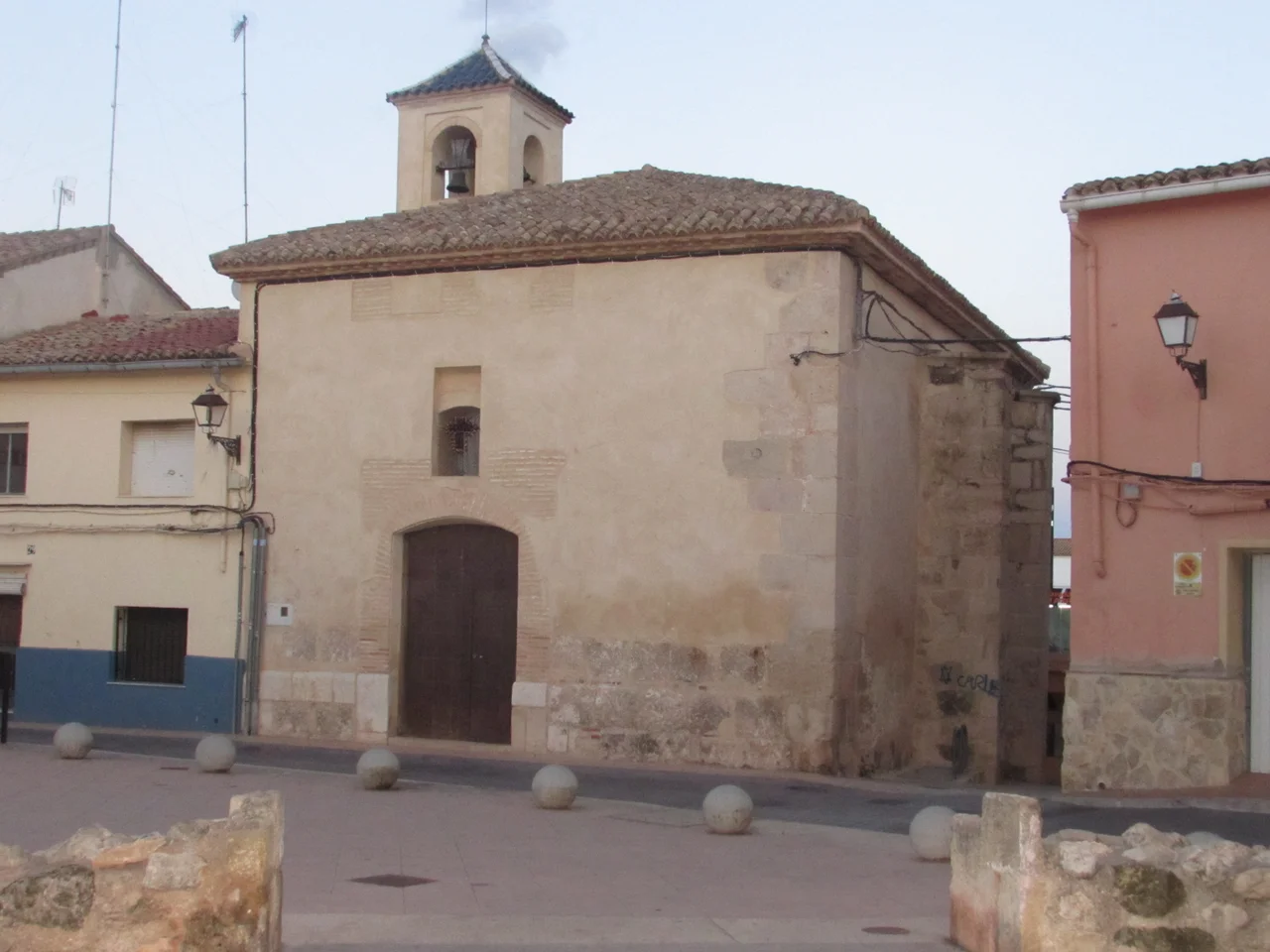

Oratory of the Borgias
The name Borgia summons Renaissance Rome: poison and intrigue, warrior cardinals, popes who ruled like princes. Yet the dynasty did not begin in an Italian palace. It began here, on the quiet plain of Canals in the Valencian interior, where a small Gothic chapel still stands beside a family tower. Long before a Borgia sat on the throne of Saint Peter, this was the family's ancestral ground, a señorío of stone and orchard far from the corridors of the Vatican. The Oratory of the Borgias, also called the Church of the Tower, is where that improbable climb quietly started.
Where the Borgias Began
The oratory once formed part of the palace complex the Borgias held at the Señorío de Torre de Canals, their ancestral power base. From these unremarkable acres the family rose astonishingly far. Alfons de Borja, born of this Valencian line, became Pope Callixtus III, and a kinsman later took the throne as Pope Alexander VI, fixing the Borgia name in history as a byword for ambition and scandal across Renaissance Italy. Standing in Canals, that transformation feels almost unbelievable. It is a long road from a country tower in the fields of Valencia to the marble intrigues of Rome, and this chapel marks its starting point.
A Gothic Chapel by the Tower
The building itself is plain and old, raised most likely in the 13th century in the early Valencian Gothic style. It stands directly in front of the Borgias Tower, and over the centuries it has been reworked more than once. The design is simple and strong: a single rectangular nave with a flat east end, walls of stone and mortar, and a gabled roof once built partly of wood. Two diaphragm arches, springing from pillars, carry the whole span. There is no soaring vault here, no cathedral drama, just the sturdy, honest architecture of a family chapel built to last.
The Relic of the True Cross
The oratory was first dedicated to the True Cross, and that dedication ties it directly to the family's Roman glory. Tradition holds that one of the panels of the main altar depicted the True Cross and commemorated a relic given by Pope Callixtus III himself, a gift flowing back from Rome to the Borgias' Valencian home. Faith and family pride ran together in that altar. Whether the story is exact or embellished by time, it captures how the chapel bound this small town to the great events unfolding far away, through the person of the first Borgia pope.
What Was Lost, What Remains
History has not been gentle to the chapel's treasures. The original main altar was destroyed during the Spanish Civil War, and the shield bearing the arms of the House of Borgia vanished after a renovation in 1878. What survives still rewards a visit. A medieval panel painting depicting the Last Judgment, attributed to the artist known as the Master of Borbotó, remains conserved here, its ranks of the saved and the damned a fittingly Borgia meditation on power and its reckoning. Protected now as a cultural monument, the oratory keeps watch over the dynasty's beginnings.
The Route of the Borgias
The oratory does not stand alone in memory. It anchors one end of the Route of the Borgias, a trail of chapels, palaces, and towers threaded through this corner of Valencia that follows the family from its rural cradle toward wealth and power. Nearby Xàtiva, with its long castle crowning the ridge, and Gandía further south, where the Borgias later built a ducal palace, complete the circuit. To travel it is to watch a Valencian farming clan reinvent itself across generations, until its name echoed in Rome. This modest chapel in Canals is where the road begins, small and stubborn and easy to overlook, like most beginnings that end in legend.
From the Air
The Oratory of the Borgias stands at 38.9561°N, 0.5890°W, in the town of Canals on the fertile plain of La Costera, in the interior of Valencia province. From the air, orient on Canals and the neighboring city of Xàtiva just to the south, whose long hilltop castle strung along a rocky ridge is the great regional landmark and easy to pick out. The oratory and its adjacent tower sit on the flat farmland below. A viewing altitude of 2,500 to 4,500 feet takes in the town, the castle ridge, and the surrounding orchards. Nearest major airport is Valencia (LEVC), roughly 60 km to the north; Alicante-Elche (LEAL) lies to the south. The inland light is usually clear, best in the morning before summer haze settles over the plain.
Nearby Stories
- Font Roja Natural Park 1.9 km away
- Calpe 5 km away
- Battle of Almansa 7.6 km away
- Hēmeroskopeion 14 km away
- Battle of Alcalá (1129) 19 km away
- Jumilla 32 km away
- Requena 32 km away
- Festival Internacional de Benicàssim 95 km away