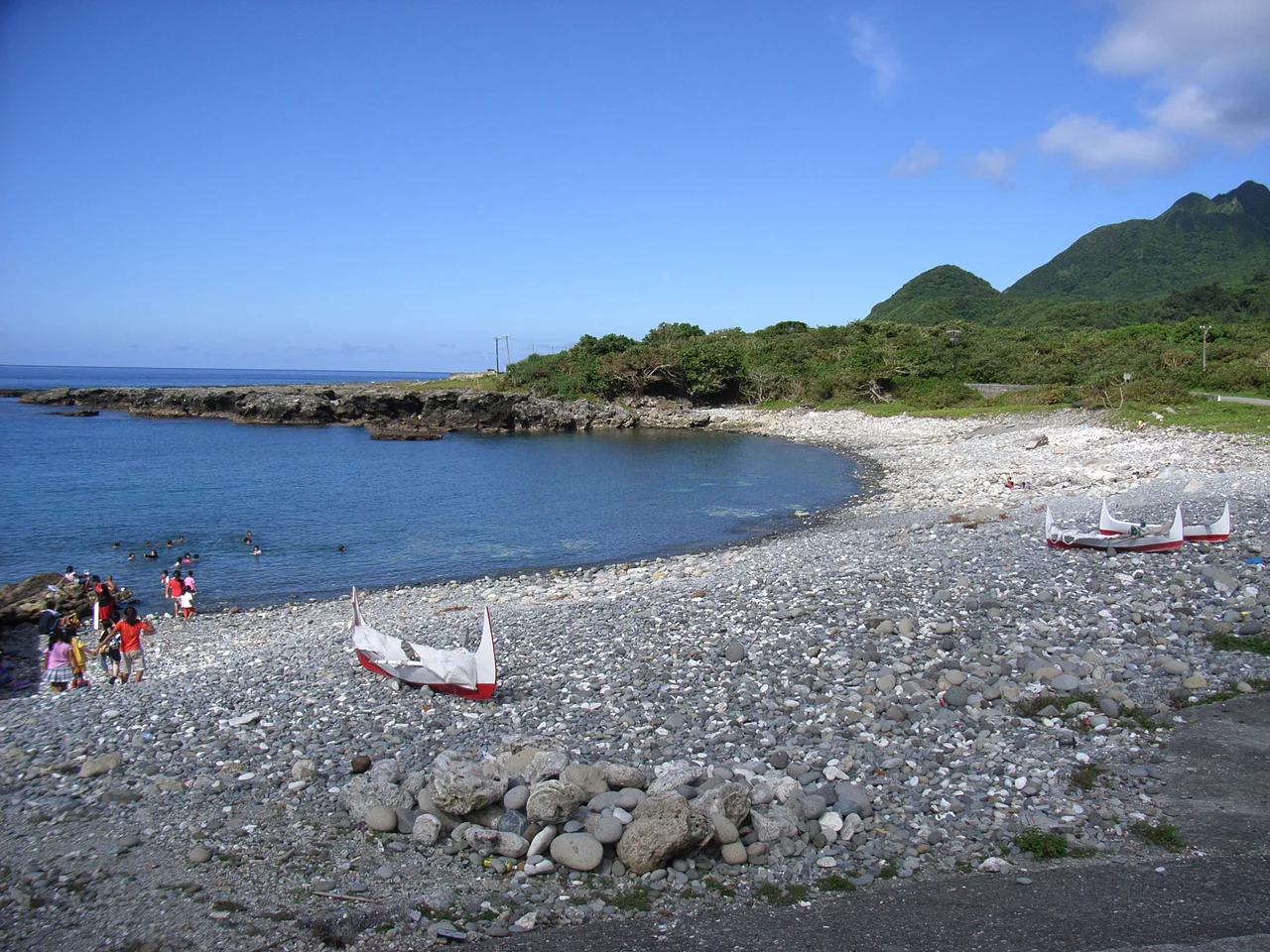

Orchid Island
The Tao people have three names for this island, and none of them is 'Orchid Island.' They call it Pongso no Tao — island of human beings. They have also called it Ma'ataw, floating in the sea, and Irala, facing the mountain. These names are a philosophy: the island is defined not by what outsiders see, but by what it means to the people who have lived on it for some four thousand years. The colonial world gave it a series of other labels — Tabaco on Japanese maps, Kōtō under Imperial Japan's rule, and finally Lanyu, a Mandarin romanization that government offices and airline timetables still use. But out on the water at dawn, when Tao fishermen read the currents for flying fish the way their ancestors did four millennia ago, the island remains exactly what it has always been.
The Long Memory of the Sea
Genetic studies place the Tao's ancestors on this island around 4,000 years ago, arriving during the great Austronesian Expansion that spread human communities across the Pacific. Before colonial borders severed the connection, the Tao maintained close relationships — through trade and intermarriage — with the Ivatan people of the Batanes Islands, which lie just across the Bashi Channel to the south. The two communities were neighbors in an ocean neighborhood, sharing language roots and maritime knowledge across open water.
Flying fish are not simply food here. They are ceremony. The Tao calendar is structured around their migration, with specific rituals marking the opening and closing of the fishing season, governing which boats may go out, and determining how the catch is divided. This knowledge — intricate, practical, and sacred all at once — is among the best-preserved traditional practices of any Taiwanese indigenous group, a fact owed partly to isolation and partly to colonial policies that, however clumsily motivated, kept outside settlement at bay until 1967.
Layers of Unwanted Attention
Imperial Japan declared the island an ethnological research area in the early twentieth century, sealing it off from ordinary visitors. The Tao were, in effect, placed in a living museum — studied, but not consulted. When the Republic of China took over after 1945, the isolation continued for another two decades.
Then came something worse than observation. In 1982, Taiwan's Atomic Energy Council — without seeking the Tao's consent — built a nuclear waste storage facility at the island's southern tip to receive low-level radioactive material from Taiwan's three nuclear power plants. Taiwan Power Company (Taipower) took over operation of the site in 1990. About 100,000 barrels of waste have since been stored at the Lanyu site. Many of the iron barrels have corroded in the island's salty, humid air. As partial compensation — and in acknowledgment of the imposition — households on the island receive free electricity under Article 14 of the Offshore Islands Development Act.
Since the early 1990s, the Tao have repeatedly and publicly demanded removal of the waste, calling it 'evil spirits' in demonstrations that drew national attention in 2002 and again in 2012. The waste remains.
Volcano, Coral, and the Animals Between
The island itself is volcanic, part of the Luzon Volcanic Arc, though it has been quiet since the Miocene epoch. Eight mountains rise above 400 meters; the tallest, Hongtoushan, reaches 552 meters. From its summit, the northwestern peaks glow reddish at sunset — the 'red heads' that gave the island one of its oldest Chinese names.
Below the mountains, coral reefs encircle the island in shallow turquoise rings, sheltering four species of sea snake and providing nesting grounds for green sea turtles. Humpback whales, once common in these waters before commercial whaling ended the population, have been reappearing as migratory visitors since the 2000s — the first confirmed sightings in Taiwanese waters in decades. The island also harbors 35 plant species found nowhere else on Earth, including the palm Pinanga tashiroi, which grows only here. Offshore and ashore alike, Orchid Island holds a biological specificity that belongs to no other place.
A Literature Born from the Waves
The writer Syaman Rapongan grew up Tao, left the island for Taiwan's mainland cities, and eventually returned — not as a tourist, but as someone reclaiming a self. He became a bare-hand ocean diver, learning the sea the way his ancestors learned it, and began writing in Chinese about what Tao civilization means and what it stands to lose. His books — including 'Cold Sea, Deep Feeling' and 'Black Wings' — have won major literary prizes and introduced Tao perspectives to a broad audience, challenging readers to see the island not as a remote curiosity but as a living world with its own completeness.
His 1998 novel 'Black Wings' asks a question the whole island is still answering: should young Tao people pursue opportunity on the mainland, or wait for something that belongs to the sea? There is no easy resolution. The first 7-Eleven opened on the island in September 2014. Mandarin education has been compulsory since 1967. And yet the flying-fish rituals continue, the canoes are still built and painted in traditional forms, and the Tao language persists in homes and on the water.
Life on a 45 Square Kilometer World
About 5,000 people live on Orchid Island, roughly 4,200 of them Tao. The economy rests on fishing — especially the annual flying-fish catch — and farming: wet taro, yams, and millet, crops that have been cultivated here for millennia. Tourism has grown since the ban on outside visitors lifted in 1967, bringing visitors drawn to the coral reefs, the traditional underground houses designed to withstand typhoons, and the Lanyu Flying Fish Cultural Museum.
The island sits within a warm, rainy tropical climate zone, with humidity often exceeding 90% and annual coastal temperatures averaging 26°C. Typhoons pass through regularly. Access is by a half-hour flight on small aircraft from Taitung City's airport, or by ferry from Fugang Fishery Harbor — a journey whose conditions, like much of life on Pongso no Tao, are governed by the sea.
From the Air
Orchid Island (Pongso no Tao / Lanyu) lies at approximately 22.05°N, 121.53°E in the Philippine Sea, about 62 km southeast of the Taiwanese coast. The island's distinct volcanic profile — eight peaks over 400 m, with Hongtoushan at 552 m — is easily identified from altitude. Recommended viewing altitude: 3,000–5,000 m for full island context, or 1,500 m to resolve individual peaks and the coral reef ring. The nearest airport is Lanyu Airport (RCLY), a small strip on the island's eastern coast. The nearest major facility is Taitung Airport (RCNN) on the Taiwan mainland. ZGGG (Guangzhou Baiyun) is approximately 800 km to the northwest. Approach from the north to view the mountains lit by afternoon sun; the northwestern peaks turn amber-red at sunset, explaining the old name 'Redhead Island.' Coastal approaches should account for frequent typhoon-season visibility reductions.
Nearby Stories
- Formosa Expedition 12 km away
- Zhaori Hot Spring 35 km away
- Fangliao 36 km away
- Mavulis Island 91 km away
- 1991 Eruption of Mount Pinatubo 743 km away
- Twin Forts of Romblon 1026 km away
- Sibuyan Island 1074 km away
- Sinking of MV Sewol 1378 km away