.jpg)
Rothbury
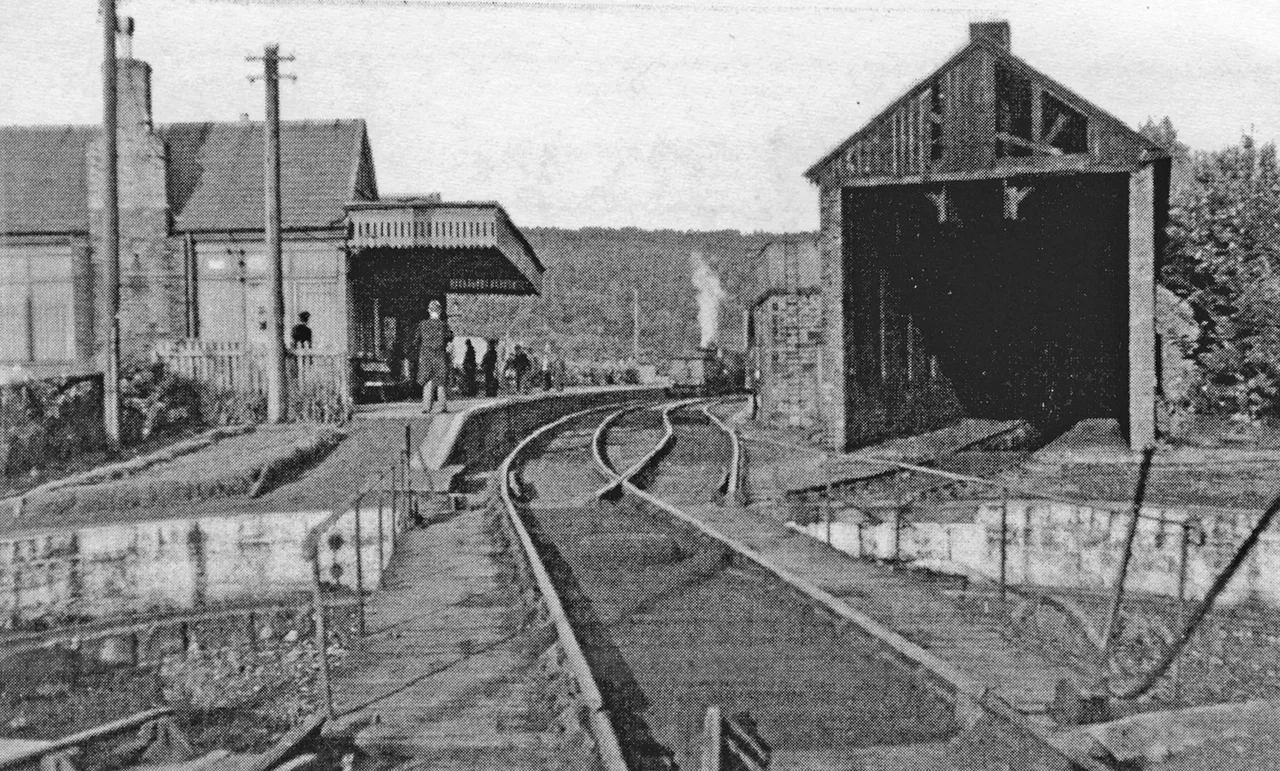
On 19 August 1884, the Prince of Wales stepped off a train at a small Northumberland station and walked into the local butcher's shop. He stayed about twenty minutes, talked about meat with the proprietor, and sent a thank-you letter two days later from Clarence House. The visit was emblematic of what Rothbury had become by the late nineteenth century: a rural Coquetdale town suddenly hosting royalty, courtesy of the railway and the magnetic pull of a self-made industrialist's house on the hill above.
The Fairy Palace on the Crag
Sir William Armstrong, later Lord Armstrong of Cragside, was the engineer who armed half the world's navies. He built his country house and shooting box above Rothbury between 1862 and 1865, then kept extending it as a 'fairy palace' all the way to 1900. Cragside was the first house in the world lit by hydroelectric power, fed by lakes Armstrong dammed on the moors above. Royalty came to see it. The National Trust holds it now. The Prince of Wales travelled here in 1884 with Princess Alexandra and five children, accompanied by firework displays staged by Pain's of London. Without Armstrong, Rothbury would have stayed a quiet upland village. With him, it became a stop on the imperial circuit.
The River and the Stone
Rothbury sits on the River Coquet at the edge of the Northumberland National Park, 13.5 miles northwest of Morpeth and 26 from Newcastle. Front Street runs along the B6341, and stone houses lean toward the water. Half a mile south stands Whitton Tower, an exceptionally well-preserved fourteenth-century pele tower built when border raiders made defensive towers a necessity rather than an architectural flourish. Higher still on Lordenshaw Hill, over a hundred panels of prehistoric rock art mark the moor, including cup-and-ring carvings and an Early Bronze Age cairn. People have been leaving marks on these hills for four thousand years. Armstrong's hydroelectric house is, in that long view, very recent.
The Duergar of Simonside
Above the town rise the Simonside Hills, where local folklore places the duergar, a Norse-derived dwarf who lures travellers at night with lantern light, then leads them toward bogs and cliffs. The name has woven itself into the modern fabric of Rothbury. A children's book about the creature appeared in 2021. An annual ten-mile winter night-time trail run through the Simonsides is called the Duergar Nightcrawler. A Rothbury art gallery carries the name Red Deaugar. The Highland Pipe Band, founded in 1920, still wears Seaforth Highlanders tartan in memory of the soldiers stationed in Coquetdale during the First World War. Folk tunes about the Rothbury Hills, written by Jack Armstrong in 1944, are still performed at the annual traditional music festival.
Famous Sons and Strange Cases
Rothbury has produced more notable people than its size suggests. The industrialist Lord Armstrong, the actress Imogen Stubbs, and the comedian Alexander Armstrong, who co-presents Pointless, were all born here. Alexander Armstrong's father served as a local GP. The Bedlington Terrier was originally called the Rothbury Terrier before miners in Bedlington adopted the breed and changed its name. The town's history also holds darker chapters. In February 1919, two Russian sailors attempted an armed robbery at the Rothbury Brewery; PC Francis Sinton was beaten with an iron bar but survived, and received the King's Police Medal. In July 2010, fugitive Raoul Moat hid for six days in the surrounding countryside before a six-hour stand-off ended by the river at dawn.
From the Air
Located at 55.31°N, 1.91°W on the River Coquet at the eastern edge of the Northumberland National Park. Nearest commercial airport is Newcastle (EGNT) roughly 30 miles south. Cragside estate, with its dammed lakes feeding the historic hydroelectric system, lies just east of town. The Simonside Hills rise to the southwest, with Tosson Hill the highest point. Cruising VFR over Coquetdale at 3,500-5,000 ft offers excellent views of the river valley winding east toward Amble and the sea.
Nearby Stories
- MS Oslofjord (1937) 2 km away
- Aydon Castle 5.2 km away
- German submarine U-1274 5.9 km away
- Battle of Homildon Hill 7.6 km away
- SM UB-115 7.8 km away
- Kielder Forest 9.4 km away
- Smailholm Tower 9.7 km away
- Battle of Arfderydd 29 km away