
Sen Monorom
There's a particular quality to the light in Sen Monorom at dusk. The elevation — 733 meters above the lowland heat — pulls a cool mist off the rolling hills, softening the edges of the jungle where the grasslands end. Cambodia's far eastern capital sits close to Vietnam, close to the sky, and far from the rhythms of Phnom Penh. Most travelers pass it by entirely. That is, quietly, one of its greatest virtues.
Where the Highlands Begin
Mondulkiri Province is unlike anywhere else in Cambodia. The country's largest province by area is also its least populated, and Sen Monorom — its small, unhurried capital — reflects that spaciousness. The town sits at a crossroads between the forested mountains to the north, the Cambodian lowlands to the west, and Vietnam just beyond the hills to the east. At 733 meters, nights are genuinely cool, a relief that surprises first-time visitors expecting equatorial heat. The central market is compact enough to walk in a few minutes, and the roads that fan out from town dissolve quickly into red dirt tracks threading through jungle and tall grass. The pace is deliberate. There are no temples competing for attention, no famous ruins. What Sen Monorom offers instead is a different kind of Cambodia — highland, quieter, and less mapped.
The Bunong Homeland
Long before Sen Monorom became an administrative capital, the Bunong people — also called the Phnong — were living in these hills. They are one of Cambodia's indigenous highland groups, and Mondulkiri remains their heartland. The Bunong have their own language, their own animist traditions, and a deep relationship with the forest that has shaped their economy and spiritual life for centuries. They have traditionally kept elephants, cultivated the land communally, and organized village life around ceremonies tied to the agricultural calendar. In Sen Monorom's market and the shops along the main street, you can find scarves, baskets, and woven textiles made by Bunong artisans — goods that represent genuine craft traditions, not souvenirs manufactured elsewhere. The tourist industry is growing, and the Bunong people are navigating those pressures on their own terms. Many communities continue to live much as they have for generations, though the changes are arriving faster than the red-dust roads might suggest.
Jungle, Grass, and Winding Roads
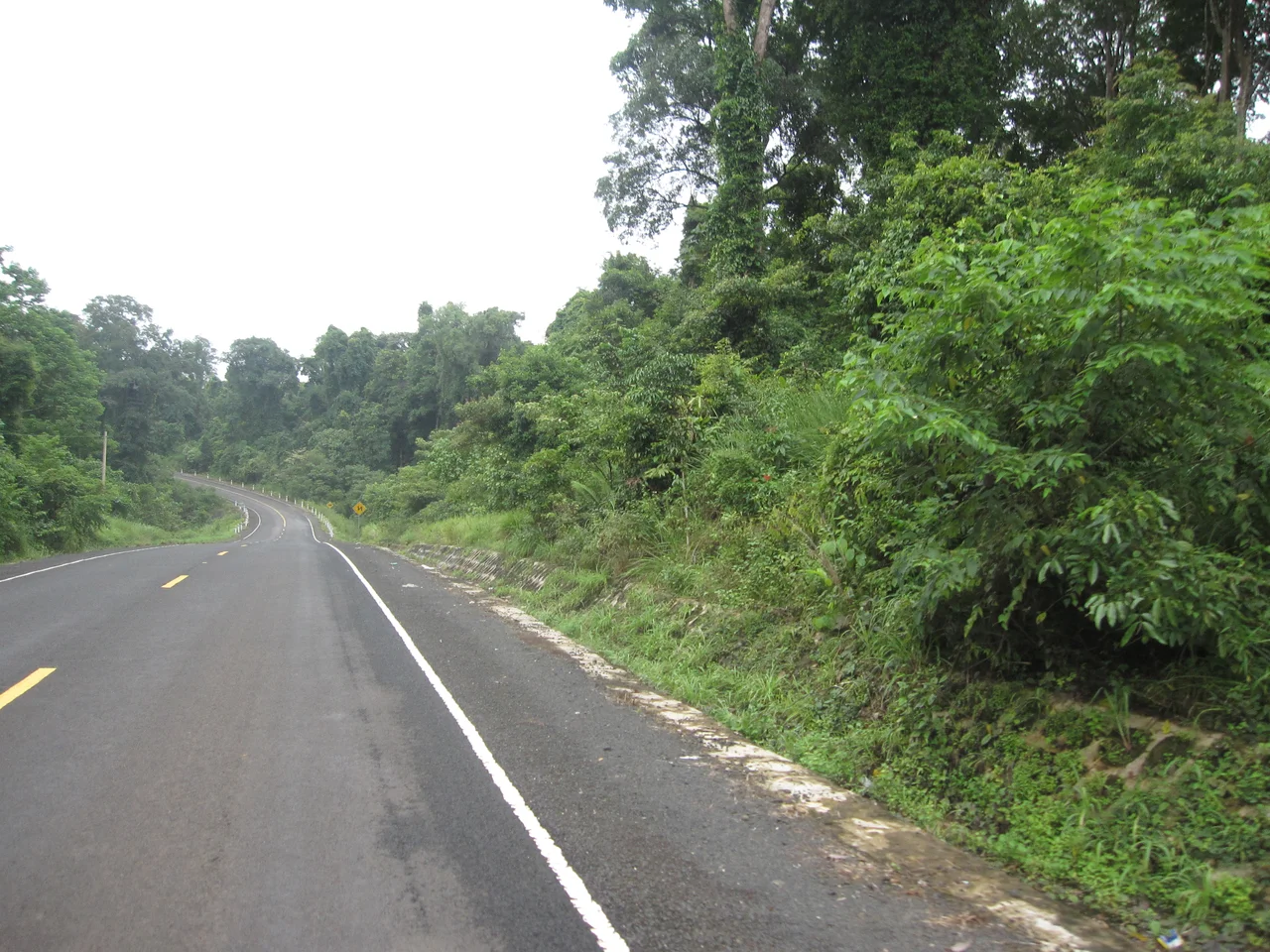
Step outside town and Mondulkiri's landscape asserts itself. Rolling grassy hillsides — a topography unusual in Cambodia, which most visitors associate with flat rice plains — give way to dense forest where waterfalls carve through sandstone. The roads that matter most here are not on most maps. A motorbike is the right tool for getting anywhere meaningful: down into river valleys, up to viewpoints where the green hills unfold in every direction, out to villages where the jungle canopy begins just past the last house. The province holds several waterfalls, including Bou Sra, one of the largest in Cambodia, where the river drops in three stages through tropical forest. The dry season, November through April, offers clearer skies and passable roads. During the wet season, the hills turn vividly green and the rivers run full, but many tracks become impassable without local knowledge.
Getting There Is Part of It
The road to Sen Monorom from Phnom Penh is honest about its condition. The roughly 370-kilometer journey takes about seven hours by shared minivan, through the junction town of Snuol and past the lowland forests of Kratie Province, the road pocked with potholes that make the journey feel longer. Minivan services are numerous; their reliability varies considerably, and reviews from travelers are blunt on the subject. The discomfort is not incidental — it is part of the passage, the physical sense of arriving somewhere that takes effort to reach. A bus connection also runs from Siem Reap, a longer overland route through the country's interior. The town itself is small enough that once you are there, a bicycle serves for everything within the central area, with motorbikes for hire when the forest calls.
Coffee, Honey, and Khmer Lessons
Sen Monorom produces coffee and honey, two products that reflect the highland environment and the labor of the communities who grow and gather them. Both are sold in the market and in small shops near the town center, where vendors from Bunong villages bring goods alongside Khmer and Vietnamese merchants. A few guesthouses and cafes line the main street, serving Khmer food alongside fresh passion fruit juice and the occasional Western option. The Bamboo Cafe, a reliable local fixture, draws travelers and locals alike. The teenagers who work there are known, according to more than a few visitors' accounts, to enjoy giving impromptu Khmer lessons to anyone patient enough to try. It's a small detail that says something true about the town: Sen Monorom is not performing itself for tourists. It's simply going about its life, and visitors are welcome to join in.
From the Air
Sen Monorom lies at 12.45°N, 107.20°E in eastern Cambodia's Mondulkiri Province, at approximately 733 meters elevation — notably higher than the Cambodian lowlands visible to the west. From the air, the town appears as a small settlement in a landscape of rolling green hills and patchwork forest, quite distinct from the flat rice plains that dominate most of Cambodia. The terrain rises further toward Vietnam to the east. The nearest airport with scheduled service is Phnom Penh International (VDPP), roughly 370 km to the southwest. Ratanakiri Province's Lumphat airfield (VULH) lies approximately 150 km to the north. Flying over at altitude in clear weather, the Mondulkiri highlands read as an island of elevation rising from the surrounding lowlands — an unusual sight in this part of Southeast Asia.
Nearby Stories
- Duc Lap Camp 11 km away
- Gia Nghia 21 km away
- Battle of Phuước Long 32 km away
- Buôn Đôn 33 km away
- Battle of Ap Gu 54 km away
- Sambor Dam 64 km away
- Battle of Tong Le Chon 89 km away
- Đình Lạc Giao 107 km away