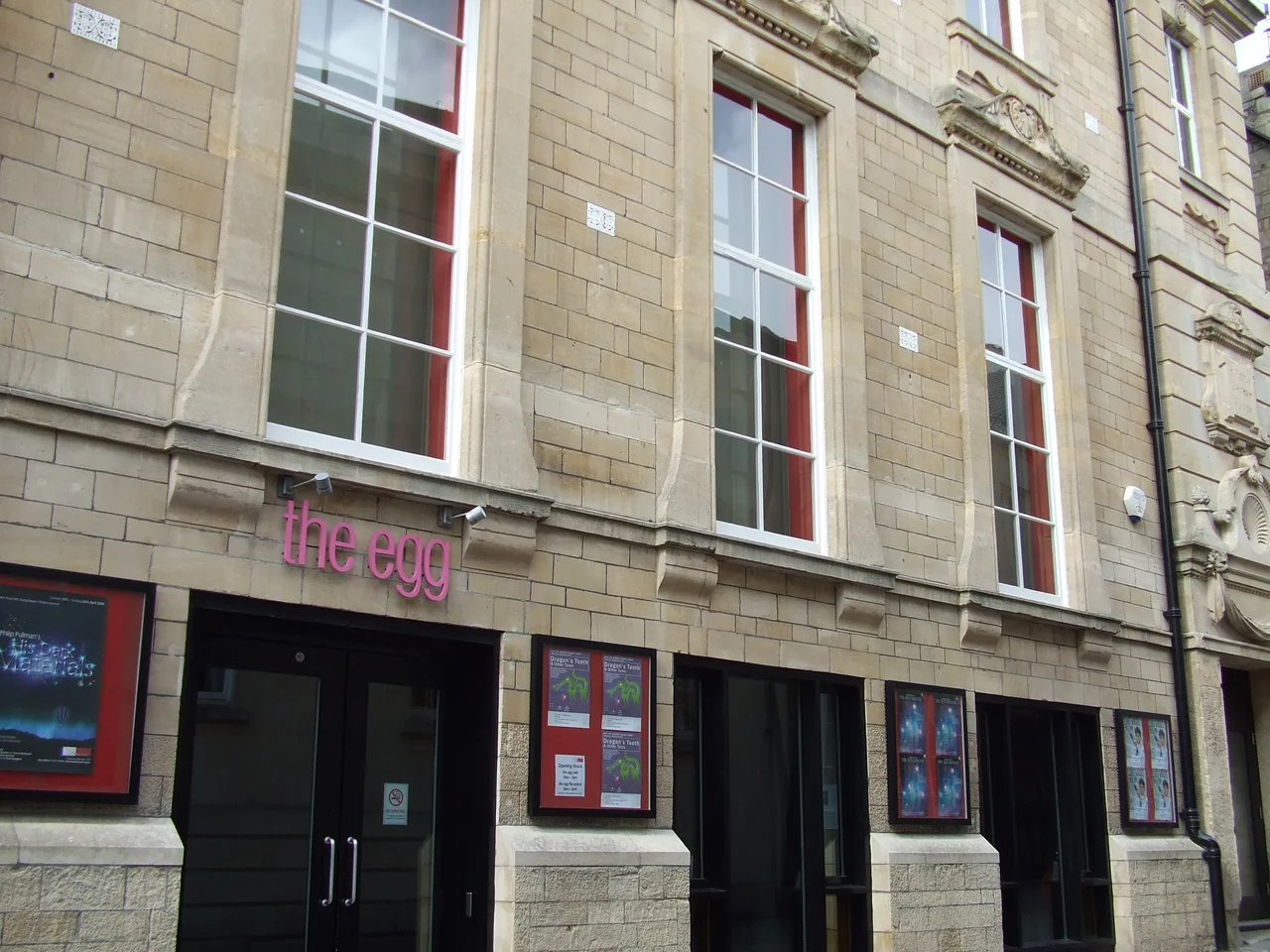

Theatre Royal, Bath
On the opening night, 12 October 1805, an unknown actor walked onstage to play Richard III. He had been hired cheap. Nobody recorded his name. The production was, by most accounts, not a success. Yet behind him the curtain hung from a brand-new auditorium funded by something that sounds more like a heist than an investment vehicle: a tontine, the seventeenth-century French scheme where subscribers paid in, took annuities, and watched their shares grow as fellow members died. The last survivor scooped the lot. Among those who bought into Bath's theatrical version were the Prince Regent (later George IV) and his brother. Two centuries on, the Theatre Royal is still standing, still playing to roughly 900 people a night, and still considered, by the Theatres Trust, one of the finest surviving examples of Georgian theatre architecture anywhere.
Built on a Bet
The site was chosen in 1804, replacing the older Old Orchard Street Theatre, which in 1768 had won the first royal patent ever granted outside London. The new building rose to a design by George Dance the Younger, the great London architect; the day-to-day construction work was supervised by the Bath architect John Palmer. Shares cost £200 each, an enormous sum, but they sold quickly. The interior was lavish: the ceiling carried decorative panels rescued from Fonthill Splendens, the lost fantasy house of William Beckford, painted by Andrea Casali and donated by Paul Cobb Methuen. When gas lighting arrived in 1827, the panels were judged too precious to risk and were moved to Dyrham Park. The theatre established its reputation under William Wyatt Dimond, attracting Dorothea Jordan, William Macready, and Edmund Kean to the boards. In November 1815, Joseph Grimaldi himself, the most famous clown in England, played Mother Goose here in pantomime.
Fire and What Came After
On 18 April 1862, fire tore through the building overnight. Stage, scenery, wardrobe, library, all of it gone, leaving only the exterior walls black against the morning sky. A new company formed within weeks, a competition was held, and the Sussex-trained theatre architect C. J. Phipps won the commission. His rebuilt auditorium opened on 3 March 1863 with Charles Kean and Ellen Terry in A Midsummer Night's Dream. The current main entrance on Sawclose is older than the theatre behind it: a 1720 frontage by Thomas Greenway that once stood at Beau Nash's house, the social arbiter who made Georgian Bath. Pevsner thought its ornament "characteristically overdone." Most visitors find it gloriously so. In 1902 the theatre closed for nine months while a new staircase, electric lighting, fire curtain, and radiators were installed under the terms of its Royal Charter.
The Names on the Programme
Read the cast lists across two centuries and you read a who's-who of English-language theatre. Sarah Bernhardt appeared in 1916, controversially playing a wounded male French soldier in Du Theatre au Champ d'Honneur. Anna Pavlova danced here in the 1920s. Mrs Patrick Campbell, Henry Irving, Sybil Thorndike, John Gielgud, Donald Wolfit, Irene Vanbrugh, all walked these boards. Noel Coward's Private Lives and Blithe Spirit played during the Second World War, when audiences were grateful for any light entertainment between bombing raids. The theatre still routinely tries out West End productions before London sees them: Kenneth Cranham took the Olivier for Best Actor in 2016 for The Father, which began life downstairs in the Ustinov Studio. The Ustinov, named for Peter Ustinov and opened in 1997, has become a hothouse for new work; in 2012 Sarah Ruhl's In the Next Room earned three Tony nominations after a run there.
The Grey Lady Watches
Behind the gilt and the velvet, the building has its own folklore. The Theatre Royal is said to be haunted by several ghosts, but the most famous is the Grey Lady, an actress from centuries past who is reported to watch performances from a particular box, which now bears her name. She leaves, by tradition, the distinct scent of jasmine. Sightings continue. In 1979 the theatre was dilapidated and nearly lost; a trust headed by the inventor Jeremy Fry bought it for £155,000 and launched the fundraising campaign that saved it. Bel Mooney led another rescue in 2010, when £3 million of refurbishment expanded the foyer, refreshed the auditorium, and cut the building's carbon footprint by about 30 percent. Penelope Keith and Peter Bowles reopened the Main House on 8 September 2010 in Sheridan's The Rivals, a Restoration comedy set in eighteenth-century Bath. The play had come home.
From the Air
Located at 51.38 degrees N, 2.36 degrees W in the heart of Bath, just north-west of the Roman Baths complex and immediately south of Queen Square. The building reads from above as a modest Georgian block in a tight grid of honey-coloured stone; the more distinctive landmark nearby is the broad sweep of the Royal Crescent to the west. Nearest major airport is Bristol (EGGD), 12 nm west; Gloucestershire (EGBJ) sits 30 nm north. Best appreciated from low overflight or on foot in Bath itself.
Nearby Stories
- Marlborough Castle 1.4 km away
- Clevedon Pier 4.6 km away
- Stourhead 5.6 km away
- Siege of Bridgwater (1645) 8.4 km away
- Raglan Castle 10 km away
- Berkeley Castle 12 km away
- Mottisfont Abbey 20 km away
- Blenheim Palace 33 km away