
Tiraspol
You can pay for a Visa charge here that gets billed in Russian rubles, spend Pridnestrovian ones that no bank outside these borders will touch, and ride a trolleybus built in the 1960s to a square watched over by Lenin. Tiraspol is the capital of Transnistria, a breakaway state that most of the world declines to recognize, and it draws its rare visitors precisely because of that strangeness. Here the Soviet symbols were never taken down. A quiet provincial town on the banks of the Dniester, largely sealed off from the outside, it has become an accidental museum of a vanished century, still open for business.
Twenty-Four Centuries on the Dniester
The riverbank has drawn settlers for a very long time. Around 600 BC, Greek colonists from Miletus founded a town called Tyras about ten kilometers from the mouth of the Tiras River, the ancient name for the Dniester. The modern city, though, traces itself to 1792, when Field Marshal Alexander Suvorov, acting on the orders of Empress Catherine the Great, established a border fortress here on land newly conquered from the Ottoman Empire. His equestrian statue still commands the central square. The city's most consequential chapter came in the twentieth century, when Tiraspol served as the capital of the Moldavian ASSR from 1929 until 1940, and again after 1992, when it became the seat of the self-declared Transnistrian republic that emerged from a brief war of independence.
A City Frozen in Amber
Walking the main street, aptly named 25 October, is how you take in most of Tiraspol. The parliamentary building wears a relatively new Lenin statue, and across from it a T-34 tank from the Great Patriotic War stands as a monument that holds soil carried from the battlefield of Stalingrad. The trolleybus system is a marvel of preservation, many of its cars dating from the Soviet 1960s and 1970s yet kept in immaculate order, freshly painted outside and fitted with surprisingly comfortable spring-loaded leather benches within. Line 19 links Tiraspol to the neighboring city of Bender, running every fifteen or twenty minutes. Near the university, the Culture Park mixes abundant trees with amusement rides both abandoned and enthusiastically used, a fine place to sit and watch the town go by.
An Isolated Capital
Isolation shapes daily life here. Tiraspol is landlocked and cut off from the wider world by a lack of transcontinental infrastructure; there is neither an airport nor a seaport anywhere in Transnistria, and the nearest international flights leave from neighboring Moldova. To buy anything, visitors must first change their money into Pridnestrovian rubles, whose exchange rate the local republican bank sets and prints for itself, so the number of rubles a euro buys can swing from week to week. The city's diplomatic life is as unusual as its economy: there are no foreign embassies, yet the fellow unrecognized territories of South Ossetia and Abkhazia keep representative offices here, and Russia maintains a consulate. Even the wifi tells the story, doled out in thirty-minute daily allotments at slow speed by the state operator.
Brandy, Football, and the River
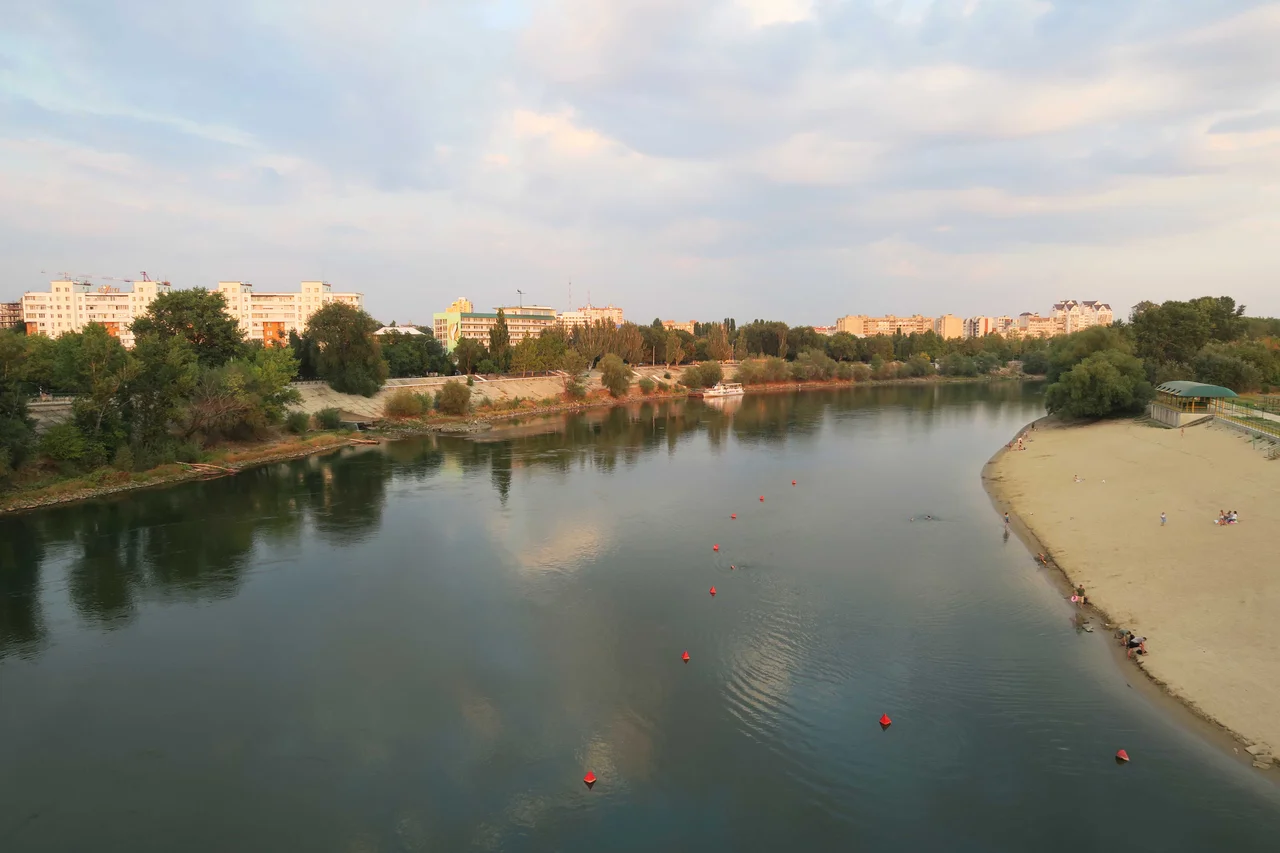
For all its oddities, Tiraspol has genuine local pride. The famous Kvint distillery, whose factory on Lenin Street is an attraction in itself, produces the brandy and vodka that residents consider a hallmark of the place. On the pitch, FC Sheriff Tiraspol plays in Moldova's top division and regularly qualifies for European tournaments, its home ground a modern stadium west of the center that seats 12,700, though since 2022 UEFA has barred the club from hosting its European matches in Transnistria, sending those fixtures to neutral venues elsewhere in Moldova. And when summer comes, life gravitates to the water. Locals gather along the Dniester just off the main street, and cheap thirty-minute boat tours drift out onto the river, the guide collecting fares only after the vessel has left the dock. It is in these small, ordinary pleasures, a glass of brandy, a match, an evening by the river, that the isolated capital feels most like simply a town where people live.
From the Air
Tiraspol lies at 46.85 N, 29.63 E on the left bank of the Dniester River, the capital of Transnistria. From low altitude the river, the compact city grid, the Suvorov statue on the central square, and Sheriff Stadium to the west are the main landmarks; the neighboring city of Bender sits just across the river. Transnistria has no airport of its own; the nearest is Chisinau International (LUKK) in Moldova, about 70 km west.
Nearby Stories
- Odesa Catacombs 31 km away
- Kuialnyk Estuary 42 km away
- Lower Dniester National Nature Park 43 km away
- Granite-Steppe Lands of Buh 109 km away
- Battle of Vaslui 113 km away
- Bug Gard National Nature Park 139 km away
- Battle of Baia 225 km away
- Lake Sfânta Ana 258 km away