
Wolverton Railway Works
In 1833, the Act of Parliament that authorized the London and Birmingham Railway included a clause that sounds quaint today: a railway works had to be built around the midpoint of the line, because engineers of the day believed it was scientifically unsafe to run a steam locomotive more than fifty miles between inspections. The surveyors looked at every possible site along the 112 miles from London to Birmingham. They chose Wolverton, a small Buckinghamshire village beside the Grand Union Canal, where the railway company could get an easy agreement to build a viaduct over the canal company's land. Five years later, in 1838, Wolverton Works opened. It is still working today, 187 years later - reduced, transformed, fought over by administrators and German manufacturers, but still in the business of building and maintaining railway carriages on the same stretch of land Robert Stephenson chose for it.
Locomotives First, Then Carriages
The early years were maintenance: locomotives bought from outside firms came to Wolverton for inspection and repair. The works built its first locomotive on site in 1845, a second in 1846, a third in 1848. After buildings were enlarged and facilities expanded, the rate climbed. In total, 166 locomotives were built at Wolverton in its career - including three varieties of the elegant 2-2-2 LNWR Bloomer Class with their single driving wheels, eighty-six of the Wolverton Express Goods 0-6-0, and four varieties of 0-4-2. Then in 1865 the London and North Western Railway made a strategic decision: Wolverton would specialize in carriages, while Crewe would build the locomotives. The change made Wolverton the largest carriage works in Britain. The first products were 27-foot six-wheeled carriages on rigid wheelbases. By the 1880s the works was making twin-car sets with interconnecting gangways for first-class passengers. By 1889 it was producing the LNWR's first dining cars. In 1901 it became the first railway works in Britain to use electricity for lighting and machinery throughout.
The Towns the Works Built
Wolverton was a small village before 1838 and a town afterwards. The railway company built terraced housing for its workers - rows and rows of Victorian brick streets - and an associated new town at New Bradwell to absorb the overflow. The older towns of Stony Stratford and Newport Pagnell, both within a few miles, expanded sharply as the works grew. The Wolverton and Stony Stratford Tramway connected the village to its older neighbour; the Wolverton to Newport Pagnell Line did the same to the east. The tram cars themselves were notable - certainly the largest ever to run in the United Kingdom, and possibly the largest steam trams ever built anywhere. The whole arrangement was a model that would be repeated across Victorian Britain: a railway company creating an industrial settlement, then physically linking it to the existing market towns whose inhabitants the works needed to employ. Today the resulting urban fabric forms the northern districts of Milton Keynes.
Two Wars, One Workshop
When the First World War came, Wolverton converted passenger carriages into ambulance trains for service in the UK and overseas. Part of the works was turned over to the Ministry of Munitions. New Bradwell was bombed from the air and lost five lives - small numbers by the standards of the war, large enough for a working-class railway town that had thought itself far from the front line. When the Second World War came, the works went further. Railway production stopped entirely. The vast engineering and woodworking shops were retooled to produce Horsa gliders - the wooden troop carriers that landed Allied airborne units in France on D-Day in June 1944. The same workshops repaired Whitley bombers and Hawker Typhoon wings, and converted some seven hundred commercial vans into armoured vehicles for military use. A Victorian carriage works in Buckinghamshire built the wooden gliders that brought paratroopers to Normandy. Most of the men and women who built them never spoke about the work afterwards, because they had signed the Official Secrets Act and assumed the rule still applied.
The Royal Train
Among Wolverton's specialities was the maintenance of the Royal Train - the dedicated set of carriages used by the British monarch and senior royals for official travel. The carriages were kept ready for service in the works's yards for decades, painted in their distinctive maroon livery and pulled out for state occasions. The arrangement lasted for most of the twentieth century and into the twenty-first. In July 2025, Buckingham Palace announced that the Royal Train would be taken out of service by 2027, with the royal family relying on helicopters instead. A piece of railway tradition that stretched back to Queen Victoria's reign was retiring. Wolverton's connection to the monarchy, expressed in polished mahogany and brass for nearly two centuries, would end.
The Carriage Works That Refused To Close
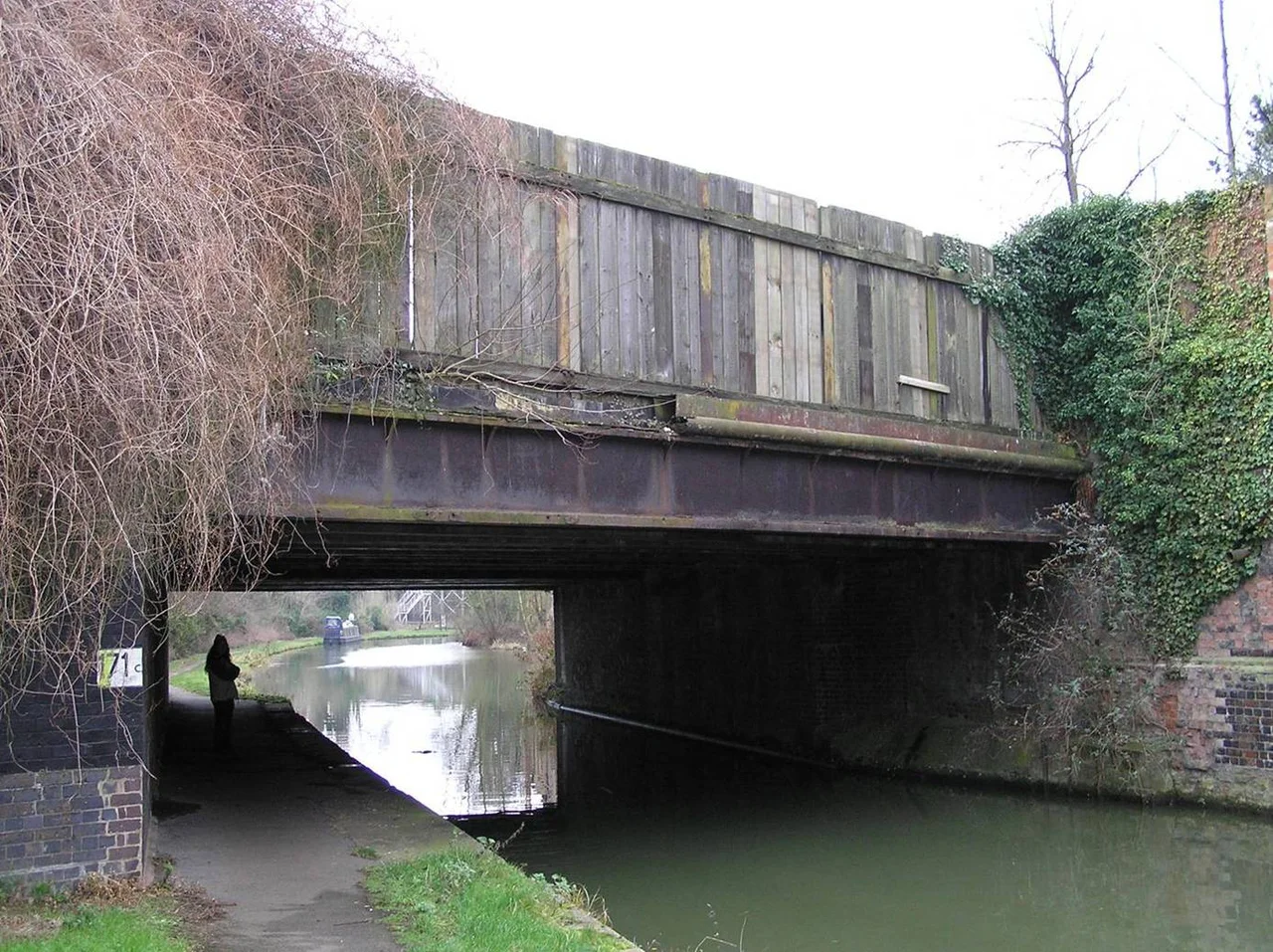
The story of the past thirty years is a story of survival. By 2013 the operator was a company called Railcare, which entered administration in July with immediate redundancy for many of the 225 workforce. In August the German engineering company Knorr-Bremse purchased the business. In November 2018 it was sold again, to the private equity group Mutares, and now operates as Gemini Rail Services UK Limited. The site itself is owned by St. Modwen Properties, a property developer. Much of the original 1838 footprint has been redeveloped. The Stratford Road frontage holds car showrooms, supermarkets, and a community centre. A Tesco occupies a part of the central area, its frontage carefully designed to echo the original Victorian buildings. A charity bookshop has taken over the old LNWR firestation. A canal-side housing development fills the eastern end. But at the western end, train maintenance, repair and refurbishment continues - the same business the works opened to do in 1838, on the same ground Robert Stephenson chose for it. The cast-iron bridge Stephenson built across the Grand Union Canal in 1834-5 is still there too, a Grade II* listed survivor of an age when most railway bridges of its kind have long since been removed.
From the Air
Wolverton Railway Works lies at 52.063°N, 0.816°W in north Buckinghamshire, in the northern districts of modern Milton Keynes. From altitude, look for the West Coast Main Line running roughly north-south and the long industrial footprint flanking it, with the Grand Union Canal running parallel just to the east. The Wolverton Viaduct crosses the Great Ouse valley a short distance to the north - one of the most impressive viaducts on the original London and Birmingham line. Cranfield Airport (EGTC) sits ten miles east; London Luton (EGGW) is twenty miles south. The Iron Trunk aqueduct carrying the Grand Union Canal over the Great Ouse is immediately to the north, a useful navigation reference.
Nearby Stories
- Coombe Abbey 3.5 km away
- Waddesdon Manor 3.7 km away
- Battle of Edgehill 5.8 km away
- Battle of Naseby 8.7 km away
- Hertfordshire 9.9 km away
- Connington South Rail Crash 11 km away
- St Neots 13 km away
- Cotswolds 35 km away