
Zaleski Mound Group
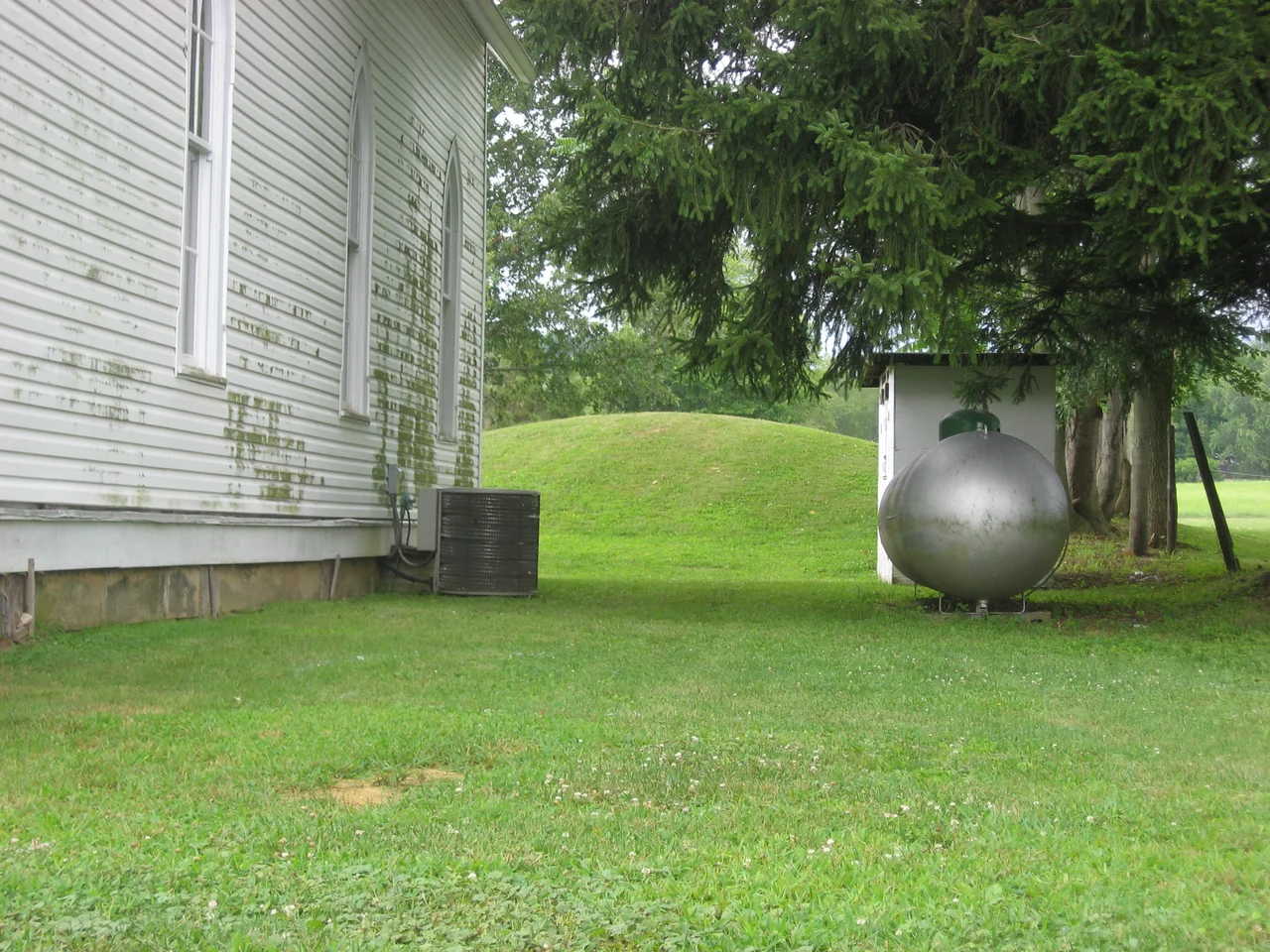
Drive into Zaleski State Forest from the south and you pass it almost without noticing - a tree-covered conical hill standing in a community park near the forest entrance. The Ranger Station Mound is the largest of three Adena burial mounds clustered around the small village of Zaleski, Ohio, and at 14.4 feet it has stood here for something close to two thousand years. The mound is older than every road, every house, and every railroad track in Vinton County. The community grew up around it. The forest grew back around the community. The mound just kept being itself.
Who the Adena Were
The Adena culture flourished in the Ohio Valley from roughly 800 BC to AD 200 - a long Woodland-period tradition of mound-building, settled village life, and early agriculture. Adena communities typically grew small crops alongside hunting and gathering, lived in circular houses with conical roofs, and buried their dead in earthen mounds that sometimes stood alone and sometimes clustered into groups like the one at Zaleski. The mounds were not raised in a single day. Layer by layer, generation by generation, each burial added more soil to the cone. The Adena left no written records, but their mounds offer indirect testimony: who they buried, how they treated the dead, what grave goods they considered worth sending into the next world.
The Ranger Station Mound
The Ranger Station Mound is the centerpiece of the Zaleski group and the largest of the three. It rises 14.4 feet above the ground, a smooth conical shape now covered in trees that have grown over it since the surrounding land became state forest. The mound sits in a small community park by the entrance to Zaleski State Forest, easily visible from the road and accessible on foot. Unlike many mounds in the region, the Ranger Station Mound has not been excavated extensively, and modern archaeological practice favors leaving it that way. The interior holds whatever the Adena left there - bones, grave goods, possibly evidence of multiple burials. The exterior is what visitors see, and what photographs cannot quite capture: a quiet artificial hill with roots running through it.
The Two Companions
Two smaller Adena mounds complete the group. Both stand within or near the village of Zaleski, though they are less easily visited. Their existence as a cluster is itself meaningful in Adena archaeology, suggesting either an extended occupation of the area or a recurring choice by neighboring groups to use the same valley for burial. The three mounds together were added to the National Register of Historic Places, joining the much-debated Ratcliffe Mound near Londonderry as one of the registered archaeological sites in Vinton County. The Zaleski Masonic Lodge No. 472, also nearby, is the only historic building in the village on the register.
A Forest Around the Past
What makes the Zaleski mounds especially well-preserved is the land use history of the surrounding area. After Depression-era reforestation through the Ross-Hocking Land Utilization Project absorbed the marginal hill farms around Zaleski into what became Zaleski State Forest, the immediate landscape stopped being plowed or developed. Mounds that might have been gradually disturbed by farming or housing instead became surrounded by forest. Hope Furnace, the 19th-century iron smelter nearby, has its own state-forest park. The mound stands above all of it. The Adena who chose this valley for burial could not have known that the land would stay forested into the 21st century, but the conditions they needed to leave a permanent mark accidentally aligned with the conditions later humans created to preserve their work.
From the Air
Located at 39.29 N, 82.39 W in the village of Zaleski, Vinton County, southeast Ohio, near the entrance to Zaleski State Forest. The largest mound rises about 14 feet above the surrounding ground. John Glenn Columbus International (KCMH) is about 75 miles north. Best viewed at 3,000-4,500 feet on clear days, with the forested Vinton County hills extending in every direction.
Nearby Stories
- Hopewell Culture National Historical Park 10 km away
- Buffington Island 13 km away
- Blennerhassett Island 25 km away
- Gavin Power Plant 30 km away
- Portsmouth 33 km away
- Columbus: The Test Market Where America Tries Things First 46 km away
- The Y-Bridge of Zanesville 57 km away
- Gnadenhutten Massacre 98 km away