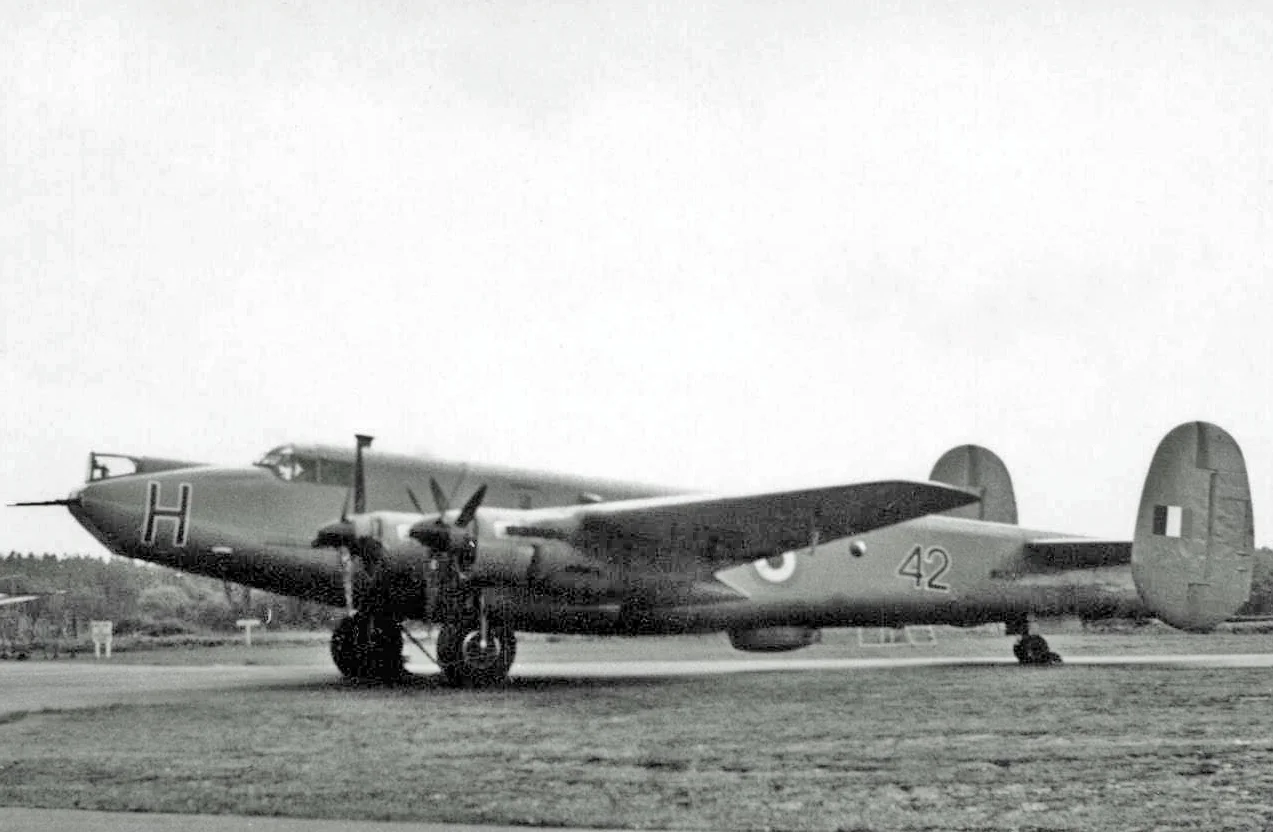

1955 RAF Shackleton aircraft disappearance
Two aircraft took off six minutes apart on the morning of 11 January 1955, and twenty-one airmen never came home. The aircraft were Avro Shackleton MR2s, four-engined maritime patrol bombers built around the wings of the Lancaster. The squadron was No. 42, based at RAF St Eval on the Cornish coast, and the patrol area was the stretch of Atlantic southwest of Ireland that aircrew called Fastnet, after the rock that marked its eastern boundary. The first Shackleton, WG531, lifted off at 10:14. The second, WL743, followed at 10:20. They were meant to be half an hour apart. They never reported a problem. By dawn the next morning, both crews were missing.
Six Minutes Instead of Thirty
Standard procedure called for a thirty-minute separation between Shackletons heading to the same patrol area. On the morning of 11 January, that procedure broke down. WG531's takeoff had been delayed; WL743's was brought forward. The result was a separation of six minutes between two aircraft heading at the same speed for the same patch of ocean. The crews knew it. Hourly reports through the day showed the navigators carefully adjusting their tracks to keep distance between them, and by eight in the evening, the two aircraft were some 85 miles apart. WG531 was carrying ten men. WL743 carried eleven. They were a mix of officers and aircrew - pilots, navigators, signallers, flight engineers, air gunners - some on their first overseas posting, others who had flown through the last years of the Second World War and stayed in the service afterward. They were patrolling the same wartime convoy lanes they had patrolled then, now in peacetime, hunting submarines that no longer surfaced for them to find.
The Silent Radio
At 20:58 a ground controller at St Eval tried to contact WL743 with a barometer reading the navigator had earlier requested. There was no reply. This did not, at first, alarm anyone. Loss of radio contact was common when Shackletons flew at their normal patrol heights of a few thousand feet above the sea - the curvature of the Earth, atmospheric conditions, and the long range to base all conspired against clear reception. The crew were expected to keep trying. When the time came for the two aircraft to be turning back toward Cornwall and neither responded, the operations room at St Eval began to take the silence seriously. The search and rescue centre at RAF Mount Batten was alerted. Another Shackleton was launched into the night to try to reach the missing aircraft on voice or morse. There was no answer.
Twenty Thousand Square Miles
By 03:50 on the morning of 12 January, search aircraft were over the patrol area. Over the next three days, at least eight Shackletons from St Eval, two Short Sunderland flying boats from RAF Pembroke Dock and RAF Aldergrove, and a flotilla of military and civilian ships combed an estimated 20,000 square miles of ocean. The searching aircraft logged 235 flying hours. The weather worsened. No wreckage was found, no oil slick, no life raft, no debris. After three days the search was called off. A board of inquiry convened on 14 January 1955. Its main hypothesis was that the two aircraft had collided in cloud or darkness, despite the navigators' efforts to keep them apart. The commanding officer of the squadron, interviewed years later, did not believe it. The 85-mile separation reported at 20:00 made collision, he said, 'the least probable' explanation.
An Engine in a Trawler's Net
For eleven years the only memorial to the missing crews was the silence of the Atlantic. Then, in July 1966, a trawler working between Skellig Michael and the Bull Rock lighthouse off County Kerry pulled up its nets and found inside the No. 4 engine from WL743. The position was about 75 miles north of where the official search had concentrated. The engine recovery raised more questions than it answered. If WL743 had gone down in collision with WG531 south of Fastnet, how had her No. 4 engine drifted - or been carried - to a position so far north? Currents in this part of the Atlantic can shift wreckage long distances, but the find encouraged some who had never accepted the collision verdict. No further substantial wreckage from either aircraft has ever been recovered. WG531 has left no trace at all.
Panel 93
Twenty-one names are inscribed on Panel 93 of the Armed Forces Memorial at the National Memorial Arboretum in Staffordshire. They include the pilots and crews who flew out of St Eval on a January Tuesday in 1955 and were lost somewhere over the Fastnet Atlantic. Some of them had families waiting in married quarters at St Eval. Some had children too young to remember them. Most have no known grave but the sea. The Royal Air Force Coastal Command, of which No. 42 Squadron was part, lost many crews to the Atlantic in both war and peace; the Shackleton, in its long career through the 1950s, 60s and 70s, suffered more accidents than any other British maritime aircraft of its era. One writer has called this double loss the worst of all the Shackleton disasters. The Atlantic that night kept what it took.
From the Air
Last reported position southwest of Fastnet Rock at approximately 51.68°N, 10.43°W. The wider search area extended across 20,000 sq mi of ocean off the south-west of Ireland. Modern flights over this region cruise at FL350 and above; the Shackletons typically patrolled at 1,000-3,000 ft to scan the sea surface. Skellig Michael, the medieval monastery rock now famous from cinema, lies about 30 nm northeast of the recovery position. Nearest airports: Kerry (EIKY) and Cork (EICK). Atlantic weather is the defining factor here - low cloud, rain squalls, and reduced visibility are routine, especially in winter, the same conditions that may have contributed to whatever happened on the night of 11 January 1955.
Nearby Stories
- French Expedition to Ireland (1796) 3.2 km away
- Portmagee 3.4 km away
- Battle of Callann 28 km away
- HMHS Llandovery Castle 33 km away
- RMS Lusitania 90 km away
- The Laki Eruption: The Volcano That Changed World History 1423 km away
- The Northern Lights: The Sky Show That Vikings Thought Was Bridge to the Gods 1524 km away
- Sao Miguel 1892 km away