
1993 Cherbourg Incident
It started over fish. Not over oil, not over territory, not over any of the things wars are supposed to be about - over fish, and a small ring of water around the Channel Islands where the European Union had drawn a six-mile line on a chart. On a cold March day in 1993, French trawlermen on the deck of La Calypso did the unthinkable: they kidnapped three British naval boarding officers, set course for Cherbourg, and dared the Royal Navy to follow. For a week, the English Channel felt less like a sleepy waterway and more like a place where something could actually break.
Six Miles of Trouble
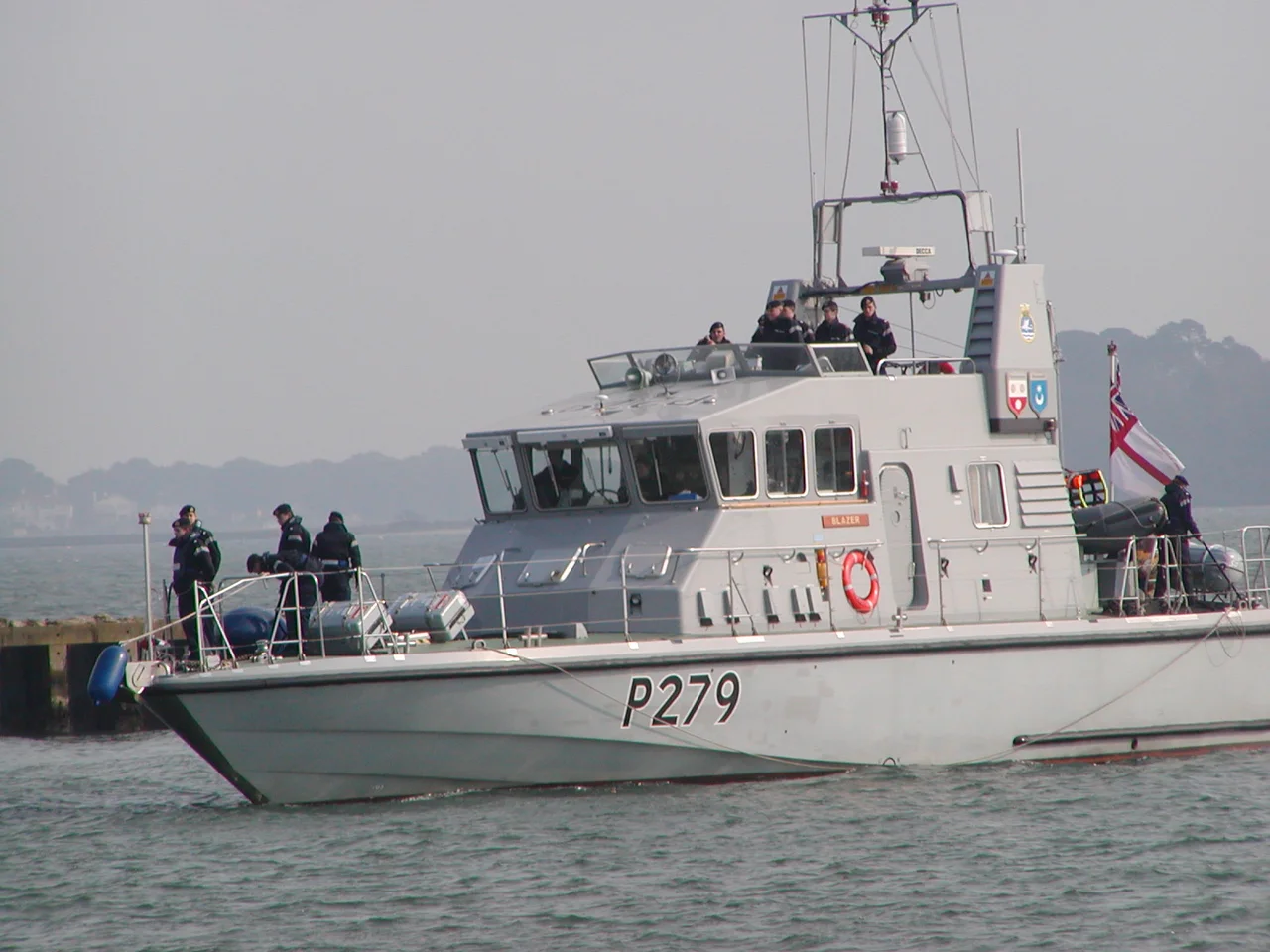
The line had been drawn the previous September, when the European Union recognised a six-mile zone of exclusive British fishing rights around the Channel Islands. Until then, the Norman trawlers running out of Cherbourg had worked those waters without restriction, dragging for scallops, lobster, sole and turbot in grounds their families had fished for generations. Now they were poachers in their own neighbourhood. Tensions simmered through the winter. By March 1993, the Royal Navy's fishery protection squadron was actively boarding French boats inside the line. The French government was furious. The fishermen were beyond furious. On 28 March, the patrol ship HMS Blazer paid a courtesy visit to Cherbourg Harbour - which, in retrospect, was perhaps not the diplomatic gesture the Admiralty intended.
The Calypso Affair
Out at sea that same day, the British minesweeper HMS Brocklesby stopped a Cherbourg trawler called La Calypso and sent three fishery protection servicemen aboard. The Calypso's skipper, Michel Mesnage, refused to play along. With three British uniformed men still standing on his deck, he gunned the engines and ran for Cherbourg. The men were, for a few hours, hostages. A French port vessel intercepted the Calypso once she reached harbour and returned the servicemen to Royal Navy control, but the diplomatic damage was done. As word spread along the quay, eight French trawlers surrounded HMS Blazer where she lay moored in Cherbourg, blocking her from leaving. Fishermen burned the patrol boat's ensign on the dockside. A British government minister warned that the Royal Navy would get tough.
Standoff at Saint Peter Port
On 29 March, a flotilla of 36 French trawlers steamed across the channel to Saint Peter Port in Guernsey - not to fish, but to make a point. By the time the boats reached the harbour, lawyers and diplomats had been hauled out of bed. A preliminary deal was sketched out on the quayside. Mesnage was arrested but quickly released on bail on 3 April. On 5 April, an informal pact was signed between British and Cherbourg fishermen: boats from England and the Channel Islands would be allowed to unload their catch in French ports again. It was the first sign that the fishermen themselves, not the governments, wanted the thing settled. They knew each other. They drank in the same Channel ports. The lines on the diplomats' maps mattered less to them than the price of scallops at the Cherbourg market.
Aftershocks
The trouble was not quite finished. On 30 June, the French Navy seized the Guernsey-based trawler Sara P at sea and confiscated her lobster pots, a tit-for-tat that proved the underlying argument was still raw. A definitive agreement was not reached until 16 August 1994, when the two governments exchanged formal notes in Paris covering coastal fishing around the Channel Islands, the Cotentin Peninsula and Brittany. The 1993 Cherbourg incident produced no deaths, no serious injuries, no shots fired in anger. Wikipedia files it among 'battles and conflicts without fatalities'. But it produced something else: a reminder that the long peace between Britain and France was less complete than the textbooks suggested, and that European integration could not entirely overrule a Norman fisherman's idea of where his grandfather had cast a net.
Echoes
The dispute would return. In 2021, after Brexit removed the United Kingdom from the EU fisheries framework, French and Jersey fishermen squared off in another stand-off in Channel Islands waters, with French boats massed off Saint Helier and a Royal Navy patrol vessel sent to watch them. The 1993 playbook was dusted off almost line for line. The Channel is narrow. The fishing grounds are old. And on both sides of the water, the people who pull living things from the sea still believe, somewhere deep, that the lines drawn by Brussels and Whitehall are something less than permanent. Cherbourg, with its huge harbour and its long memory, has always been a port where that argument finds its way ashore.
From the Air
The incident played out in the waters between Cherbourg (49.65°N, 1.62°W) and the Channel Islands, roughly 50 km of open sea to the north. From cruise altitude above the Cotentin you can see Guernsey and Jersey on a clear day. Cherbourg Harbour, with its vast outer breakwater visible from 10,000+ feet, is the natural landmark. Nearest airports: Cherbourg–Maupertus (LFRC), Guernsey (EGJB), Jersey (EGJJ). Expect changeable Channel weather, marine layer in mornings, and substantial commercial maritime traffic transiting east-west through the lanes.
Nearby Stories
- Abbey of Saint-Sauveur-le-Vicomte 4.3 km away
- Alderney Society Museum 9.3 km away
- Channel Islands 18 km away
- Operation Donnerkeil 31 km away
- German Submarine U-672 31 km away
- D-Day: The Longest Day 59 km away
- Fishbourne Roman Palace 103 km away
- Basilica of Sainte-Therese, Lisieux 110 km away