
Operation Donnerkeil
Three German capital ships - the battleships Scharnhorst and Gneisenau, the heavy cruiser Prinz Eugen - had been trapped at Brest on the Atlantic coast of France since 1941, hammered relentlessly from the air by RAF Bomber Command. Hitler decided they had to come home. The Kriegsmarine called it Operation Cerberus. The Royal Navy and the press would call it the Channel Dash. The Luftwaffe's part - the constant fighter umbrella over the ships as they ran the English Channel in broad daylight, past the cliffs of Dover, past every RAF base in the south - was named Unternehmen Donnerkeil. Operation Thunderbolt. On 11 February 1942 the ships slipped their moorings. By the evening of 13 February they were home.
Trapped at Brest
The trap began with success. Scharnhorst and Gneisenau had spent eight weeks in early 1941 hunting Allied convoys in the Atlantic as part of Operation Berlin, sinking or capturing 22 merchant ships before docking at Brest on 22 March 1941. The heavy cruiser Prinz Eugen joined them on 1 June, having survived the failed sortie that ended with the Bismarck on the bottom of the Atlantic. Brest was close to British air power, and the RAF spent the next ten months hammering the port. From 29 March 1941 onwards, Bomber Command flew 2,928 sorties against the ships. A daylight raid on 24 July lost twelve percent of its attackers. Night raids killed 18 RAF aircrew. The ships took damage and repeatedly required repair. Hitler, shaken by the loss of the Bismarck, ordered them moved to Germany - and from there to Norway, where they would serve as a fleet in being against Allied convoys to the Soviet Union.
The Patient Has Cancer
At the Wolf's Lair on 12 January 1942, Hitler met his senior commanders to decide the route. The longer Atlantic passage around the British Isles offered open water but more chances for interception. The shorter Channel route was suicidally direct - past the entire south coast of England in roughly 24 hours, much of it in daylight. The Kriegsmarine, after long debate, chose the Channel. Hitler described the operation as a medical metaphor: the patient has cancer, and the only hope is drastic surgery. The Luftwaffe was ordered to provide air cover and diversionary raids. Chief of the Luftwaffe General Staff Hans Jeschonnek promised about 250 aircraft. Adolf Galland, General der Jagdflieger, was given executive authority for the air operation - Donnerkeil. Galland and Jeschonnek signed secrecy pledges before leaving Hitler's headquarters.
Galland's Umbrella
Galland's plan was meticulous to a degree the Luftwaffe rarely managed. The Channel route was divided into three sectors, each with its own fighter controller. Former Geschwaderkommodore Max Ibel was put aboard Scharnhorst as Jagdfliegerfuhrer Schiff - Fighter Controller Ship - to direct the umbrella from the deck of the battleship itself. Galland demanded at least sixteen fighters over the ships at all times, split between high altitude and low altitude to defeat coastal radar, flying figures-of-eight along the fleet under radio silence. Each sortie was timed to give thirty minutes over the ships before the relief arrived. Ground crews had to refuel and rearm in thirty minutes or less. Pilots were told to ignore RAF aircraft leaving the area but engage anything attacking the ships - with ramming if necessary. Eight dummy operations involving 450 sorties were flown between 22 January and 10 February to rehearse the umbrella. The Funkhorchdienst developed a subtle jamming technique that degraded British coastal radar without alerting the operators that they were being jammed.
The Day Everything Went Right for the Germans
The German fleet slipped Brest in darkness on the night of 11 February. Three Hudson patrol aircraft from RAF Coastal Command should have detected the breakout. The first, Stopper, had its ASV radar disabled by a Bf 110 night-fighter from NJG 1 and returned to base; its replacement arrived at 22:38, after the ships had already sailed. The second Hudson, Line SE, had its radar fail at 20:55 and returned to base without replacement. The third, Habo, was recalled an hour early because mist threatened the airfield at Thorney Island. By the time a radar technician at Fairlight in East Sussex detected the German fleet at 10:15 on 12 February - twenty-seven echoes south of Cap Gris Nez - the ships were already deep into the Strait of Dover. Two Spitfire pilots scrambled from RAF Kenley confirmed the sighting at 10:42 but maintained radio silence and only reported on landing at 11:09. The RAF had been outmanoeuvred for almost a full day.
Esmonde's Six Swordfish
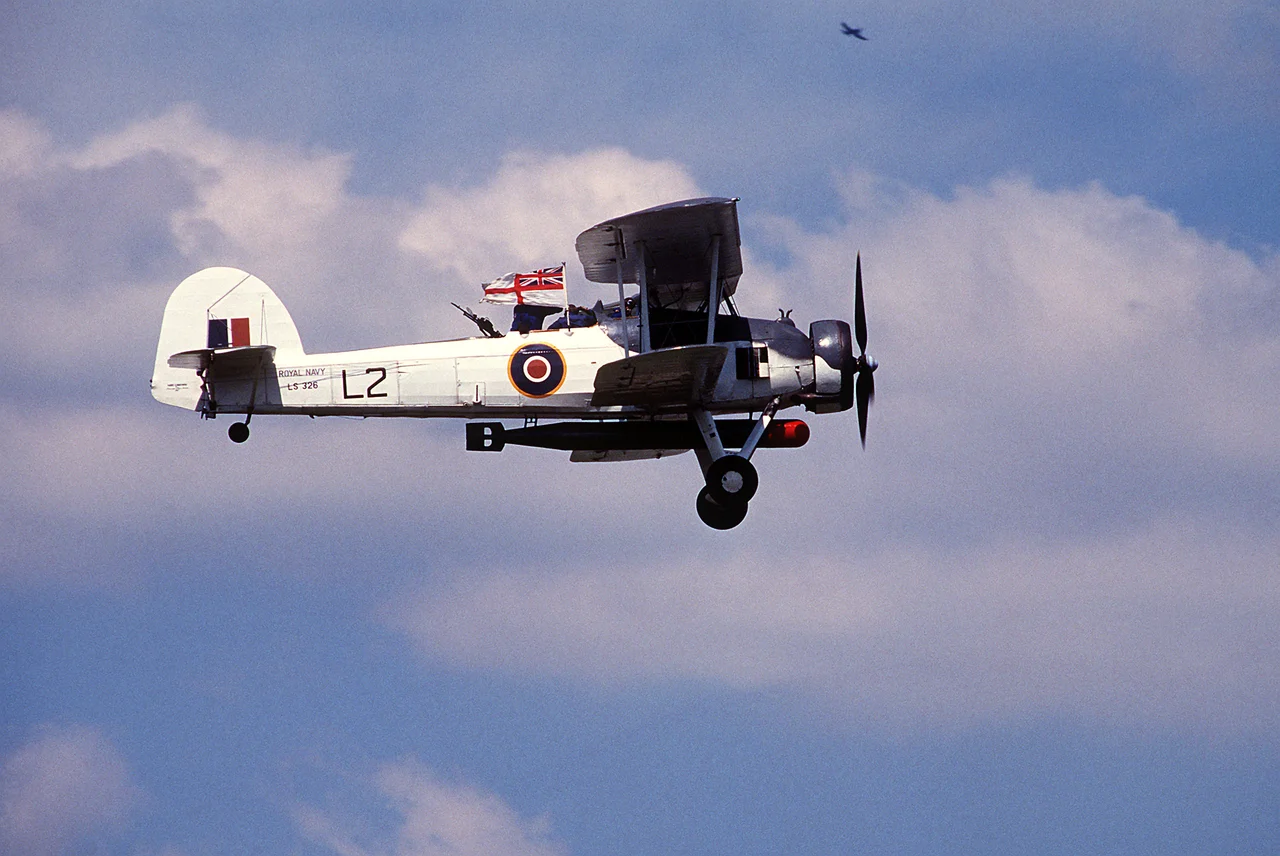
At 12:25 Lieutenant Commander Eugene Esmonde of No. 825 Squadron Fleet Air Arm took off from RAF Manston with six Fairey Swordfish biplane torpedo bombers to attack the German fleet. The promised escort - Spitfires from 411 and 64 Squadrons - arrived fifteen minutes late and missed the rendezvous. Only 72 Squadron under Squadron Leader Brian Kingcome reached the Swordfish in time. The Fw 190s of JG 26 came down on Esmonde's formation at fifty to a hundred feet above the Channel; the German pilots had to lower their undercarriages to keep from overshooting the slow biplanes. All six Swordfish were shot down. Esmonde was killed; the Victoria Cross was awarded posthumously. Only five of the original eighteen Swordfish aircrew survived. RAF Bomber Command, having been stood down on the assumption the Germans would never run the Channel in daylight, dispatched 242 aircraft between 13:55 and 17:05. Of these, only 39 are confirmed to have actually attacked the ships. None scored a hit.
Mines, Aftermath, Reckoning
The German operation achieved its tactical objective: the ships reached home waters on the evening of 12 February, two days after sailing from Brest. The Luftwaffe had flown 300 fighter and 40 bomber sorties; it lost 17 fighters and 5 Do 217 bombers, with 23 men killed. The RAF lost 41 aircraft. But the ships did not escape unharmed. Scharnhorst struck two mines, one at 14:31 and another at 21:34 GMT, the first stopping her dead in the water with engine damage. Gneisenau struck a mine at 18:55. The mines may have been laid by Hampden bombers; if so, they inflicted more damage than the entire combined air assault. Once in port, the ships were not safe either. On the night of 26/27 February, Bomber Command put 61 aircraft over Kiel; a bomb penetrated Gneisenau's foredeck, ignited fuel fumes from her open tanks, and engulfed her from bow to A turret. She steamed to Gdynia in Poland on 4 April and was decommissioned. She never went to sea again. Scharnhorst was repaired and eventually reached Norway in March 1943; she survived another eight months before HMS Duke of York and her escorts sank her at the Battle of North Cape on 26 December 1943. Operation Donnerkeil had been a tactical triumph. Strategically, the Kriegsmarine had brought its big ships home only to lose all of them.
From the Air
Operation Donnerkeil covered the English Channel from Brest, France, to the German Bight, with the ships' most dangerous passage running through the Dover Strait at roughly 51 N, 1 E. The article's coordinates of 50 N, 2 W place the focus over the central Channel south of Portland and Weymouth - the waters where the fleet passed during the afternoon of 12 February 1942 and where Esmonde's Swordfish were destroyed. From altitude, the relevant geography is the narrow throat of the Strait of Dover, the broader central Channel between Portsmouth and Cherbourg, and the western approaches off Brest. Nearest controlled fields in the central Channel: Bournemouth (EGHH), Exeter (EGTE), and Cherbourg-Maupertus (LFRC) to the south. Recommended cruise 5,000-8,000 ft for a view across the full Channel.
Nearby Stories
- German Submarine U-672 5.3 km away
- Battle of Portland 14 km away
- Alderney Lifeboat Station 19 km away
- HMS Warrior (1917) 22 km away
- Vale Castle 29 km away
- Carisbrooke Castle 47 km away
- Isle of Wight 77 km away
- D-Day: The Longest Day 99 km away