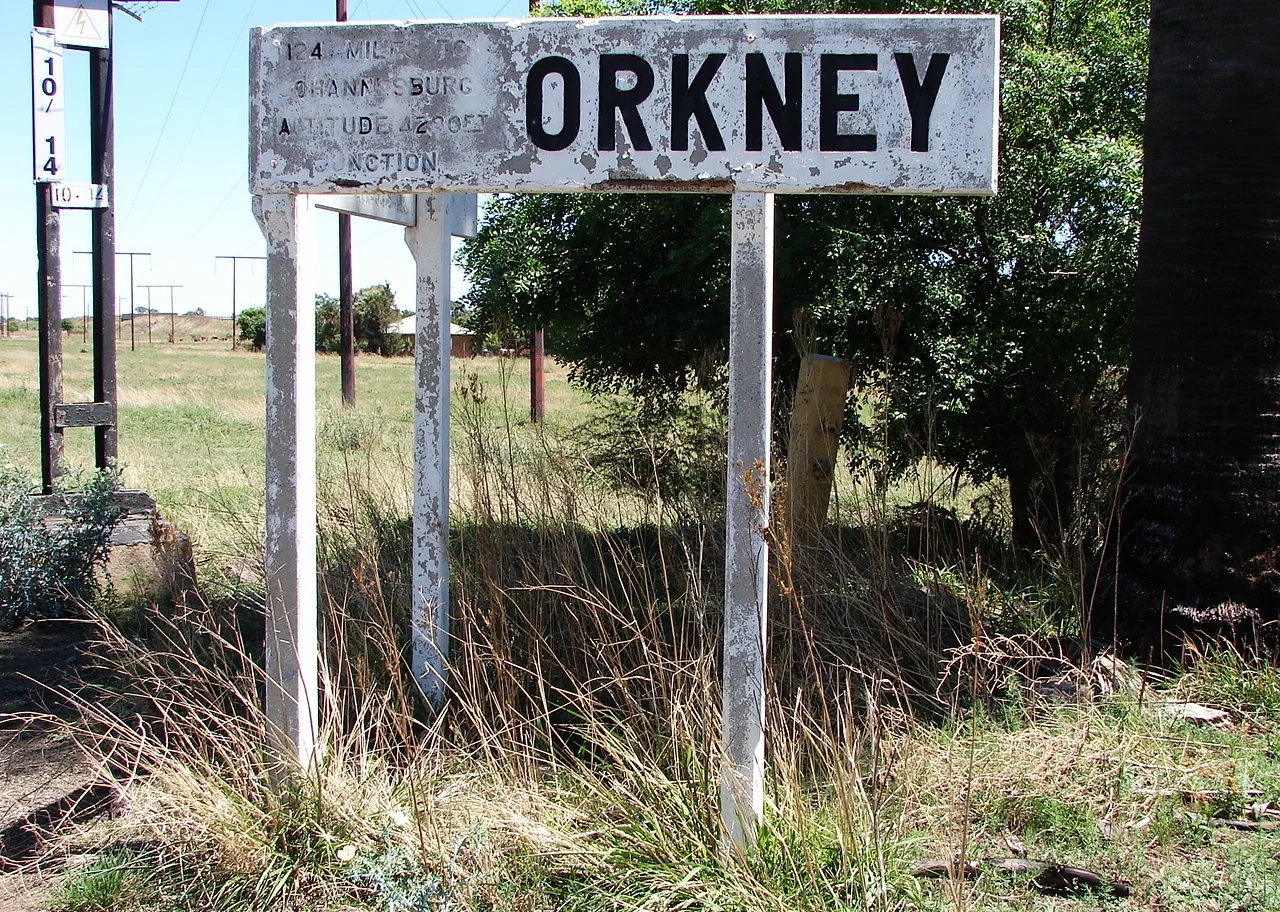

2014 Orkney Earthquake
At 12:22 on a winter afternoon in August 2014, the ground beneath the North West province of South Africa lurched, and the shaking spread for hundreds of kilometers. Office towers were evacuated in Pretoria. People felt it in Durban, on the distant coast, where the beach sand amplified the tremor. It reached across borders into Botswana, Lesotho, Mozambique. At magnitude 5.5, it was the most powerful earthquake South Africa had experienced since 1969 - and yet, unusually, no fault deep in the earth had let go on its own. The most likely culprit lay just below the surface, in the labyrinth of tunnels that generations of miners had carved out of the rock in their long search for gold.
The Ground That Mining Made
The epicenter sat near Orkney, a gold-mining town in the Klerksdorp district, in a belt of the country where the earth trembles more often than most people realize. This is one of the most intensively mined regions on Earth, and the connection is not coincidental. According to Professor Andrzej Kijko of the University of Pretoria's Natural Hazard Centre, more than 90 percent of South Africa's earthquakes are caused by mining, concentrated around the gold fields of Klerksdorp, Carletonville, and Welkom. When you remove vast quantities of rock from deep underground, the stresses in what remains have to go somewhere. The cavities can activate natural faults, and the ground settles violently. Scientists who studied the 2014 event concluded it was mining-related - making it, by some accounts, the largest mining-induced earthquake in the country's history.
Warnings in the Rock
The signs had been there. In March 2005, a seismic event at a mine in nearby Stilfontein killed two miners underground and forced the operation to close. The investigation that followed reached a sober conclusion: mining had caused it, and further seismic events would keep happening as long as the mining continued. The report called for better seismic monitoring, and some of its recommendations had been put in place before 2014 arrived. There were nearer warnings too. In June 2014, just weeks before the main shock, the area recorded a 4.9-magnitude tremor that one earth scientist, Dr. Chris Hartnady, believed may have been a foreshock - the earth clearing its throat before it spoke in full.
One Life, Many Losses
The earthquake claimed a single life, and his name was Leshomo Makhaola. He was thirty-one, a man from Lesotho, and he died when the wall of an old mining house collapsed on him in Kanana. It is worth pausing on that one death amid the dramatic talk of magnitudes and evacuated skyscrapers, because the human weight of the quake fell hardest not on the tall buildings of the cities but on the modest homes of mining communities. In the township of Khuma, near Stilfontein, more than 600 houses were damaged. Clinics cracked and closed; schools were left unusable, sending children home. Underground, 34 miners were hurt - cuts, bruises, a broken leg - though emergency teams reached them and a feared entrapment turned out, with relief, to be false.
After the Shaking
When the worst had passed, the aftershocks kept coming - more than a thousand of them within a month, including one that struck Khuma the same afternoon as residents picked through the wreckage of their homes. The Council for Geoscience warned that they might continue for months. The provincial government opened a disaster relief fund, and families whose houses were no longer safe gathered in a community center while they waited for repairs. There was a colder aftermath too, in the paperwork: of seventeen insurance companies surveyed, five indicated they might reject claims if the quake were proven to be mining-related - a reminder that when human activity shakes the ground, the question of who is responsible can be as fraught as the disaster itself. For the people of the gold belt, the earthquake was less a freak of nature than a debt the deep mines had finally come to collect.
From the Air
The 2014 Orkney earthquake was centered at 26.97°S, 26.71°E, near the gold-mining town of Orkney in South Africa's North West province, in the Klerksdorp district southwest of Johannesburg. The USGS estimated a shallow focal depth of about 5 km. From the air the region reads as the heart of the Witwatersrand gold belt - flat highveld grassland scarred by mine headframes, tailings dams, and the towns of Orkney, Klerksdorp, and Stilfontein along the Vaal River system. Nearest major airport is OR Tambo International (FAOR) in Johannesburg, roughly 170 km to the northeast; Klerksdorp has a smaller regional airfield. The highveld at around 1,300 m offers clear, dry winter skies with long visibility over a tan-and-gold mining landscape.
Nearby Stories
- Battle of Bothaville 17 km away
- Vredefort Impact Structure 43 km away
- TauTona Mine 47 km away
- Battle of Rooiwal 75 km away
- Mponeng Gold Mine 94 km away
- Siege of Mafeking 104 km away
- Natalia Republic 195 km away
- Golden Gate Highlands National Park 208 km away