
9th Military Region (Brazil)
The barracks of the 1st Horse Artillery Regiment stretches more than 126 meters along a Campo Grande avenue - long enough that you can walk its frontage and still not finish the block. It was built in the reorganization that followed the Paraguayan War, when Brazil concluded that defending the interior required more than forts on distant rivers. The barracks still stands, and so does the institution it belongs to: the 9th Military Region, heir to an unbroken chain of frontier commands that traces back to 1821. In Campo Grande, uniforms have been part of the city's fabric for more than a century - not as occupation, but as foundation. The city grew up around the military, and the military shaped the city's politics, its economy, and its self-image.
The Frontier Colony
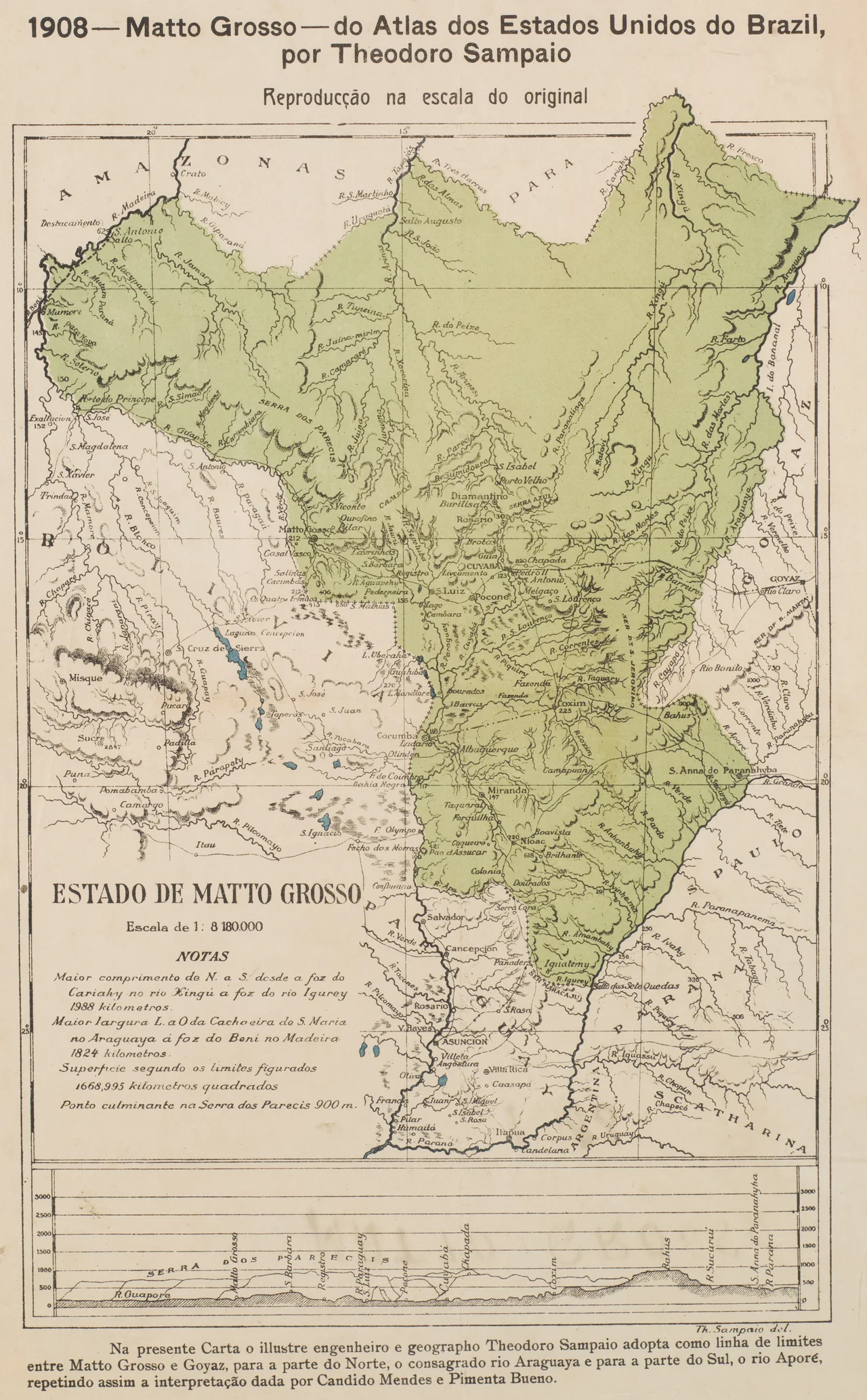
When Portugal created the Captaincy of Mato Grosso in 1748, it was not an administrative convenience. It was a geopolitical wager. The Overseas Council declared the colony must be made "so powerful so that it imposes respect in its neighbors and serves as a bulwark for the entire interior of Brazil." The first governor, Antonio Rolim de Moura, arrived in 1751 with an infantry regiment, artillery, and ammunition. His successor, Luis de Albuquerque de Melo Pereira e Caceres, whose name now graces the 9th Military Region as the "Mello e Caceres Region," fortified the Guapore River border with Spain. In 1775, Fort Coimbra rose at a narrow point on the Paraguay River, halting the Spanish advance upstream from Asuncion. The Miranda Presidio went up in 1797 to block the Apa River. These forts and outposts were not just defensive - they became the seed settlements from which the region's towns eventually grew.
Invasion and Recovery
By the mid-nineteenth century, Mato Grosso had declined into one of the weakest provinces in the Empire of Brazil. In 1863 its entire defense comprised 1,415 regular soldiers, organized into a single artillery battalion and a handful of smaller units. When Paraguay invaded in 1864, launching what would become the Paraguayan War, the province was catastrophically underprepared. The provincial capital of Cuiaba was never taken, but the war bled the region. A Brazilian attempt to invade Paraguayan territory collapsed into the disastrous Retreat from Laguna. Corumba was finally retaken in 1868 only because Paraguayan forces withdrew to confront threats on other fronts. After the war, Mato Grosso became the third-largest military contingent in the Empire - but in the early Republic that followed, assignment there became a form of punishment. Dissenters and "incorrigibles" were transferred in. Military personnel in Mato Grosso were almost always outsiders.
The Railway Brings Campo Grande
In 1914, the Northwest Brazil Railway reached the southern part of Mato Grosso. This changed everything. The logistics of frontier defense had been nightmarish - mule trains, river boats, weeks of travel from Rio de Janeiro. The railway offered something like modernity. In 1919, the military command moved its headquarters to Campo Grande, a logistical hub with a mild climate and rail connections that could carry troops quickly to any threatened point on the border. The city was not on the border itself - and that was the point. Under the army's new doctrine, the frontier would be screened by light forces, and the main body of troops would be concentrated inland, ready to move by rail toward wherever an invader penetrated. Campo Grande became the military capital of the state. In 1939, an observer noted that "uniformed personnel stand out among the civilian population" and "a respectable sum of money is injected monthly into the local economy."
Coups, Conspiracies, and the Present
The 1920s saw Mato Grosso become a focal point of tenentism - young officers plotting against the conservative Old Republic. In 1932, the region became an important theater of the Constitutionalist Revolution. Under President Joao Goulart in the early 1960s, dissident officers were transferred to Mato Grosso as a form of exile, but because communication from the interior was so poor, they drifted out of sync with other opposition groups and eventually formed their own local majority. When the 1964 coup came, General Barbosa Lima, commander of the Military Region, joined it, and the region oversaw arrests of political opponents. Today, the borders remain sparsely populated but better connected, and the 9th Military Region's role has shifted. The region sits on one of Brazil's primary drug trafficking corridors. Much of the army's daily work has become subsidiary policing - a role for which it was never really designed, undertaken because other state agencies cannot fill the gap.
From the Air
Located at 20.46 S, 54.64 W in Campo Grande, capital of Mato Grosso do Sul. Nearest airport is Campo Grande International (SBCG), with the city visible from 5,000-10,000 feet on approach. The flat cerrado landscape extends in all directions - Campo Grande sits at about 532 meters elevation on the Maracaju plateau. The Paraguay River lies 300 km to the west, marking the Paraguayan border. Clear visibility is typical outside the November-March rainy season.
Nearby Stories
- Mato Grosso do Sul 4.8 km away
- Great Red Spot 144 km away
- Buraco das Araras Private Natural Heritage Reserve 151 km away
- Serra da Bodoquena National Park 169 km away
- Nova Andradina 185 km away
- Cisalpina Private Natural Heritage Reserve 245 km away
- New Coimbra Fort 273 km away
- Paraná River 328 km away