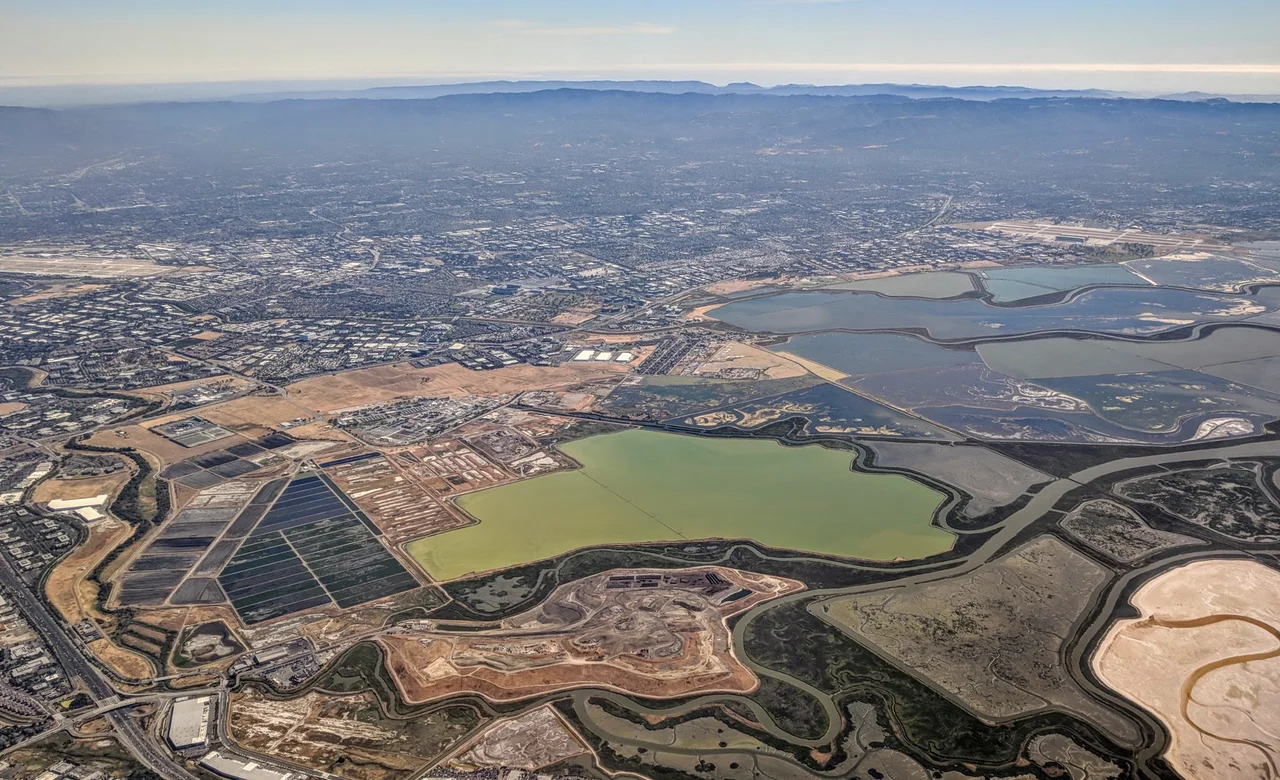

Alviso, San Jose
Alviso feels like a place that time forgot, wedged between the salt ponds of southern San Francisco Bay and the sprawling tech campuses of north San Jose. It is San Jose's only waterfront district, named after the nineteenth-century Californio ranchero Ignacio Alviso, who owned the area as part of his Rancho Rincon de los Esteros. Founded as an independent town in 1852, Alviso was once the primary port for the South Bay, handling goods that moved between San Jose and San Francisco by water. That was before the railroad, before the freeways, before the silicon.
The South Bay's Lost Port
In the 1850s, Alviso was a critical link in the Bay Area's transportation network. Before the San Francisco and San Jose Railroad was completed in 1864, goods and passengers moved between the two cities by steamboat, with Alviso serving as the southern terminus. The town's port handled agricultural products from the Santa Clara Valley destined for San Francisco markets. The arrival of the railroad rendered the port largely obsolete, and Alviso's role in regional commerce declined. The town that had been a hub became a backwater, too small to compete and too waterlogged to easily develop.
Living with Water
Flooding has been Alviso's defining challenge for more than a century. The town sits at the lowest point of the Santa Clara Valley, where the Guadalupe River, Coyote Creek, and numerous smaller waterways meet the Bay. Tidal surges and heavy rains regularly inundate streets and properties. The Army Corps of Engineers and local flood control agencies have built levees and pump stations, but the fundamental geography remains: Alviso is at the bottom of a watershed that drains hundreds of square miles of increasingly paved-over valley. Climate change and sea level rise have added new urgency to the flooding problem.
Between Two Worlds
Today Alviso exists in a peculiar limbo. Its residential streets, with modest homes and a small-town character, sit just minutes from the gleaming headquarters of Cisco Systems, Samsung, and other tech giants that occupy north San Jose. The Don Edwards San Francisco Bay National Wildlife Refuge borders the district, and the Alviso Marina County Park offers access to the Bay's marshlands and salt ponds. Silicon Valley tech workers kayak past the old port site on weekends. The district retains the feeling of a place that was absorbed by San Jose's growth without being assimilated by it, a waterfront village hiding in plain sight at the edge of the world's technology capital.
From the Air
Located at 37.43°N, 121.97°W at the southern tip of San Francisco Bay. Norman Y. Mineta San Jose International Airport (KSJC) is approximately 4 miles south. Moffett Federal Airfield (KNUQ) is about 4 miles west. Alviso is identifiable from altitude by its small-town street grid at the edge of the salt ponds and marshland, contrasting sharply with adjacent tech campus development.
Nearby Stories
- Pan Am Flight 843 3.2 km away
- San Gregorio, California 4.8 km away
- The Mystery Spot: Where Gravity Takes a Vacation 18 km away
- Altamont Free Concert 26 km away
- From Aluminum to Ammunition to Aviation Fuel 35 km away
- Kesterson National Wildlife Refuge 37 km away
- Panoche Hills: California's Last Desert Refuge 70 km away
- ʻAkaka Falls State Park 3707 km away