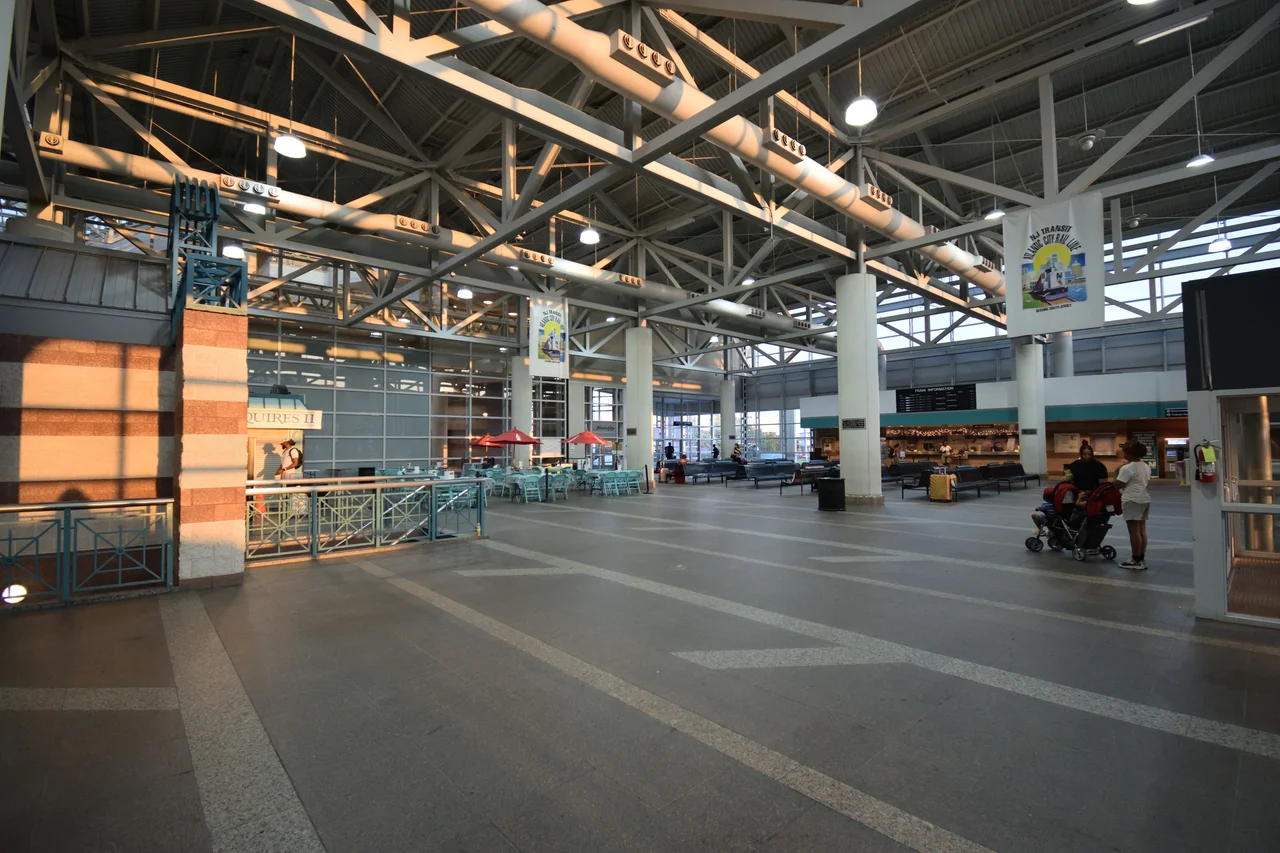

Atlantic City Rail Terminal
When the Atlantic City Rail Terminal opened on May 22, 1989, it was the eastern end of a deliberate political project. The Pennsylvania-Reading Seashore Lines had stopped running trains to Atlantic City in 1981 - the rails had been lifted, the old Atlantic City Union Station had been converted to a bus depot, and the entire rail link between Philadelphia and the casinos had been allowed to die. The 1989 reopening was Amtrak's attempt to capture the Gambler's Express market - the busloads of Philadelphia gamblers being shuttled to the new casinos every weekend. The new line ran direct from Philadelphia's 30th Street Station to the boardwalk in ninety minutes. The trains called it the Atlantic City Express. Everyone else called it the Gambler's Express. For six years it was Amtrak's most reliably profitable short-distance service.
Five Tracks Under the Convention Center
The Atlantic City Rail Terminal sits directly beneath the Atlantic City Convention Center, which opened in 1997 and was deliberately built atop the rail tracks to integrate the two facilities. The terminal has five tracks served by three platforms - generous infrastructure for what is now a modest service. Passengers arrive on the tracks at convention-center basement level and emerge up an escalator into the convention floor. The architecture firm TAT/SSVK designed the terminal with the convention center in mind, anticipating that trains would deliver convention attendees directly into the building. The architectural choice was forward-looking - rail-connected convention facilities are rare in American cities - but the connection has worked as intended only intermittently. Most convention attendees still drive.
The Gambler's Express
Amtrak's Atlantic City Express ran from 1989 to 1995 as a federal effort to capture the booming East Coast casino travel market. The service was sometimes called the Gambler's Express because of who was actually riding it: Philadelphians coming down for the day or weekend to play the new casinos. The marketing was direct. Casino dealers and ticket agents both pushed the train as the easiest way to bypass Atlantic City Expressway traffic. The trains ran multiple times daily. The economics worked because Atlantic City was, in those years, almost the only place on the East Coast where someone could legally gamble. Foxwoods would open in Connecticut in 1992; Mohegan Sun in 1996. After those competitors opened, the Atlantic City monopoly weakened. Amtrak ended its service in 1995. NJ Transit took over the Atlantic City Line and has operated it ever since.
ACES from Manhattan
From 2009 to 2012, a separate service called the Atlantic City Express Service - ACES, an acronym that took some explaining - ran direct from New York Penn Station to Atlantic City. It was operated jointly by NJ Transit, with Caesars, Harrah's, and Borgata subsidizing the operation to bring New York gamblers south. The trains ran Friday afternoons, Saturday afternoons, and Sunday afternoons. The service required passengers to change power systems at Newark, an operational complication that limited its appeal. ACES ran for three years before the casino partners pulled their subsidies in March 2012. The service was killed. The route was never restored. Direct rail service from Manhattan to Atlantic City has not existed since.
The Old Union Station
Before 1989, Atlantic City's rail service ran out of the Pennsylvania-Reading Seashore Lines station - originally Atlantic City Union Station, built in 1880 and rebuilt several times - which sat slightly inland from the present terminal location. After PRSL trains stopped running in 1981, the Union Station building was converted to the Atlantic City Municipal Bus Terminal. It was demolished in 1997, the same year the Convention Center and the modern rail terminal opened across the property. A photographic and historical record of the old building survives at the Atlantic City Historical Museum. The current bus terminal sits two blocks south of the rail terminal. The two facilities together provide the only meaningful public transit access to the city, and the current rail terminal handles the load.
What Runs Today
NJ Transit's Atlantic City Line runs roughly hourly during the day, less frequently in the evening and on weekends. The line stops at Absecon, Egg Harbor City, Hammonton, Atco, Lindenwold, Cherry Hill, and finally Philadelphia's 30th Street Station. The ride is ninety minutes. Lindenwold is the main interchange point, connecting to PATCO's high-speed line to Center City Philadelphia. The Atlantic City Jitney casino shuttle picks up at the rail terminal on the convention center side. The bus terminal two blocks south runs the 319 route to New York City and all Atlantic County local routes. Together the trains and buses produce a meaningful flow of car-free travelers, but the casino-driven tourism economy still arrives mostly by car. The terminal handles what comes.
From the Air
The Atlantic City Rail Terminal sits beneath the Atlantic City Convention Center at approximately 39.36 degrees north, 74.44 degrees west, on the bay side of Absecon Island. From cruising altitude, look for the convention center complex - a large rectangular building northwest of the casino district. Atlantic City International (KACY) lies about 7 nautical miles northwest. The rail line runs west-northwest from the terminal across the salt marshes, paralleling the Black Horse Pike and the Atlantic City Expressway toward Philadelphia.
Nearby Stories
- Cape May 8.1 km away
- A. J. Meerwald 14 km away
- The Pine Barrens: Home of America's Oldest Monster 25 km away
- Hereford Inlet Lighthouse 38 km away
- Constitutional Convention (United States) 50 km away
- PS General Slocum 143 km away
- Wardenclyffe Tower 201 km away
- USS Atik 493 km away