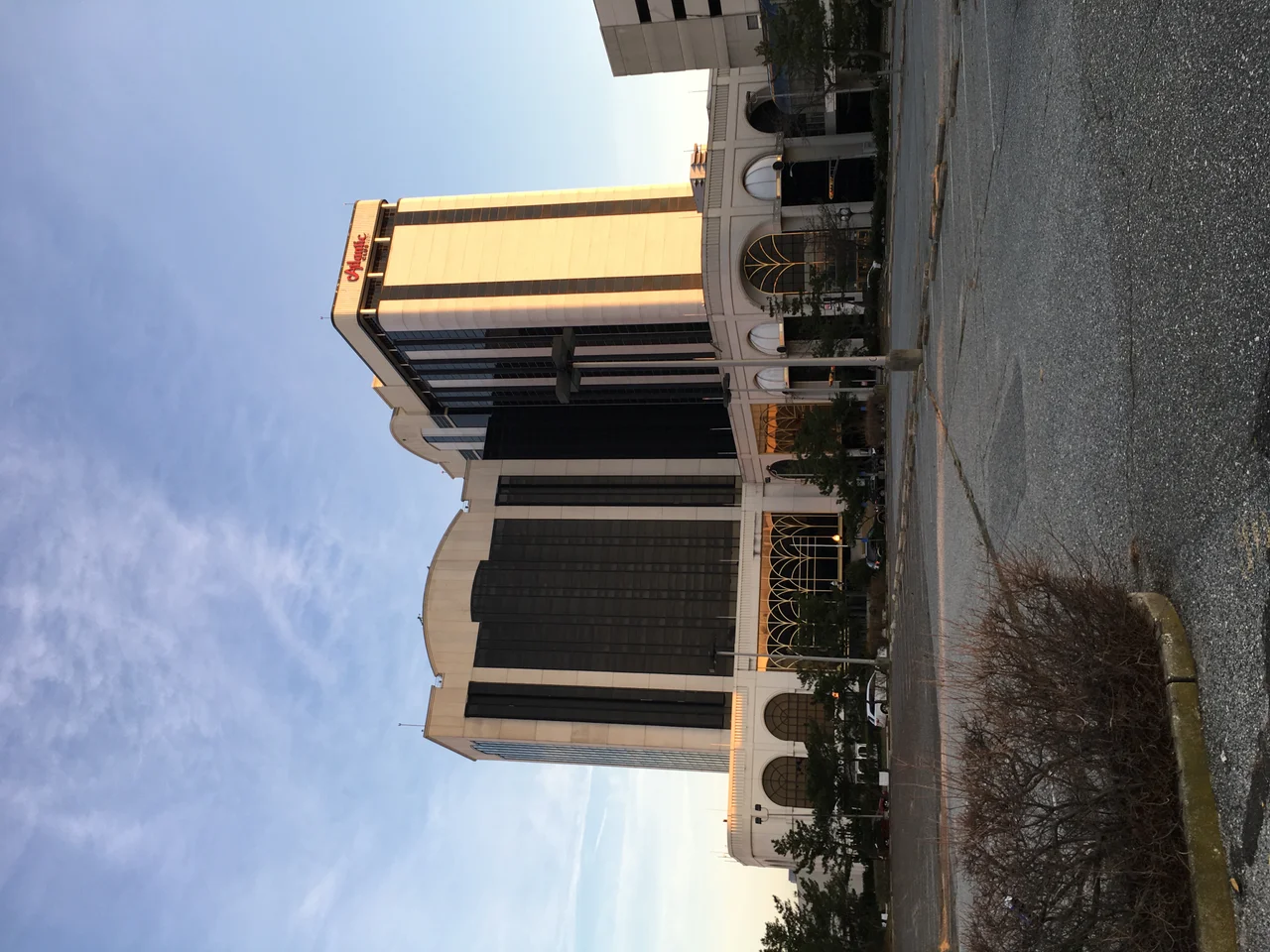

Atlantic Club Casino Hotel
Steve Wynn was 38 years old when he bought the Strand Motel on the Atlantic City boardwalk for $8.5 million, tore it down, and built a 506-room casino on the site. The Golden Nugget Atlantic City opened in 1980, financed in part by junk-bond king Michael Milken, and it became the youngest gambler's bet on the East Coast casino business. By 1983 it was the highest-grossing casino in Atlantic City. Frank Sinatra played the 500-seat Opera House. Dean Martin played there. Sammy Davis Jr. played there. Dolly Parton, Lou Rawls, Don Rickles - the Rat Pack circuit of the late twentieth century all came through. Then in 1987 Wynn sold the casino to Bally Manufacturing for $440 million, declared he would never come back to Atlantic City, and left to build the Mirage in Las Vegas. The building he left behind kept operating - under five different names - for the next twenty-seven years.
Wynn's Atlantic City
The Golden Nugget Atlantic City was Steve Wynn's first major casino property and the launching pad for what would become his Las Vegas empire. He had inherited a small Las Vegas casino called the Golden Nugget from his father and rebuilt it into a profitable downtown property in the 1970s. The Atlantic City version was his attempt to scale up. Joel Bergman designed the building. Atlandia Design managed the construction and furnishing. The advertisements featured Wynn personally - in one famous commercial he delivered towels to Frank Sinatra. The Golden Nugget was the city's sixth casino after legalization, opening four years after the 1976 referendum and two years after Resorts International had proved the East Coast casino model worked. Wynn's casino was smaller than the competition - only 506 rooms - but it ran more profitably.
The Wynn Departure
Wynn's public feud with New Jersey gaming regulators became one of the more famous stories in casino-industry history. The regulators required casino executives to comply with intrusive background checks and ongoing supervision; Wynn considered the regulatory burden excessive. In 1987 he sold the Golden Nugget Atlantic City to Bally Manufacturing for $440 million - more than three times what it had cost to build seven years earlier - and announced he was leaving Atlantic City for good. He used the proceeds, along with significant Milken-financed junk-bond borrowing, to build the Mirage in Las Vegas. The Mirage, when it opened in 1989, redefined Las Vegas and started the modern era of themed mega-resorts. Atlantic City watched Wynn leave and never fully recovered the entrepreneurial energy he represented.
Bally's Grand, Hilton, ACH
Under Bally Manufacturing, the property was renamed Bally's Grand Hotel and Casino. In 1996 Hilton Hotels acquired Bally Entertainment and renamed it the Atlantic City Hilton. In 2000 the property passed through another ownership chain - Nicholas Ribis and Colony Capital bought Resorts Atlantic City and several other properties, including eventually the Hilton, for a combined $1.24 billion in 2005. By 2009 the parent company, Resorts International Holdings, could not pay the Resorts Atlantic City mortgage and surrendered that property. In June 2011 Hilton ended the licensing agreement, and the casino was temporarily renamed ACH Casino Resort. The Las Vegas Hilton lost its name at the same time. The Atlantic City property had now had four corporate identities in twenty-five years, each less profitable than the last.
A Casino for the Rest of Us
On February 7, 2012, Colony Capital relaunched the property as The Atlantic Club Casino Hotel with a new slogan: A casino for the rest of us. The pitch was specific - the Atlantic Club would be the city's first locals casino, a smaller, friendlier, less intimidating gambling property aimed at the everyday Atlantic City visitor rather than the high-end gambler. The renovation refreshed the gaming floor and the 802 hotel rooms. PokerStars, the world's largest online poker site, opened negotiations in December 2012 to buy the property and use it as a legal landing pad for US online gambling - New Jersey was on the verge of legalizing online gambling, and PokerStars wanted a brick-and-mortar foothold. The deal was announced in January 2013 and collapsed in April when PokerStars missed a deadline to secure a temporary gaming license. The Atlantic Club's last hope had failed.
The 2014 Closures
On January 13, 2014, at 12:01 a.m., the Atlantic Club Casino Hotel closed permanently. Caesars Entertainment bought the real estate. Tropicana bought the gaming equipment and the customer databases. The two together paid $23.4 million for what Wynn had sold in 1987 for $440 million. The Atlantic Club was the first of four Atlantic City casinos to close in 2014 - the Revel followed, then Trump Plaza, then Showboat. The casino market that Wynn had helped create in 1980 had collapsed within the space of a single year. The building has been sold and resold since: TJM Properties in May 2014, Colosseo Atlantic City in October 2019. Various plans have been floated - indoor water parks, family entertainment centers, a Stockton University expansion. As of 2022, Colosseo had begun reskinning the buildings with glass curtain walls as part of a redevelopment to include hotel towers and residential condos but no casino. The Atlantic Club stands largely empty. Frank Sinatra is gone. So is the boardwalk era it represented.
From the Air
The former Atlantic Club Casino Hotel stands at the southern end of the Atlantic City boardwalk at approximately 39.35 degrees north, 74.45 degrees west, near Boston Avenue. From cruising altitude, look for the tall hotel structure at the southern end of the casino strip, between the Tropicana and the open beach. Atlantic City International (KACY) lies about 8 nautical miles northwest. The building remains standing but has been closed since January 2014.
Nearby Stories
- Cape May 8.1 km away
- A. J. Meerwald 14 km away
- The Pine Barrens: Home of America's Oldest Monster 25 km away
- Hereford Inlet Lighthouse 38 km away
- Constitutional Convention (United States) 50 km away
- PS General Slocum 143 km away
- Wardenclyffe Tower 201 km away
- USS Atik 493 km away