
BWI Thurgood Marshall Airport
On May 2, 1947, ground was broken in Anne Arundel County, Maryland for what would become the largest airport between Washington and Philadelphia. The land had belonged to Friendship Methodist Church, which had served the surrounding farming community since 1851. The church held its final service on Easter Sunday 1948. The building was razed. The bodies of 170 people in its cemetery were exhumed and reinterred elsewhere. Baltimore-Fort Meade Road was rerouted west to make way for the runways. Friendship International Airport opened on June 24, 1950, dedicated by President Harry Truman, who arrived in his Douglas DC-6 from Washington National. Seven minutes later, the same aircraft made the airport's first departure. Today the field is known as Baltimore-Washington International Thurgood Marshall Airport. Renamed in 1973 for the broader market it serves, renamed again in 2005 to honor a Baltimore-born Supreme Court Justice, it carries more passengers than either Dulles or Reagan National in most years.
The Church and the Runway
Friendship Methodist Church gave the airport its first name and most of its land. The Baltimore Aviation Commission picked the 2,100-acre site near Linthicum Heights in 1944, the year before the war ended. The city of Baltimore purchased the church property in 1946 and the surrounding farmland over the next several years. Construction cost about $15 million by the time the runways were laid and the original terminal finished. Friendship International had a 9,450-foot main runway by 1963 - long enough to handle any commercial jet then flying. In 1972 the Maryland Department of Transportation bought the airport from Baltimore for $36 million. State ownership transformed it from a regional facility staffed by three employees into a major commercial airport operated by hundreds. The 1973 rename to Baltimore-Washington International was strategic: the airport wanted travelers from suburban Montgomery and Prince George's counties to think of it as a Washington-area option, not just a Baltimore one.
Thurgood Marshall's Name
On October 1, 2005, the airport was renamed for Thurgood Marshall, the Baltimore-born civil rights lawyer who argued Brown v. Board of Education before the Supreme Court in 1954 and became the first African American justice on that court in 1967. Marshall grew up at 1632 Division Street in West Baltimore. He studied law at Howard University after the University of Maryland refused to admit him because of his race. He later sued the same University of Maryland law school on behalf of another Black applicant, Donald Murray, and won the first major civil rights case of his career. The Marshall dedication at the airport reflected a Maryland that had finally caught up with the man it had once turned away. The airport's full official name remains long. Most travelers call it BWI.
Southwest's Eastern Capital
Southwest Airlines arrived at BWI in September 1993 and never really left. By 2011 the carrier was moving 56 percent of the airport's passengers. The original concourses A and B were expanded, renovated, and combined into a single Southwest facility that opened on May 22, 2005, designed by URS Corporation. Southwest still operates an average of 245 daily departures from BWI to destinations in the United States, Mexico, and the Caribbean. The expansion continued: in late 2018, construction began on a $60 million, five-gate Concourse A expansion for Southwest, which opened in 2021. In January 2026, a new A/B Connector - the largest capital project in the airport's history at a cost of nearly $500 million - opened ahead of schedule, finally giving passengers a direct walking connection between the two Southwest concourses and bringing in a new in-line baggage handling system.
First Airport with a Train Station
In 1980 BWI became the first airport in the United States with a dedicated intercity rail station. The BWI Rail Station, located about a mile from the terminal and connected by a free shuttle, sits on Amtrak's Northeast Corridor and is served by Amtrak, Acela, and Maryland's MARC commuter trains running between Washington's Union Station and Baltimore's Penn Station. A separate light rail line connects the terminal directly to downtown Baltimore. Dulles International would not get a rail connection until late 2022, when the Washington Metro Silver Line was finally extended. The early commitment to intermodal connection has paid off in steady patronage. From BWI Rail you can be at Union Station in 35 minutes on Amtrak; from the terminal you can be at downtown Baltimore in 25 minutes on light rail. Few American airports have ever been this easy to get to and from without a car.
One Strange Day in 1974
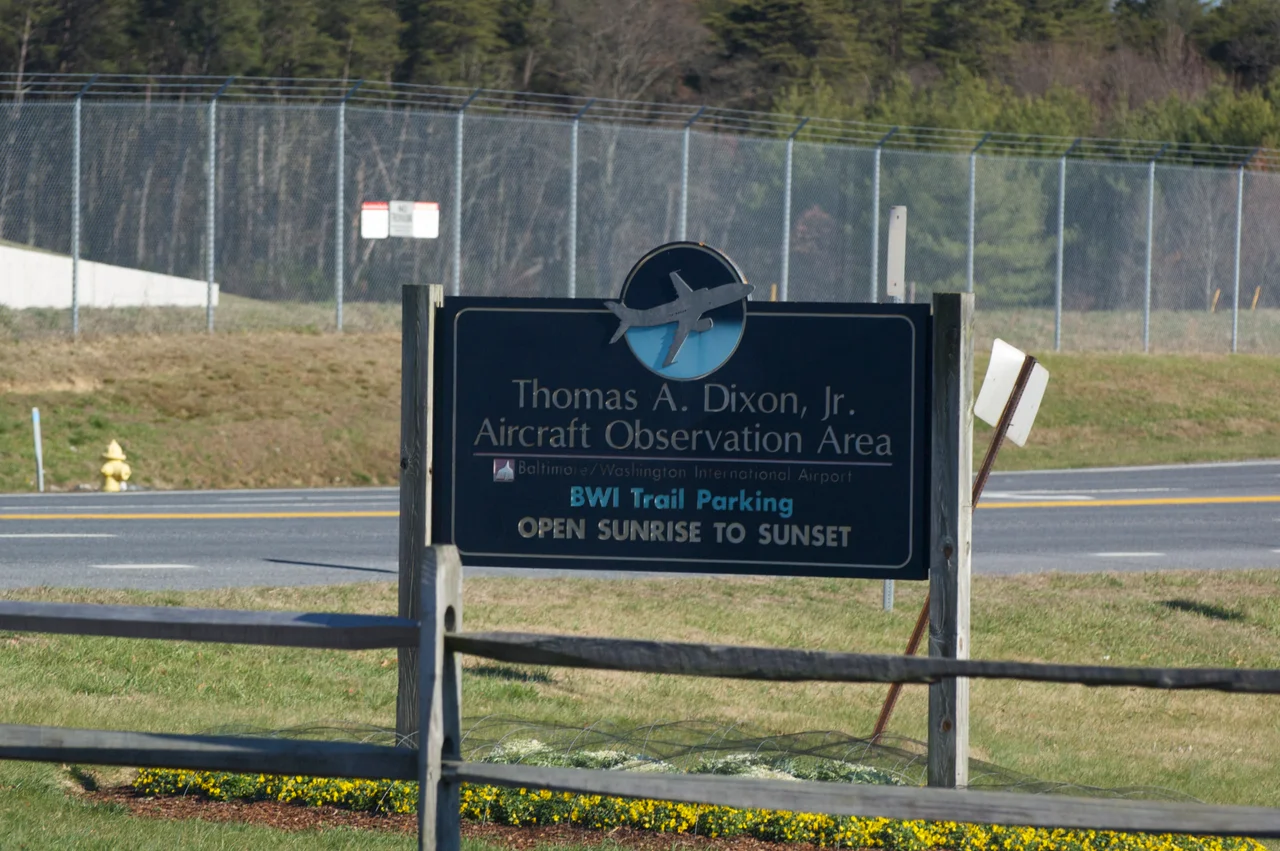
On February 22, 1974, a man named Samuel Byck walked into BWI and shot and killed an aviation police officer at the security checkpoint. He boarded Delta Flight 523, killed the first officer, and severely wounded the captain. He intended to commandeer the plane and crash it into the White House. As a gunfight broke out, an airport police officer firing from outside the aircraft mortally wounded Byck, who killed himself before officers stormed the plane. The plot has the awful specifics of the September 11 attacks twenty-seven years before they happened, by a single deranged man rather than an organized cell. Sean Penn played Byck in the 2004 film The Assassination of Richard Nixon. BWI prefers to talk about the smoother parts of its history. The terminal's free indoor concert series, launched in 2016 with Towson University's WTMD radio station and hosted at the lower-level baggage claim, has brought in local bands and even one Animal Collective album release. The aviation observation deck at Friendship Park, named for former MDOT secretary Thomas A. Dixon, looks straight down the southern approach to runway 33L, where families come on summer evenings to watch the 737s come in low over the trees.
From the Air
BWI Thurgood Marshall Airport (KBWI) is located at 39.1754 N, 76.6683 W in Anne Arundel County, Maryland - 9 miles south of downtown Baltimore and approximately 30 miles northeast of Washington, D.C. The airport has three active runways: 10/28 at 10,503 feet (the main takeoff runway, with ILS CAT IIIB on 10), 15R/33L at 9,501 feet (the main landing runway), and 15L/33R at 5,000 feet (general aviation and smaller commercial). Field elevation is 146 feet. BWI sits inside the Mode-C veil around Washington but well outside the Special Flight Rules Area; transit through the airport's Class B requires standard clearance. The Thomas A. Dixon Aircraft Observation Area at Friendship Park overlooks runway 33L from the south.
Nearby Stories
- Bunny Man 6.6 km away
- Second Battle of Dranesville 12 km away
- Surratt House Museum 12 km away
- Camp David: Where Presidents Escape and History Gets Made 32 km away
- Adkins Arboretum 35 km away
- Harriet Tubman Byway: The Routes That Led to Freedom 46 km away
- Battle of Gettysburg 60 km away
- Fort Delaware: The Island Prison Where 33,000 Confederates Waited Out the War 66 km away