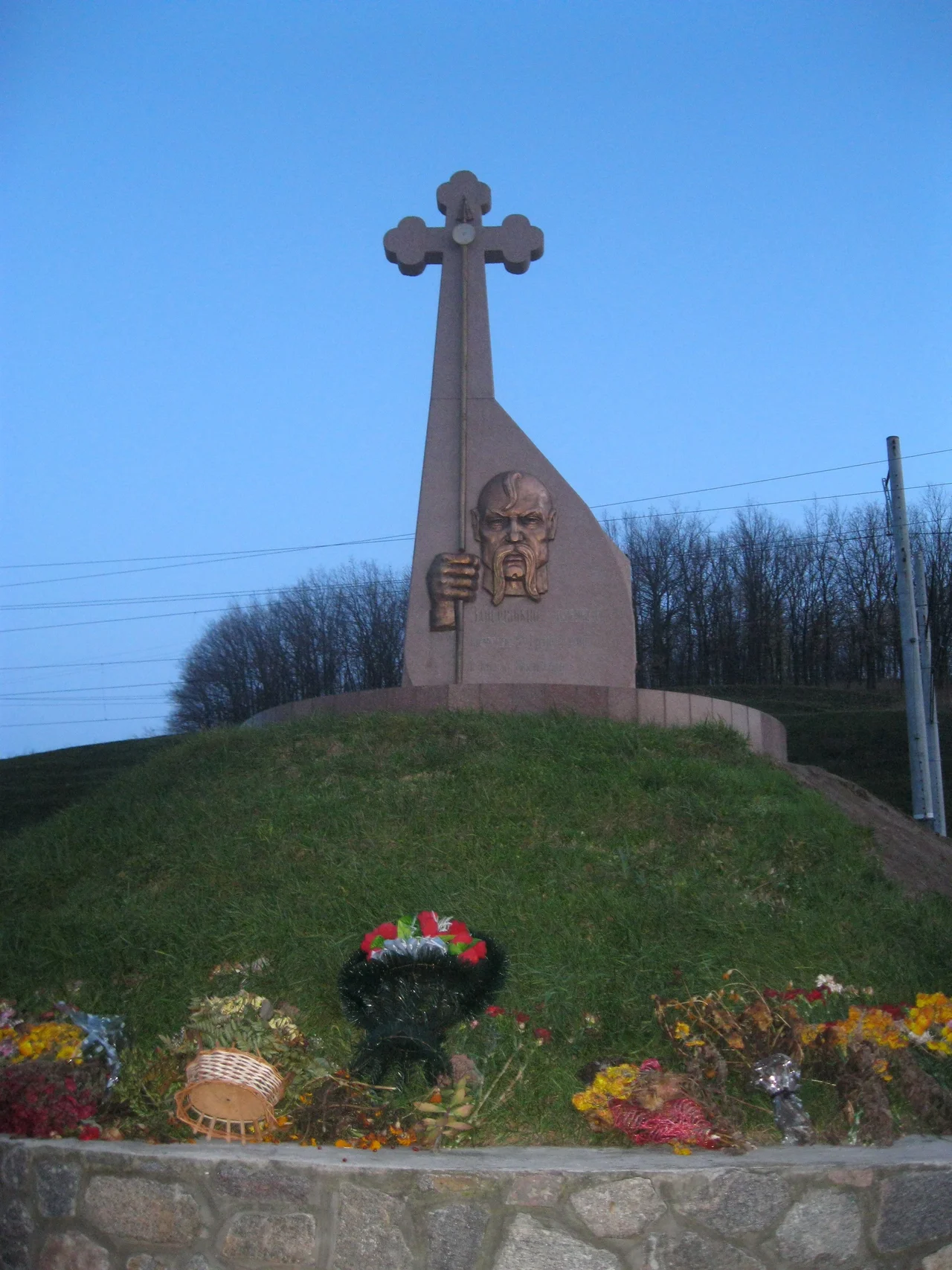
.jpg)
Battle of Kurukov Lake (1625)
The Cossacks chose their battlefield the way a chess player chooses a trap. In the autumn of 1625, on the low, waterlogged ground beside Kurukov Lake near what is now the Ukrainian city of Kremenchuk, Marek Zhmaylo pitched his camp where horses would flounder and cannon could hide. When the Polish Crown army came to crush the rising, it found not open steppe for a cavalry charge but swamp, thicket, and a rebel force that had turned the land itself into a defensive work. The clash that followed decided little on the field, yet it fixed for a generation the uneasy bargain between the Commonwealth and the Cossacks.
A Rising on the Left Bank
By 1625 the Cossacks had grievances enough to boil over. Under Hetman Marek Zhmaylo and the officer Olifer Golub, the Zaporozhian and city Cossacks organized an uprising against Polish rule, hoping to unite their forces and make the Left Bank of the Dnieper their base. Negotiations came and went without result; skirmishes flared and faded. As the season turned, both sides drew their armies toward the Kurukov area, near the flint plate on which Kremenchuk sits. Facing them was one of the Commonwealth's most capable soldiers, the Grand Crown Hetman Stanislaw Koniecpolski, fresh from earlier successes and confident he could bring the rebels to heel. The stage was set less by grand strategy than by the pull of two forces that could no longer avoid each other.
The Trap in the Marsh
At the end of October the Poles resolved on a decisive assault, but their preparations were hurried and, by later reckoning, not fully thought through. The Cossacks had chosen their ground with far more care. Camped in swampy, wooded terrain that hampered cavalry and blunted its shock, they hid part of their force in the brush along the lake, ready to strike from ambush. On 31 October 1625 the attack came, and the marsh did its work: the boggy earth neutralized the horsemen, while Cossack artillery and musket fire raked the assault from within the camp. A mass charge led by Tomasz Zamoyski nearly ended in disaster when he was struck by a bullet, his armor the only thing that saved him. German infantry under a Maltese cavalryman named Judycki was thrown back, Judycki himself wounded. The defense held.
The Bargain at Kurukove
Unable to break a defense that was too well organized to crack, the Commonwealth turned from the sword to the treaty table, and so did the Cossacks. The Treaty of Kurukove that followed was less a surrender than a settlement of terms. The Cossacks pledged allegiance to the Commonwealth, promised to refrain from hostilities without the king's consent, and gave up their independent naval raids. In return, the register, the roll of Cossacks recognized and paid by the Crown, was fixed at six thousand, and the officers won special privileges. It was a peace that satisfied no one for long. The register would never contain the ambitions of the Zaporozhian host, and within a generation the far greater rising under Bohdan Khmelnytsky would tear the arrangement apart entirely.
Where the Waters Were
The lake that gave the battle its name is folded now into the fabric of modern Kremenchuk, a busy industrial city on the Dnieper. There is little on the ground to announce that armies once maneuvered here through reeds and standing water. Yet the episode left its mark on the city's own story: Kremenchuk remembers the Treaty of Kurukove as one of the founding chapters of its early history, a moment when this crossing on the great river sat at the center of the long contest between Poland and the Cossacks. Stand by the water today and it takes an act of imagination to see the marsh that once swallowed a cavalry charge, but the river that shaped the fight still runs broad and slow past the town.
From the Air
The battle site lies near 49.10 degrees north, 33.25 degrees east, in the vicinity of Kremenchuk on the Dnieper River in central Ukraine. From altitude, the broad silver band of the Dnieper and the sprawl of Kremenchuk's industry are the clearest landmarks; the low ground west of the city marks the general area. The nearest major airfield is Poltava to the northeast.
Nearby Stories
- Chyhyryn 5.7 km away
- Deriivka 24 km away
- Aeroflot Flight 3630 27 km away
- Melgunov Kurgan 28 km away
- Battle of Zhovti Vody 46 km away
- Cherkasy 46 km away
- Poltava Museum of Long-Range and Strategic Aviation 60 km away
- Velyki Sorochyntsi 87 km away