.png)
Battle of Sanaa (2017)
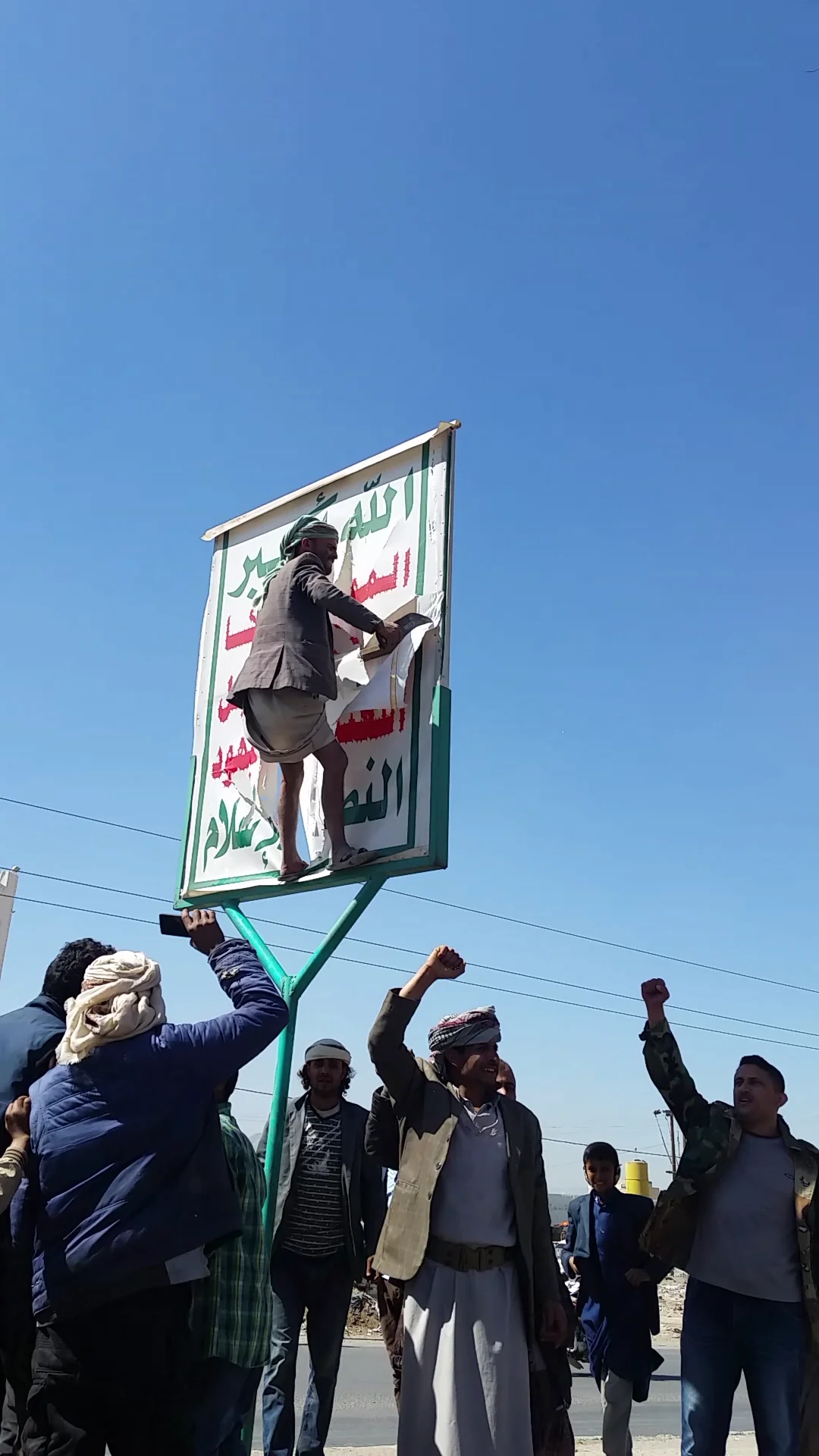
Ali Abdullah Saleh had ruled Yemen for 33 years. On 2 December 2017 he went on television in Sanaa and announced he was willing to turn a 'new page' with Saudi Arabia. Two days later he was dead on a road out of the capital, shot by the same Houthi forces he had allied with to take the city in 2014. Between those two events the Yemeni capital became a battlefield. More than 230 people were killed in six days of street-to-street fighting between Saleh's General People's Congress loyalists and the Houthi movement that had, until that week, been his partner.
An Alliance of Convenience
Saleh had been pushed out of power by the 2011 Yemeni revolution he had ruled over since 1990. The Houthis - officially Ansar Allah, a Zaydi Shia movement from the country's north - had helped topple him. In 2014 they became strange allies: the former president, who still commanded the loyalty of much of Yemen's Republican Guard and large portions of the army, joined forces with the Houthis to seize Sanaa from the Gulf-backed government of Abdrabbuh Mansur Hadi. Neither side entirely trusted the other. They divided the capital between them - Houthis in the north, Saleh forces in the south - and shared a war against the Saudi-led coalition that had been bombing them since March 2015.
The Break
The coalition, particularly Saudi Arabia and the UAE, had spent two years trying to split the alliance. By late November 2017 it had worked. Tension between Saleh's GPC and the Houthis spilled into armed clashes at the Saleh Mosque on 29 November. On 2 December Saleh made his television announcement inviting dialogue with Riyadh - a move the Saudi and Emirati governments publicly welcomed within hours. According to the pan-Arab outlet Rai al-Youm, the split was the fruit of long coalition effort. Within the city, sides formed in hours. Tribal forces - the Bani Bahloul, al Hima, and Hamadan - seized Houthi checkpoints in southern Sanaa. Houthi fighters counter-attacked into GPC neighbourhoods.
Civilians Between
The death toll in those six days exceeded 230 according to UN figures cited by Canadian television CP24. Among the dead were hundreds of fighters on both sides; many more were civilians caught in crossfire in a city of more than two million people. The International Committee of the Red Cross described the clashes as the fiercest yet seen in Sanaa - a city that had already spent more than two years under coalition bombardment. Hospitals, already overwhelmed by the war, tried to absorb casualties from an unexpected new front that had opened in their own streets. Residents stayed indoors for days. When Saudi-led coalition aircraft began bombing Houthi positions in the capital to support Saleh's revolt, the air and ground fighting overlapped in districts where families had no basements to shelter in.
The Road to Sanhan
On 4 December Abu Mohsen al-Qahoum, supervisor of Houthi militias in Sha'oub district, was killed. So was GPC secretary general Aref al-Zouka. The fighting turned against the Saleh forces quickly. Many GPC fighters and politicians defected to the Houthis rather than fight them. Saleh and a small convoy tried to leave Sanaa toward his home village of Sanhan. Houthi forces caught them on the road. The former president was killed - shot dead, in the circumstances that unfolded - ending a career that had included the unification of North and South Yemen in 1990, three decades of rule, his own overthrow, and his return to power as a coalition partner in 2014. Houthi leader Abdul-Malik al-Houthi called the killing 'the fall of the conspiracy' on 4 December.
After
On 5 December the fighting stopped. Tens of thousands of pro-Houthi demonstrators filled Sanaa's streets. Saudi-led airstrikes intensified on the city; residents were told to stay indoors. The GPC splintered. A large faction pledged allegiance to the Houthis and elected Sadeq Ameen Abu Rass as their new chairman. Saleh's son Ahmed, former commander of the Republican Guard and then exiled in the UAE, pledged vengeance. The remnants of the GPC loyal to the family slipped away into Hadi-held territory in the south to try to rebuild. The Yemeni war, which in 2017 had already caused what the United Nations called the world's worst humanitarian crisis, continued. For Sanaa - a city whose fortified old quarter has stood for more than 2,500 years, whose adobe tower-houses rise seven and eight storeys above markets that have traded frankincense and silver since antiquity - it was another wound added to many.
From the Air
Sanaa sits at 15.37N, 44.19E, about 2,250m (7,400 ft) elevation in Yemen's central highlands. Yemeni airspace is largely closed or restricted due to ongoing conflict. Sanaa International (OYSN/SAH) has seen limited humanitarian operations but is not open to general civil aviation. Do not plan direct overflight; coordinate with coalition NOTAMs and UN humanitarian corridors for any operations in this region. Djibouti (HDAM/JIB) across the Gulf of Aden is the nearest reliably open international field.
Nearby Stories
- Battle of Amran 20 km away
- Marib Dam 64 km away
- 2013 Radda airstrike 67 km away
- Al Hudaydah offensive 77 km away
- Battle of Port Midi 93 km away
- 2025 Israeli attacks in Yemen 93 km away
- Zafar, Yemen 105 km away
- Mundafan 332 km away