
Battle of Tam Quan
The helicopters arrived at 4:30 in the afternoon, drawn by a radio antenna they had spotted in the jungle near the village of Dai Dong. By nightfall on December 6, 1967, the crews of the 1st Battalion, 9th Cavalry Regiment were pinned down in the fading light, unable to advance or withdraw. It took four more hours and a ground force arriving in darkness to pull them out. That first desperate evening set the pattern for what became a two-week battle near Tam Quan in Bình Định Province — a fight against a North Vietnamese regiment that seemed to absorb every strike thrown at it and simply wait for the next one.
An Enemy That Knew the Ground
By late November 1967, U.S. intelligence knew that the People's Army of Vietnam's 22nd Regiment, part of the 3rd Division, was maneuvering near the Bồng Sơn area. Between December 1 and 4, North Vietnamese forces made probing attacks against South Vietnamese positions along Highway 1. American and ARVN forces searched for them. They couldn't find them. The regiment was already where it intended to be. When the 1st Brigade of the 1st Cavalry Division picked up the radio signal near Dai Dong on December 6, they had found — or been found by — an enemy that had prepared its positions carefully. The bunkers were deep. The fighting positions were interlocked. The PAVN soldiers who held them were dug in and disciplined, and they understood that the helicopters circling above them represented both a threat and a vulnerability.
Three Days at the Bunker Line
The battle proper began on the morning of December 7 — a day that carried its own weight of historical association, though the men fighting in the Vietnamese coastal plain had more immediate concerns. Helicopter-borne infantry companies were landed in a perimeter around the PAVN positions, and U.S. forces began methodically working inward. The North Vietnamese fought back from entrenched bunkers, forcing repeated withdrawals and calling in successive waves of artillery and tactical air strikes to soften positions before each new advance. On December 8, CS gas was fired into the PAVN lines, forcing some soldiers into the open where artillery killed them. By December 8's end, with the initial bunker complex swept and destroyed, commanders thought the worst was over. They were wrong.
The Long Pursuit
The 22nd Regiment did not break. It repositioned. On December 10, the regiment's 8th Battalion struck South Vietnamese forces before dawn — an attack that was repulsed by gunships and artillery — and the battle resumed its grinding rhythm. Villages near Truong Lam were being evacuated by their own residents, a sign that the civilians understood what was coming. More cavalry units were brought in. South Vietnamese Marine battalions replaced exhausted ARVN infantry. Through December 12, 13, and 14, search-and-destroy operations produced little contact. Then, on December 15, the 12th Cavalry located the regiment again near An Nghiep. Artillery preparation was followed by an assault that was repulsed. The regiment was still there. It took until December 19, after aerial reconnaissance spotted another radio antenna and a large bunker complex near An Nghiep, and another night of artillery and air strikes, before the positions were finally destroyed and the regiment dispersed.
The Cost
The battle ended in the last days of December 1967. Fifty-eight Americans died in the fighting; 250 more were wounded. South Vietnamese forces lost 30 killed and 71 wounded. North Vietnamese losses were counted at 650 killed and 31 captured — numbers that gave a kind of arithmetic logic to the outcome. But the 22nd Regiment, though badly mauled, had not been destroyed. A year later it would be fighting again in the same province, in operations that carry other names in the history books. The rice paddies and jungle near Tam Quan, where so many people died across two weeks in December, today are quiet farmland. The villages whose residents fled the sounds of artillery have been rebuilt. The men who fought there — American, South Vietnamese, North Vietnamese — are mostly gone now, and the ground keeps none of their names.
From the Air
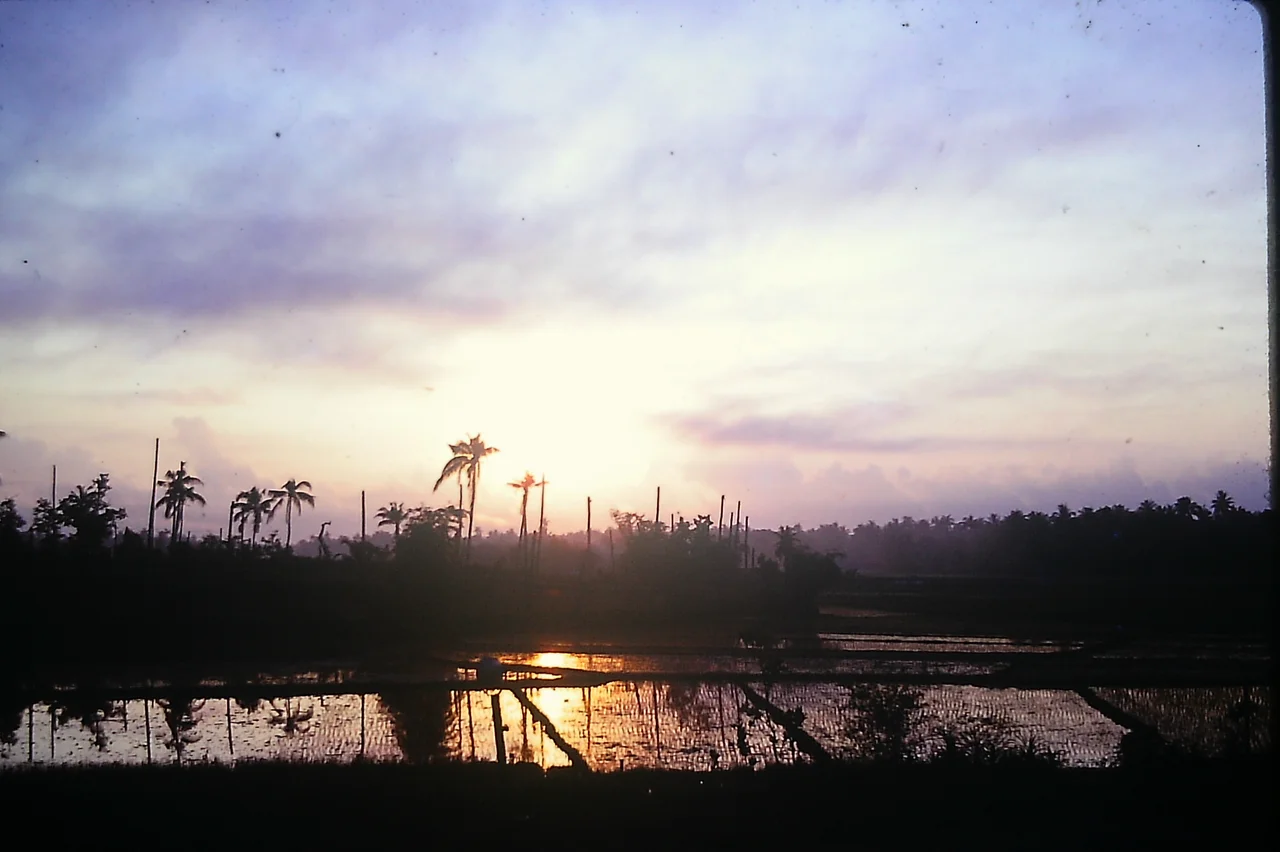
The Battle of Tam Quan took place near 14.49°N, 109.08°E, in the lowland coastal plain of Bình Định Province just inland from the South China Sea. At 3,000–5,000 feet altitude, the flat rice-paddy terrain is clearly visible, broken by small villages and tree lines that once concealed North Vietnamese bunker complexes. Landing Zone English, the U.S. forward operating base used during the battle, was located near present-day Bồng Sơn to the south. The nearest airport is Phù Cát Airport (VVPC), approximately 35 km to the south-southwest. Highway 1 runs north–south through this coastal plain, visible as the main arterial road in clear conditions.
Nearby Stories
- Phù Cát Air Base 34 km away
- Kon Ka Kinh National Park 34 km away
- Battle of Mang Yang Pass 49 km away
- Batangan Peninsula 55 km away
- Battle of Hill 488 74 km away
- Battle of the Paracel Islands 284 km away
- Hainan Island Incident 389 km away
- Kashmir Princess 437 km away