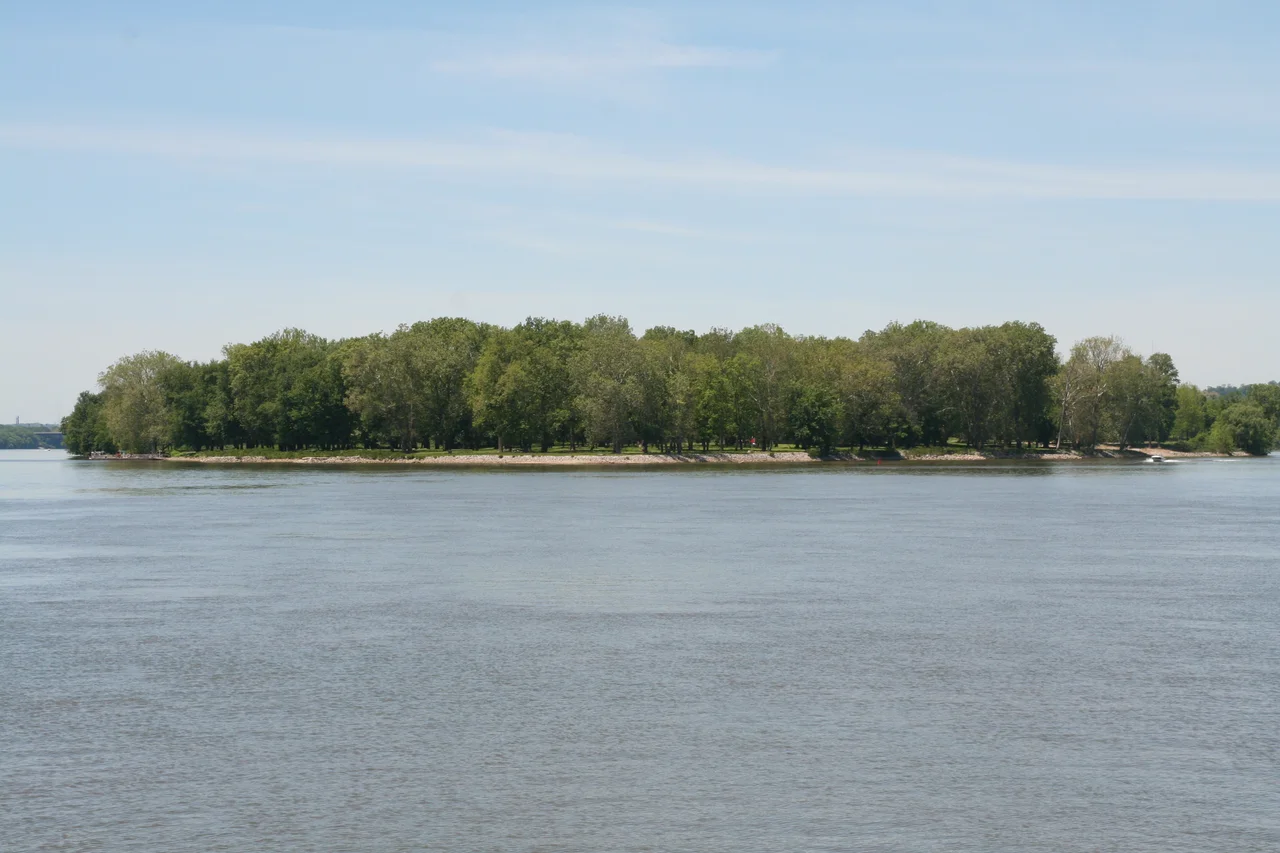

Blennerhassett Island Historical State Park
You reach it by sternwheeler. A reproduction nineteenth-century riverboat leaves Point Park on Second Street in Parkersburg, West Virginia, and takes about twenty minutes to cross the Ohio River and tie up at the dock of Blennerhassett Island. From the dock, a horse-drawn carriage carries visitors up a wagon path to a large white Federal-style mansion sitting on a lawn that runs down to the river. The mansion is a 1980s replica, built on the original 1798 foundations of the house that Harman and Margaret Blennerhassett constructed during the brief years they tried to make this island their own private Arcadia. The original house burned in 1811. The replica is detailed and convincing. The real story - of the Irish gentleman, his young wife, and the conspiracy that destroyed them both - is more interesting than the architecture.
Harman and Margaret
Harman Blennerhassett was an Anglo-Irish gentleman who arrived in America in 1796 with his much younger wife - and niece - Margaret Agnew. They had married in Ireland in defiance of their families and crossed the Atlantic in part to escape the scandal. Blennerhassett used his inheritance to buy half of a large island in the Ohio River from Elijah Backus and built a mansion in the Palladian style with Federal detailing, completed around 1800. It became one of the most ambitious private houses in the trans-Allegheny country - books from a substantial library, a chemistry laboratory, gardens patterned on English estates, enslaved laborers who did the work, including a man named Cajoe Phillips, whose memoir survived as one of the few firsthand records of enslaved life on the island. For about six years, the Blennerhassetts lived a kind of Enlightenment fantasy on the Ohio River.
Aaron Burr Arrives
In 1805, the recently-disgraced former vice president Aaron Burr - having killed Alexander Hamilton in a duel the year before - visited the island and proposed a scheme. The details of what Burr was actually planning have been debated by historians ever since: possibly the conquest of Spanish-held territory in the Southwest, possibly the secession of trans-Appalachian states from the United States, possibly something more limited that was misunderstood. Whatever Burr actually intended, he convinced Blennerhassett to bankroll the venture and use the island as a staging ground. Boats were built. Men were recruited. In December 1806, Virginia militia arrived to seize the island while Blennerhassett was downstream. They ransacked the mansion. Burr and Blennerhassett were both arrested for treason. Both were eventually acquitted - Burr's 1807 trial in Richmond is one of the foundational cases in American constitutional law - but the Blennerhassetts were ruined.
The House Burns
Harman and Margaret never returned to live on the island. They moved south, then to Canada, then back to England, then eventually back to Ireland, accumulating debt and losing children. Margaret returned briefly to the United States in the 1830s to petition Congress for compensation for the destruction of the island house; she got little and died in poverty in 1842. The mansion itself stood empty after 1806, fell into disrepair, and burned to the ground in 1811. For more than 150 years, the island contained only the foundations of the house, archaeological remnants, and stories. The island stayed in agricultural use through the nineteenth and twentieth centuries, with various tenants farming the bottomland.
Rebuilt for the Bicentennial
West Virginia acquired the island in the 1970s, and the state began a careful program of historical reconstruction. Archaeological work on the original foundations confirmed the house's dimensions and layout. In 1984, construction of the replica mansion began; it opened in stages over the following years, with the fully furnished central house welcoming visitors on July 4, 1991 - a three-story Federal-style house with Palladian wings, decorated with period antiques and arranged to reflect what historians believe the Blennerhassetts' household looked like circa 1805. The state added a riverboat dock, horse-drawn carriage rides, bicycle paths, picnic shelters, and the restored 1802 Putnam-Houser House on the island. Two blocks from the Parkersburg dock, the Blennerhassett Museum of Regional History houses regional artifacts including pre-Adena Native American materials. The whole experience is deliberately reconstructed - it is a state park designed to evoke a vanished moment in American history rather than to preserve original fabric.
Flying Over the Long Island
From the air, Blennerhassett Island is a long, narrow wooded island in the middle of the Ohio River, about three and a half miles southwest of downtown Parkersburg. The island is roughly four miles long and a half-mile across at its widest point - one of the longest islands in the Ohio. The mansion's replica stands in a cleared area near the upstream end, with carriage paths and outbuildings visible. The Blennerhassett Island Bridge crosses the river just downstream, carrying U.S. Route 50. The Ohio bends gently around the island, and the West Virginia bank rises into low bluffs while the Ohio bank stretches flat into the farmland of Belpre.
From the Air
Located at 39.27°N, 81.62°W in the Ohio River, accessed by sternwheeler from Point Park in Parkersburg, West Virginia. The long, narrow wooded island is the visible feature; the mansion replica appears as a small white building in a clearing near the island's upstream end. The Blennerhassett Island Bridge (US 50) crosses the river immediately downstream. Nearest airport: Mid-Ohio Valley Regional (KPKB) about 4 nm east. Best photographed from 3,000-5,000 feet AGL, where the full length of the island and the river bend are visible.
Nearby Stories
- Buffington Island 4.6 km away
- Moonville 5.3 km away
- State of Kanawha 18 km away
- North Bend Rail Trail 21 km away
- The Y-Bridge of Zanesville 49 km away
- West Virginia Penitentiary 58 km away
- Hillbilly Hot Dogs 58 km away
- Columbus: The Test Market Where America Tries Things First 78 km away