
Boardwalk Hall Auditorium Organ
The room had to be solved first. Boardwalk Hall in Atlantic City was completed in 1929 as the largest unobstructed indoor space ever built - a barrel-vaulted auditorium 456 feet long enclosing 5.5 million cubic feet of air. Then the question was how to fill that air with music. No conventional organ could do it. No amplification existed in 1929 that could fill a hall that size without distortion. So Senator Emerson Richards of New Jersey, an amateur organist of unusual technical ambition, designed a custom pipe organ that would run on wind pressures four times higher than any organ ever built - loud enough to fill 5.5 million cubic feet by acoustic force alone. The Midmer-Losh Organ Company in Merrick, New York, signed the contract for $347,200 just before the Great Depression. The result is officially the largest pipe organ ever constructed: 33,112 pipes, seven manuals, 1,235 stoptabs, and the only organ in the world that holds Guinness World Records as the loudest musical instrument ever built.
The Senator's Design
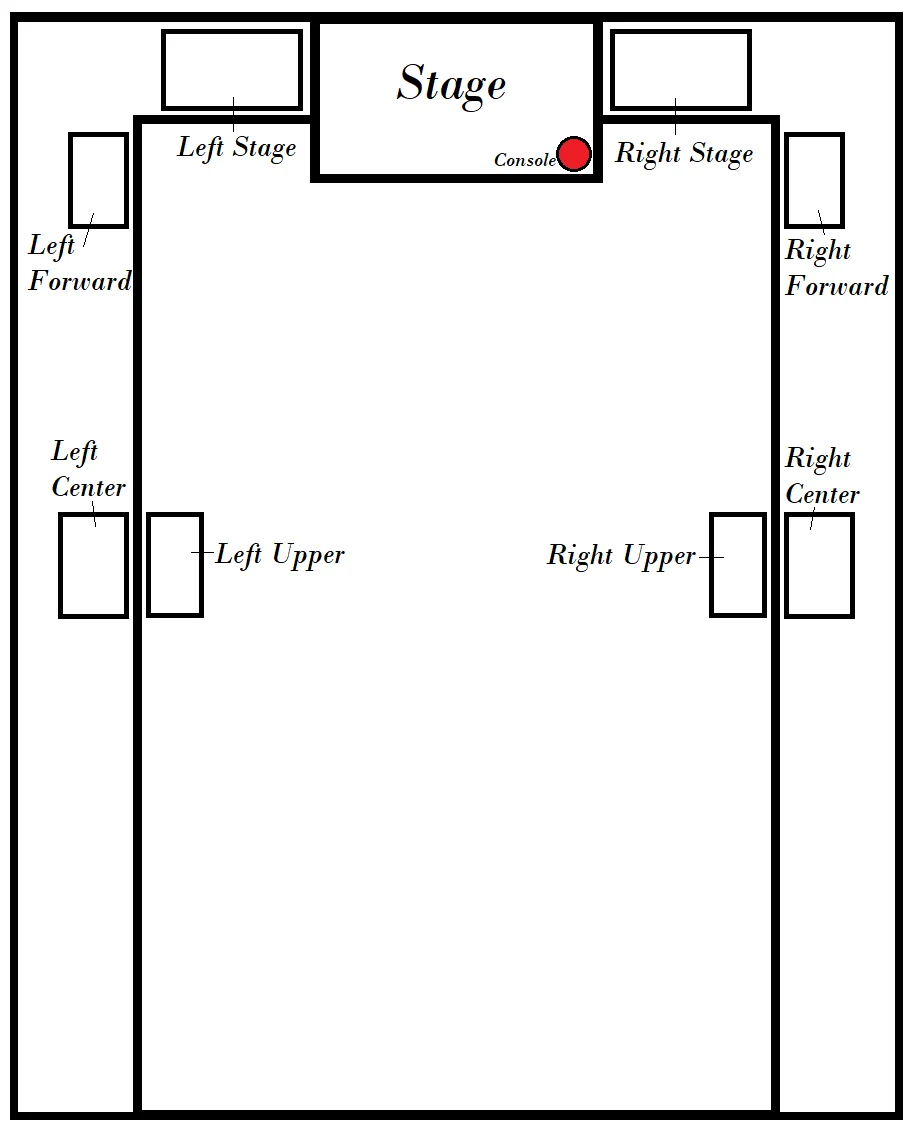
State Senator Emerson Richards represented New Jersey's Atlantic County in the legislature for many years. He was also one of the most knowledgeable amateur organ designers in the world. When Atlantic City's Convention Hall was being planned in the late 1920s, Richards saw an opportunity. The hall needed an organ. The space presented impossible acoustic challenges - the speed of sound itself meant that pipes placed near the back of the hall would arrive at the front nearly half a second after pipes at the stage. Richards's design was an attempt to solve all of these problems at once. His first proposal called for 43,000 pipes in six chambers. The cost exceeded the $300,000 budget. He revised it down to 29,000. Eventually two additional Forward chambers were added, bringing the count to 33,112. The pipe chambers were placed in the auditorium ceiling above the stage, because placing them further back would have created unfixable synchronization problems with the speed of sound.
The Console
The console - the keyboards and controls the organist uses to play the instrument - is the largest organ console ever built. It has seven manuals, three more than a standard concert organ. The bottom two manuals (Choir and Great) extend through seven octaves rather than the standard five. The third manual (Swell) covers six octaves. The console has 1,235 stoptabs - the toggle switches that select which pipe ranks sound when a key is pressed. There are 587 flue stoptabs, 265 reed stoptabs, 35 melodic and 46 non-melodic percussion stops, 164 couplers, 18 tremulants, and a crescendo pedal that gradually adds stops to build volume. The pedalboard and the Choir and Great manuals are equipped with Second Touch - the ability to press the same key to different depths to trigger different sounds. The console requires a trained organist to physically reach across more than a meter to access all the stops.
The Loudest Organ Stop in the World
The Grand Ophicleide in the Pedal Right division is - or was - the loudest organ stop in the world. The pipes are made of lead alloy of unusual thickness to keep them from cracking under their own sonic vibrations. The wind pressure is 100 inches of water column, roughly four times the pressure of a standard organ. When the rank is played, the sound exceeds 130 decibels at the keyboard. Guinness World Records recognized the stop as the loudest in the world until 2012, when a South Korean compressed-air instrument called the Vox Maris built for an outdoor expo took the title. Boardwalk Hall's organ also includes a 64-foot Diaphone-Dulzian rank that uses pipes so long the lowest notes are essentially infrasonic - felt through the chest rather than heard. The 64-foot stop required so many engineering compromises that the organ's first curator, Roscoe Evans, personally built the lowest pipes.
The 1999 Construction Disaster
Between 1999 and 2001, Boardwalk Hall underwent a multi-year renovation. The organ curator position had been eliminated for budget reasons. Construction contractors moved through the building without any meaningful supervision regarding the instrument. Pipes were removed, stepped on, and crushed - most organ pipes are made of soft lead alloys and dent permanently under any pressure. The 32-foot Trombone stop was entombed in the building's walls when a chamber opening was sealed shut. Windlines to multiple pipe chambers were cut without documentation or replacement plans. The electrical relay for the Left Stage chamber was simply cut out. The Right Stage chamber, which had been 98% operational in 1998, was completely disabled. The 5-manual console connection was severed. Cement dust contaminated thousands of switching contacts. The damage was, by any honest accounting, catastrophic - a world-record musical instrument left in pieces by a renovation that nobody had coordinated with anyone who knew the building.
The Restoration
In 2013 - twelve years after the construction damage - the Auditorium Organ was heard publicly again for the first time in forty years, played during the Miss America pageant with about 15 to 20 percent of the instrument restored to working order. The Historic Organ Restoration Committee, a nonprofit, has been raising funds for a comprehensive $16 million rebuild. The work involves re-leathering every wind mechanism, repairing every damaged pipe, restoring every severed cable, and rebuilding the electrical relays from scratch. As of 2024, approximately 95 percent of the Auditorium Organ is operational again. Free thirty-minute noon concerts run from May through September. Behind-the-scenes tours run Wednesday mornings. Nathan Bryson became the fifth curator in 2015 and leads the maintenance crew. The instrument's hundredth anniversary - 2029 through 2032 - is the target for full restoration. The largest pipe organ in the world is slowly, pipe by pipe, returning to life.
From the Air
The Boardwalk Hall Auditorium Organ resides inside Jim Whelan Boardwalk Hall at approximately 39.35 degrees north, 74.44 degrees west, on the boardwalk in Atlantic City between Mississippi and Florida Avenues. From cruising altitude, look for the distinctive 1929 Boardwalk Hall building - a large rectangular structure with a barrel-vaulted roof - at the boardwalk's south end near the Tropicana. Atlantic City International (KACY) lies about 7 nautical miles northwest. The organ pipes are not visible from outside the building; they are distributed across eight chambers behind the auditorium walls.
Nearby Stories
- Cape May 8.1 km away
- A. J. Meerwald 14 km away
- The Pine Barrens: Home of America's Oldest Monster 25 km away
- Hereford Inlet Lighthouse 38 km away
- Constitutional Convention (United States) 50 km away
- PS General Slocum 143 km away
- Wardenclyffe Tower 201 km away
- USS Atik 493 km away