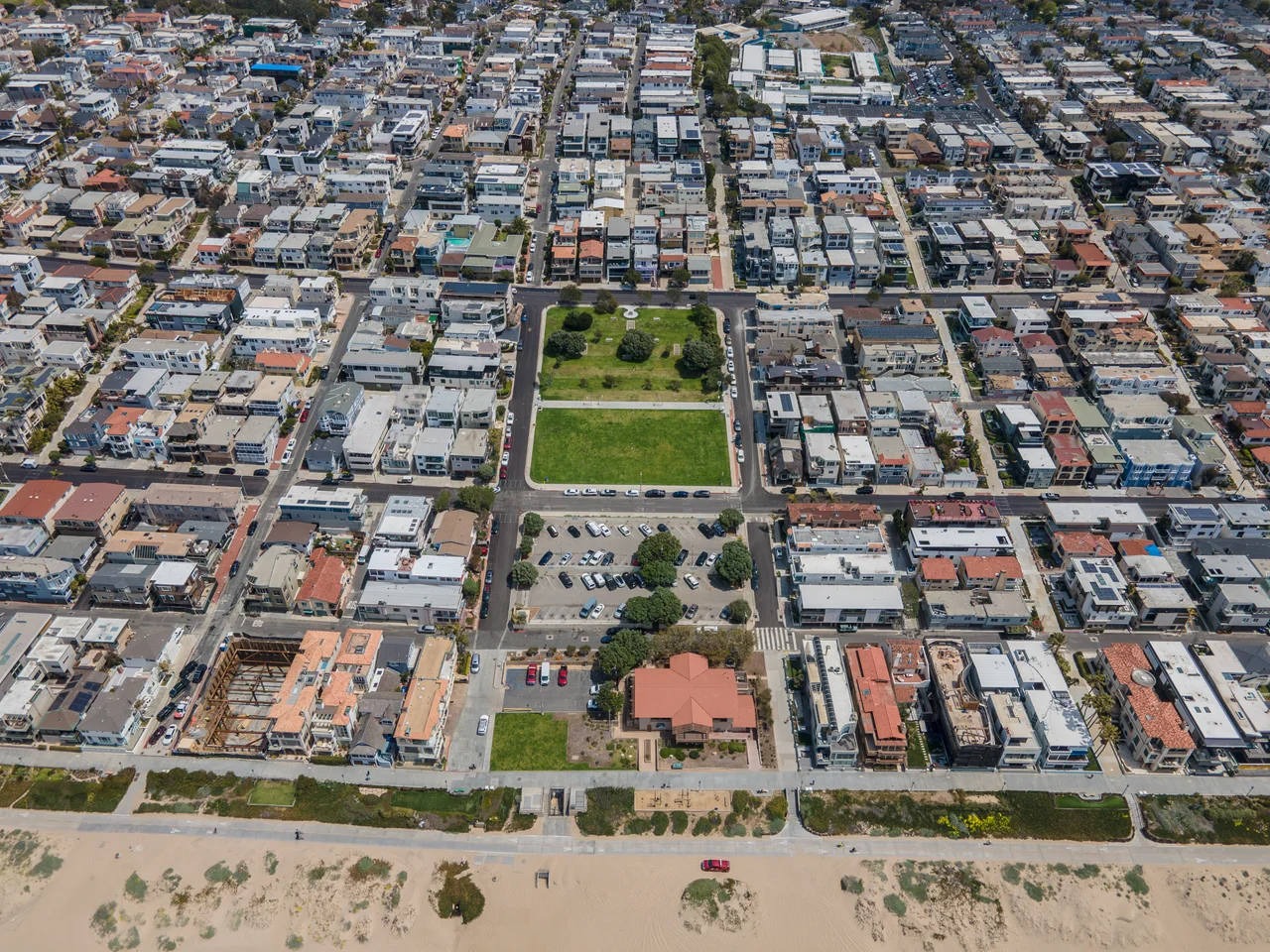

Bruce's Beach
The city of Manhattan Beach had a problem. Willa and Charles Bruce had bought a small lot on the waterfront in 1912 for $1,225 — less than many people paid for a used car — and turned it into a thriving resort. They called it Bruce's Lodge. Hundreds of Black families came every summer, finally able to swim in the Pacific without being chased off by white beachgoers or harassed by local police. The city tried harassment. It tried zoning changes. It tried having city employees dump trash and dead animals on the property. None of it worked. So in 1924, the city condemned the entire beachfront through eminent domain, claiming it needed the land for a park. It never built one.
A Refuge by the Sea
Before Bruce's Lodge, Black Angelenos had few options for the beach. Most of the Southern California coastline operated as an informal system of racial exclusion — no signs necessary when crowds of hostile white beachgoers, backed by police looking the other way, made the message clear. Willa and Charles Bruce found their way to a stretch of Manhattan Beach and built something remarkable: a bathhouse, a cafe, a dance hall, a space where Black families could spend a day at the water without fear. By the early 1920s, the small property had become the only beach resort in the Los Angeles area where Black visitors were genuinely welcome. People called it the 'Black Manhattan Beach.' Word spread through California's Black communities. On summer weekends, the place hummed.
The Campaign to Destroy It
The city's efforts to remove the Bruces were methodical and sustained. Neighbors filed nuisance complaints. The city denied building permits for improvements. Police issued citations. Then the Ku Klux Klan, surging in membership and political influence across California in the early 1920s, made its presence known in Manhattan Beach. The Bruces and the dozen or so other Black property owners who had gathered around their beach resort found themselves subject to an organized pressure campaign. When harassment failed, the city moved to eminent domain — a legal tool meant for genuine public necessity, here repurposed as a weapon. The ordinance passed in 1924. The buildings were razed in 1927. The Bruces sued for $120,000 in damages. They settled for $14,500.
A Century of Silence
The promised park never came. For decades the seized beachfront property sat, eventually transferred to the state, then to Los Angeles County. The injustice was documented in academic research in the 1990s and became more widely known in the 2000s, but the land remained in government hands. Marcus and Derrick Bruce, great-grandsons of Willa and Charles, grew up knowing the story. They did not expect to see it remedied. Then in 2021, the California legislature passed a law specifically authorizing the return of the property to the Bruce family heirs — the first such land reparation by a state in California history. In June 2022, Los Angeles County transferred the deed. The Bruces owned their great-grandparents' beach again.
Justice, Priced
What the Bruces chose to do with the property said as much about the limits of reparation as about its possibilities. In January 2023, Marcus and Derrick Bruce sold the land back to Los Angeles County for $20 million — fair market value for beachfront property that had appreciated by a factor of several thousand since their ancestors were forced off it. They could have kept it. Instead they took the money, acknowledging that a century of lost equity could not simply be returned by returning a deed. 'We honor our great-grandparents by ensuring their legacy is never forgotten,' Marcus Bruce said. The site is now Willa Bruce Beach Park, marked with interpretive signage explaining what happened there and why it mattered.
What the Water Remembers
Manhattan Beach sits at one of the most beautiful stretches of the Southern California coast, where the Santa Monica Bay curves southwest toward the Palos Verdes Peninsula and the water runs a deep blue-green on clear days. The waves that drew the Bruces here in 1912 are unchanged. The beach is public now, as it has nominally been for decades. But the story embedded in this particular strip of sand — of a family who built something, had it taken, and waited a hundred years for partial justice — gives the place a different weight. Willa Bruce opened a resort so that people who were excluded could feel, for a day, what it was like to be fully present in their own country.
From the Air
Located at approximately 33.89°N, 118.42°W on the Manhattan Beach waterfront. The beach runs along Highland Avenue, just north of Manhattan Beach Pier. Hawthorne Airport (KHHR) is approximately 2.5 miles northeast. Approach from the west over the Pacific for best coastal orientation, or south along The Strand from Santa Monica. The site is adjacent to the Manhattan Beach lifeguard station and marked with park signage.
Nearby Stories
- Ennis House 1.8 km away
- Aliso and Wood Canyons Wilderness Park 5 km away
- Amgen 9.9 km away
- Silverado Fire 12 km away
- Catalina Airport 22 km away
- Santa Barbara Island 22 km away
- Stagecoach Inn (California) 39 km away
- San Bernardino Train Disaster 40 km away