
Cape Martian Reserve
Walk out onto Cape Martian and the vegetation quietly announces that you have crossed an invisible border. Here on the southern coast of Crimea, in a pocket of coast tucked beside the Nikitsky Botanical Gardens near Yalta, the plants are wrong for the latitude in the most wonderful way. Evergreen oaks and junipers cling to sun-baked limestone, and among them grows a coppery-barked tree that appears nowhere else on the peninsula. This narrow reserve marks the very northern edge of the Mediterranean plant world, a stray fragment of a warmer sea washed up on Crimea's shore.
How the Cape Was Made
The cape itself is a story of slow collapse into the sea. This coast is the product of long and patient geological drama, layer upon layer of sedimentary limestone laid down over ages and then heaved slowly upward as the earth's crust rose. Over time, fragments broke away from a ridge known as Nikita's chain and tumbled down toward the water, and those fallen pieces of pale stone gathered at the shoreline to build Cape Martian, a headland assembled from the debris of the mountains above it. The reserve drapes over the lower part of this dissected slope, a terrain cut through by gullies, reaching from the water's edge up to about 250 meters above the sea. It is not a large place, just 240 hectares in all, and one of its most surprising features is how much of it is not land at all: exactly half lies beneath the waves, 120 hectares of coast matched by 120 hectares of the adjoining Black Sea, so that the reserve protects the water as carefully as the shore.
A Warm Room With the Door Closed
The secret to this Mediterranean island is a wall at its back. To the north rises the Main ridge of the Crimean Mountains, some 1,200 meters high, and it acts like the closed door of a warm room, shielding the cape from the cold winds that would otherwise sweep down from the interior. Sheltered in that lee, the climate turns mild and dry: summers hot and rainless, winters gentle and wet, the average temperature hovering around a comfortable 13 degrees Celsius with only modest swings between July's heat and February's cool. Rain falls to about 560 millimeters a year, most of it in the mild, wet winters. It is precisely this protected warmth, and the low, steady swing between the seasons, that lets southern plants thrive here, a Mediterranean microclimate held in place by the mountains standing guard behind it.
The Trees That Belong Elsewhere
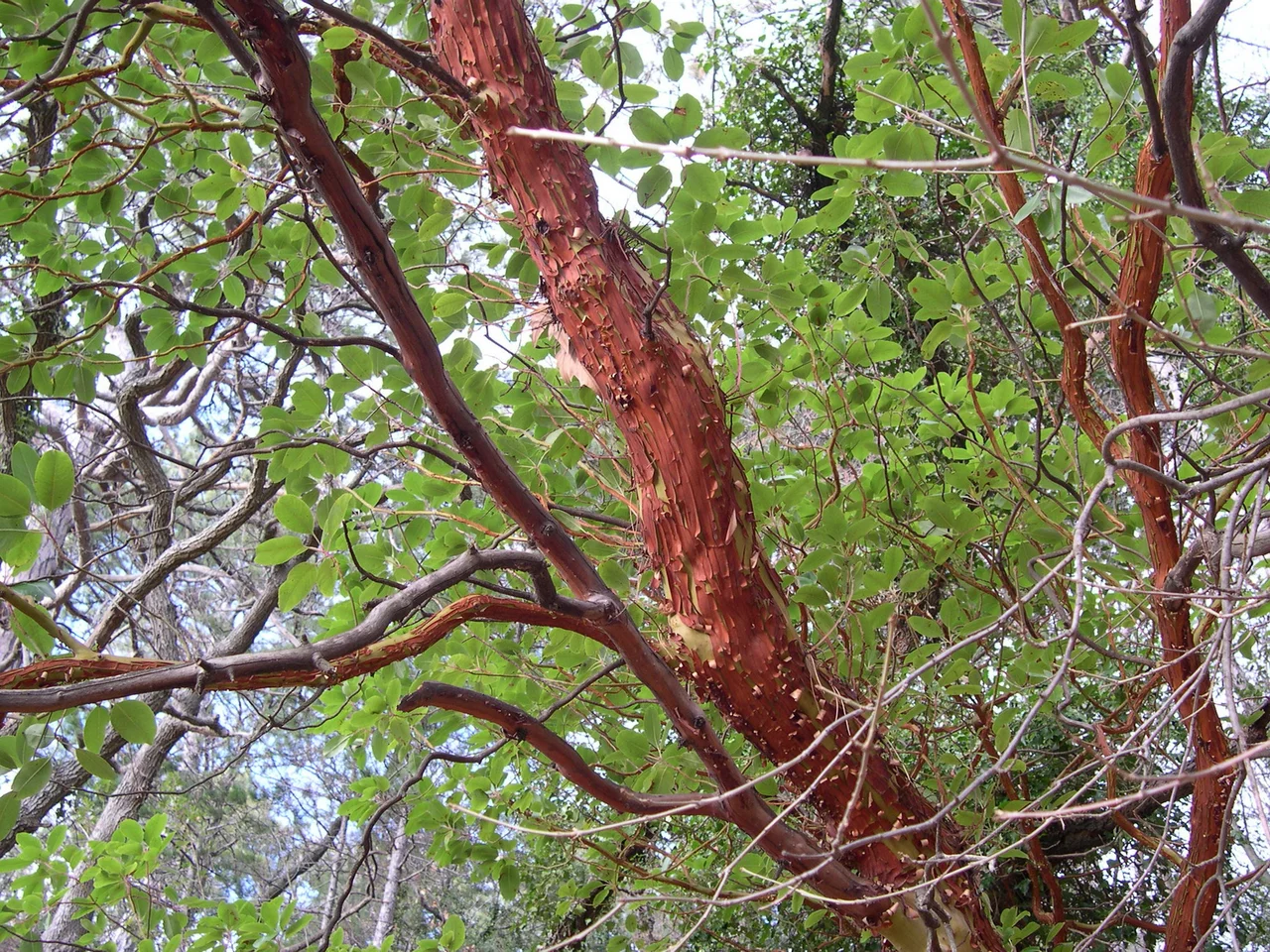
The reward for that warmth is a forest that feels transplanted from a Greek hillside. The woods are dominated by downy oak, threaded with dense stands of Greek juniper and a scattering of black pine, but the true star is the Greek strawberry tree, an evergreen with smooth, peeling, reddish bark that grows nowhere else in all of Crimea, a botanical rarity holding out on this single sheltered slope. Beneath the canopy cluster tough Mediterranean shrubs adapted to the dry summers, and offshore the story continues underwater: the reserve's waters are among the very few stretches of Crimea's southern coast still in a genuinely natural state, their seabed carpeted with native marine plant life that has vanished from busier shores. The place matters to travelers of another kind, too. BirdLife International has designated it an Important Bird Area because great cormorants pause here on their long migrations, folding their wings on a scrap of protected coast that has held onto its wild character while so much of the shoreline around it has been built over and changed. In a region of palaces and resorts, Cape Martian is a rare window onto what this coast looked like before people rearranged it.
From the Air
Cape Martian Reserve occupies the coast at roughly 44.507°N, 34.251°E, immediately east of the Nikitsky Botanical Gardens and a few kilometers northeast of Yalta. From the air, look for the small wooded headland dropping to the sea just past the terraced greenery of the botanical gardens, with the high wall of the Crimean Mountains rising behind. Fly the shore at 2,000 to 3,000 feet. The nearest major airport is Simferopol International (UKFF), about 50 km north over the ridge.
Nearby Stories
- Soviet Hospital Ship Armenia 5.2 km away
- Eski Kermen 5.5 km away
- Battle of the Alma 6.4 km away
- Novyi Svit Winery 8.5 km away
- 1988 Black Sea Bumping Incident 14 km away
- Akmesdzhyt Friday Mosque 16 km away
- Novyi Svet 31 km away
- Abkhazia 518 km away