.jpg)
Clonmany
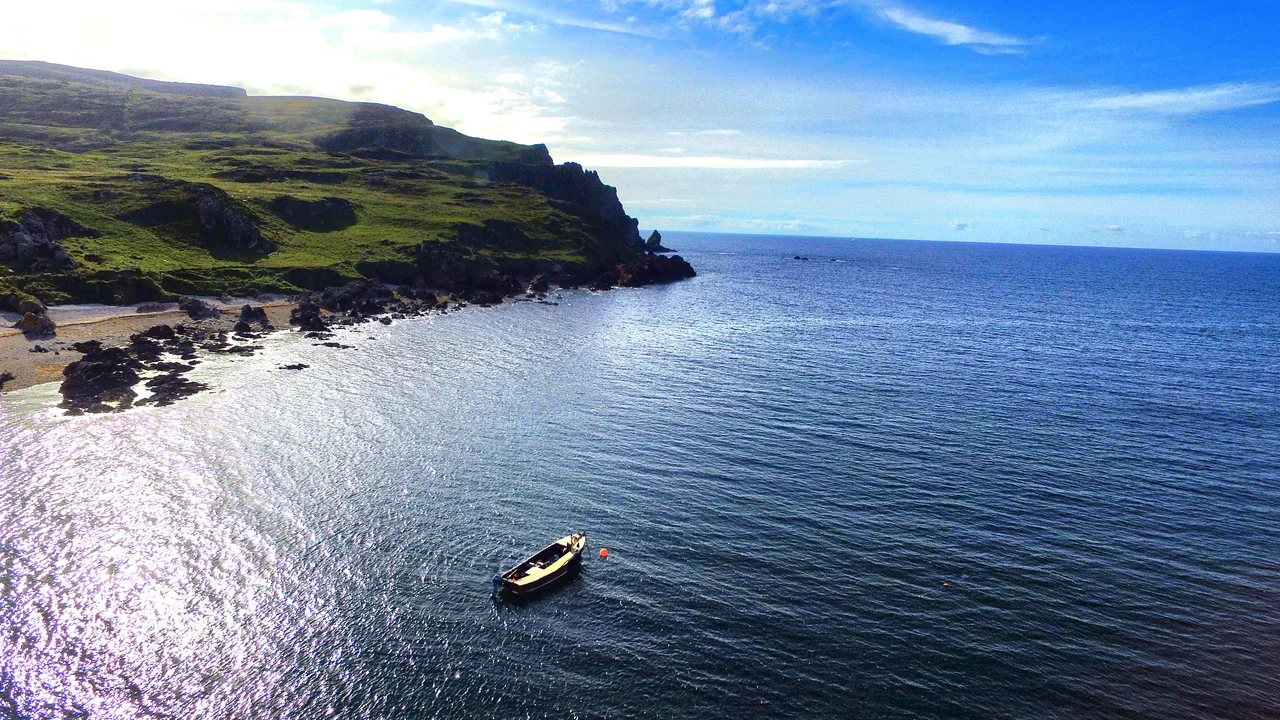
On a calm spring morning in 1847, eight men set out from the Isle of Doagh to fish Trawbreaga Bay. The weather was good. The water was, by every account, exceptionally still. Then a single sudden swell rolled in from somewhere out at sea, and seven of the eight drowned within sight of their families on the shore. Their names were Donald Doherty, Patrick Doherty, James MacLoughlin, Patrick Roe Doherty, William Noher Doherty, Hugh McCool, and John McLoughlin. They left behind wives and children whose names also entered the record. This is Clonmany, a village in north-west Inishowen known locally as The Cross, because it grew up where two roads met. The cross is also the right symbol. Clonmany has carried more than most.
A Parish Priest Who Fought at Waterloo
Born in 1779 in Cockhill, Buncrana, William O'Donnell graduated from Maynooth College and promptly declined the priesthood for the army. He fought through the Peninsular War: Vitoria, Roncesvalles, the Pyrenees. He survived Waterloo. Then, at forty, he was ordained. He arrived in Clonmany in 1829 and stayed until his death in 1856. The locals called him the Waterloo Priest. He built five National schools in the parish. He went to Lifford Prison in 1838 for refusing to pay tithes to the Church of Ireland, and his imprisonment became a focal point for a national campaign against the tithe system. When the Famine came in 1845, he set up a Relief Committee. He was seventy-seven when he died in his Clonmany residence, having lived two lives in one century and devoted the second to the people of one small Donegal parish.
The Poitin Republic of Urris
Three miles west of Clonmany, in the Urris valley, the locals briefly established their own polity. The Urris Hills were ideal for making illegal poitin: surrounded by mountains, reachable only through Mamore Gap and Crossconnell, but close enough to Derry to sell what they distilled. In 1812 the producers organised. They posted scouts. They barricaded the road at Crossconnell. They threw rocks down on revenue police who tried Mamore Gap. For three years, between 1812 and May 1815, the authorities did not enter the Urris Hills. The locals called it the Poitin Republic of Urris, though the name was actually coined in the 1920s, long after General Dalziel finally led a military force into the valley and ended the experiment. There are no governance records. The Republic existed mostly in defiance and rumour, which is fitting.
Land War and Eviction
The nineteenth century brought a different kind of unrest. By the 1830s the Ribbon men were attacking landlords. In February 1832, three thousand tenants assaulted the properties of Michael Doherty of Glen House and Neal Loughrey of Binnion. The unrest never really stopped. In 1881, eighty armed police entered Clonmany to oversee mass evictions ordered by four landlords. The Land League organised protest marches. The local clergy stood with their parishioners. The Times of London wrote that in Clonmany there was security for neither life nor property. Hundreds of families were turned out of their homes in the 1880s. Some had owed years of rent. Others had paid and were evicted anyway. Catherine Doherty, a widow in Cleagh, offered two years of arrears and half the costs and was refused. The bailiffs cleared her furniture into the road and sealed her door.
The Murders of 1921
On 10 May 1921, two Royal Irish Constabulary officers stationed at the Clonmany barracks went out for an evening walk near Straid. Their names were Alexander Clarke, twenty-three, and Charles Murdock, originally from Dublin. They never returned. The IRA abducted them both. Clarke was shot and thrown into the sea; his body washed up at Binion the next day with gunshot wounds to the heart, jaw, and neck. Murdock reportedly escaped the initial attack, sought refuge among residents of Binion, and was betrayed. His body has never been found. Local tradition says he was buried in a bog near Binion Hill. In the days that followed, six bridges on the road between Buncrana and Clonmany were destroyed by explosives, partly to delay the return of Clarke's body to England. The work of repair fell to local people.
What the Sea Brings In
Clonmany's shoreline has always belonged half to the sea. In August 1940, the body of an Italian migrant named Giovanni Ferdenzi washed ashore at Gaddyduff. He had been on the SS Arandora Star, sunk by a U-boat that July while carrying internees to Canada. He was buried in Clonmany cemetery. During the Second World War, mines drifted regularly onto the strand. One detonated at Urris in 1942. In March 1946, eight mines came ashore after a storm and the Irish Army destroyed all of them. Atlantic weather still sends storms ashore here. In August 2017, severe flooding closed the R238 when a bridge collapsed. The Irish Defence Forces helped with the rescue. The village is still there. The Tug of War team, founded in 1946, has six world gold medals. The Clonmany Festival happens every August, sheepdog trials and all.
From the Air
Located at 55.26N, 7.41W, in north-western Inishowen, County Donegal. Nearest airports are Donegal (EIDL) 33 nm south-southwest and City of Derry (EGAE) 22 nm south-east. From the air, look for the Mamore Gap pass between the Urris Hills and Raghtin More to the southwest, with the village sitting at the junction of small roads inland from Tullagh Bay. Lough Swilly stretches south. Atlantic conditions can shift fast here; locals say four seasons in an hour is not a saying but a forecast.
Nearby Stories
- German submarine U-155 (1941) 7 km away
- Grianan of Aileach 8 km away
- Tory Island 8.9 km away
- Greencastle Lifeboat Station 9.2 km away
- Dungiven 12 km away
- The Rosses 21 km away
- German submarine U-1005 23 km away
- Bruichladdich Distillery 49 km away