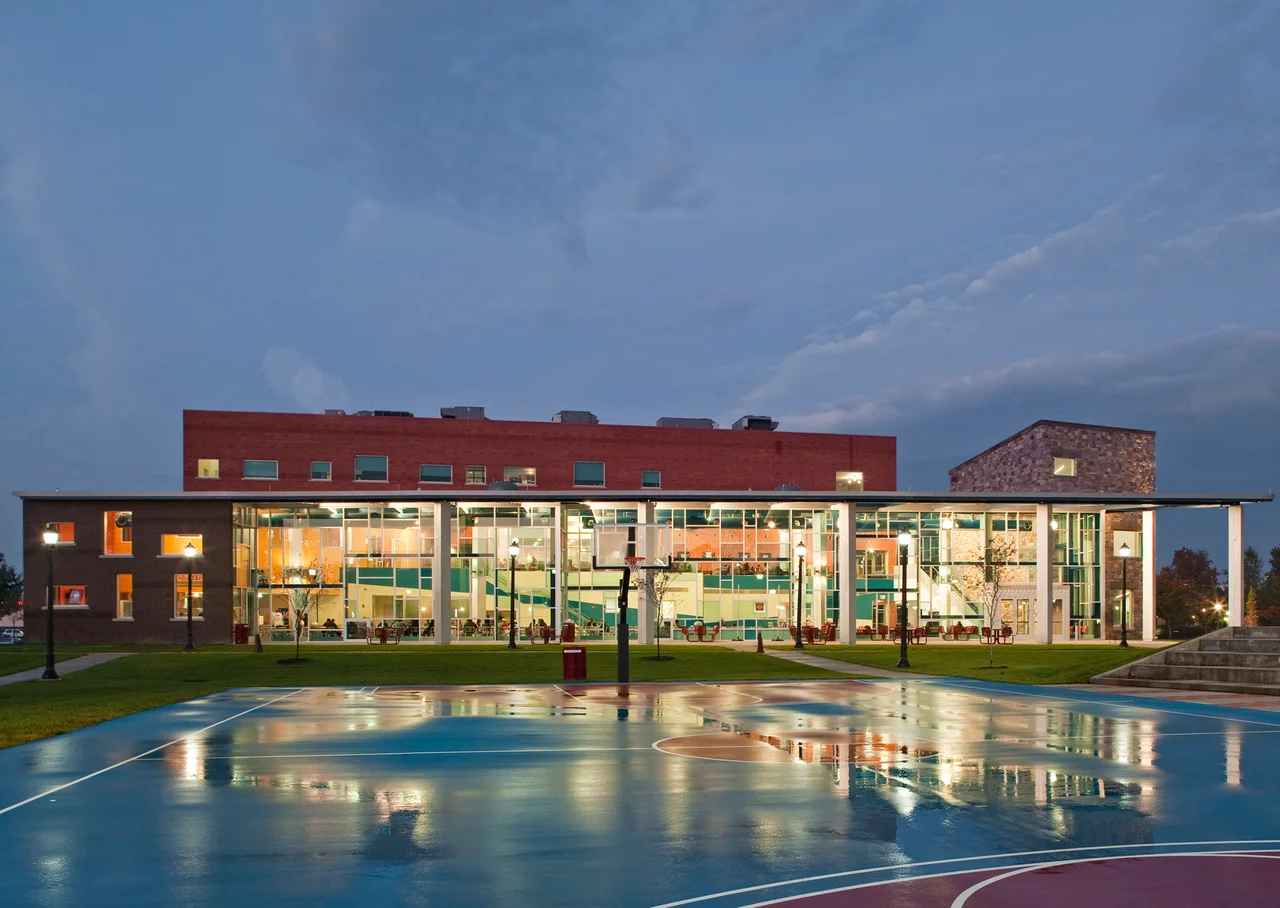

Delaware State University
On May 15, 1891, the Delaware General Assembly established the Delaware College for Colored Students. The name was bureaucratic and revealing: the state already had a Delaware College, in Newark, that was attended by white students. The new college needed a different name to keep the white legislators clear about which institution was funding what. In 1893 the state changed the name again, to the State College for Colored Students - this time to avoid any confusion at all. The college awarded its first degrees in 1898. The name kept changing. In 1948 it became Delaware State College. In 1993 it became Delaware State University. The institution's history of renaming traces a country's slow vocabulary shift on race. The mission has held. The school has spent 134 years educating Black students from Delaware.
The Land Grant and the Long Climb
Delaware State was one of seventeen 1890 land-grant HBCUs established under the Second Morrill Act of 1890, which required states that received federal land-grant funding to either admit Black students to existing land-grant colleges or build separate ones. Delaware built a separate one. The school received its first major accreditation in 1945 from the Middle States Commission on Higher Education - and lost it in 1949, then regained it in 1957. The accreditation troubles reflected the disadvantages built into the segregated system: white land-grants got more funding, more facilities, more faculty. Delaware State worked through those gaps and became, by the late twentieth century, one of the leading research HBCUs in the country. It now graduates more African American optical-science PhDs than any other institution in the United States. Its Center for Research and Education in Optical Sciences and Applications (CREOSA) is a National Science Foundation Center for Research Excellence. Its Center for Applied Optics for Space Science (CAOSS) is a NASA University Research Center.
The Wesley Acquisition
On July 1, 2021, Delaware State University officially acquired Wesley College, a 157-year-old private Methodist institution founded in Dover in 1873. The transaction made DSU the first HBCU ever to acquire an institution that was not itself an HBCU. The deal was driven by Wesley's financial difficulties - the small private college had been struggling for years - but the structure was carefully chosen. DSU renamed the campus DSU Downtown to mark its proximity to the Delaware State Capitol and Legislative Hall. The university relocated its College of Health and Behavioral Sciences to the 41-acre Wesley site, renaming the academic division the Wesley College of Health and Behavioral Sciences to preserve the older school's name. The acquisition expanded DSU's footprint into downtown Dover and added historic buildings and dormitories to the campus inventory. It also made a quiet point: a historically Black university had reached a financial position from which it could rescue a historically white institution from closure.
The MacKenzie Scott Gifts
In December 2020, MacKenzie Scott - the philanthropist and former wife of Jeff Bezos - donated $20 million to Delaware State University. The gift was unrestricted, no naming required, no strings attached. Scott had built her giving practice around identifying organizations doing important work with limited resources, and HBCUs were a major focus of her early grants. The $20 million was the largest single gift in DSU's 129-year history. Scott has continued to make large unrestricted donations to HBCUs in subsequent years - by 2025, her cumulative giving to HBCUs had reached well into the hundreds of millions of dollars. For DSU, the Scott gift came at a transformational moment, weeks before the announcement of the Wesley College acquisition. The combination of the Scott gift, the federal pandemic-era funding for HBCUs through the American Rescue Plan, and the Biden-era HBCU initiative pushed Delaware State into the strongest financial position in its history.
The Aviation Program
Delaware State University operates the only full-service, university-based flight school in the mid-Atlantic region. The aviation program is housed at Delaware Air Park in Cheswold, a small airport about ten miles north of the main campus. Students pursue B.Sc. degrees with concentrations in either Aviation Management or Professional Pilot. The Professional Pilot track gets students all the way through FAA Private Pilot, Instrument, Commercial, Multi-Engine, and Certified Flight Instructor ratings while they earn their bachelor's degree. The program is approved by the State of Delaware Education Department for Veterans Flight Training. The aviation program represents one of the most direct paths from HBCU undergraduate education to the commercial aviation workforce, a sector that has historically had limited Black representation. DSU graduates have gone on to careers as airline pilots, military officers, FAA inspectors, and aviation managers. The program is small but unique - the only one of its kind in the mid-Atlantic, and one of the few aviation programs operated by an HBCU anywhere in the country.
Dover and the Capital
The 400-acre main campus sits on the southern edge of Dover, the Delaware state capital. The location matters: DSU is the only major university in the state's capital, which gives it unusual access to state government internships, legislative testimony opportunities, and direct partnership with the executive branch. The Loockerman Hall on campus, a colonial mansion built in 1742 and added to the National Register of Historic Places in 1971, predates the university by 149 years and survives as the campus's oldest building. The Memorial Hall, the Hornets' basketball arena, has hosted Mid-Eastern Athletic Conference tournaments. The Alumni Stadium, home of the football team that competes in NCAA Division I FCS, sits at the south end of campus. Joe Biden delivered the DSU commencement address in May 2016 as Vice President. The state's senior politicians regularly visit the campus. The Approaching Storm Marching Band has played at presidential inaugurations and HBCU classics across the East Coast. For a school whose state once would not let its students vote, DSU has become an institution where state government, federal politics, and the historically Black graduate workforce all cross paths.
From the Air
Delaware State University sits at 39.19 degrees north, 75.54 degrees west, on the south side of Dover, Delaware. Dover Air Force Base (KDOV) is 4 nautical miles southeast - one of the largest air mobility bases in the U.S. Air Force - with restricted airspace surrounding its operations. Delaware Air Park (33N), where DSU's aviation program is based, is 7 nautical miles north in Cheswold. Pattern altitude in surrounding civil airspace is governed by Dover Class C. The terrain is flat - typical Kent County agricultural patchwork. Watch for active military operations at Dover AFB and intermittent restricted airspace during Dignified Transfer ceremonies.
Nearby Stories
- Cape May County, New Jersey 4 km away
- Punkin Chunkin 18 km away
- Fort Delaware: The Island Prison Where 33,000 Confederates Waited Out the War 28 km away
- USS Jacob Jones (DD-130) 40 km away
- Battle of North Point 45 km away
- Harriet Tubman Byway: The Routes That Led to Freedom 47 km away
- The Pine Barrens: Home of America's Oldest Monster 53 km away
- Three Mile Island: The Accident That Stopped Nuclear America 110 km away