
Dover Motor Speedway
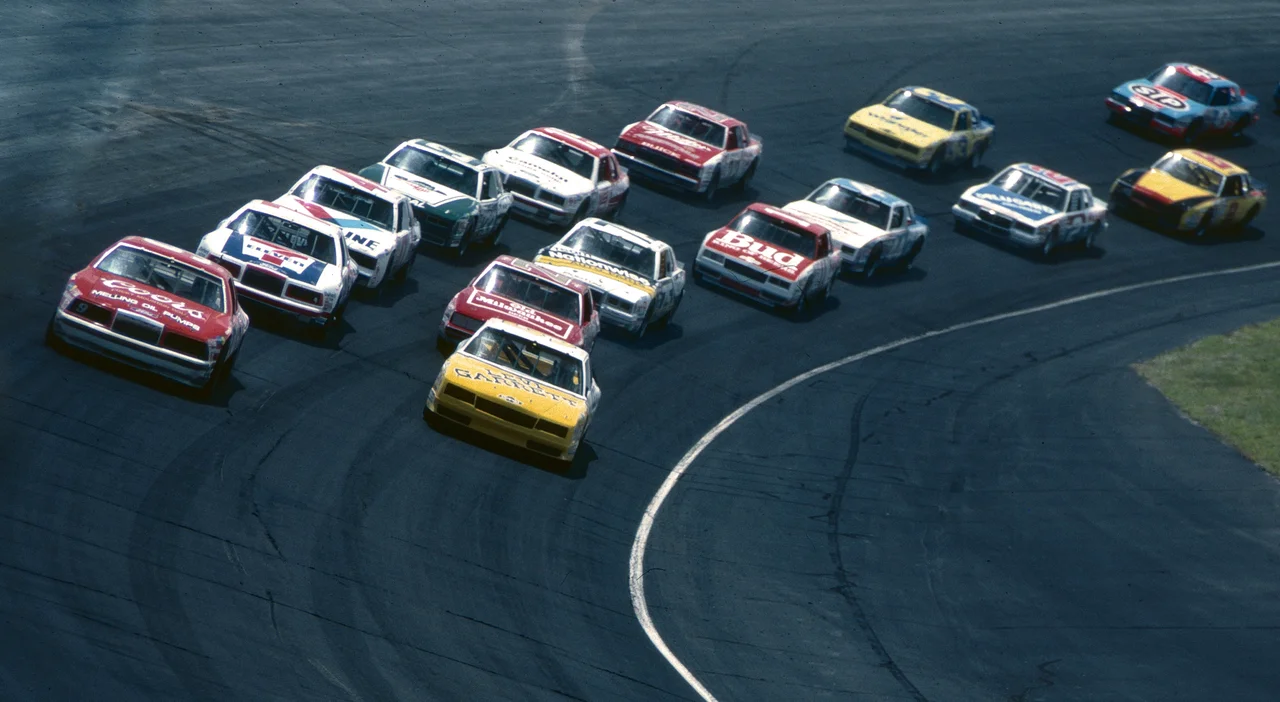
The Dover Motor Speedway is a one-mile concrete oval banked at 24 degrees in the turns. Drivers call it the Monster Mile. The concrete - asphalt was replaced with reinforced concrete in 1995, a $1.8 million repaving job - is unique among the major NASCAR ovals in the United States. Concrete is harder than asphalt, less forgiving to slide on, faster on the bottom groove, and demands a different driving line through every corner. A NASCAR Cup car hits about 175 miles per hour on the longer straightaway. The horse track sits inside the auto oval - a one-mile harness racing track operated separately by Bally's Dover. On race weekends, a fan watching the Cup Series sees a concrete oval that contains a dirt oval. Both have hosted official races. The Monster Mile is the only North American motorsport facility that is also a horse track.
David Buckson and the Lien Years
Dover Downs - the original name - was built by David P. Buckson, then-Attorney General of Delaware, who pushed Senate Bill 201 through the Delaware General Assembly in 1967. The bill rewrote state racing law specifically to let Buckson build the track. Governor Charles L. Terry Jr. signed S.B. 201 into law. Buckson bought 600 acres at the north edge of Dover for under $2 million. Construction began in October 1967. Within a year, multiple liens totaling at least $286,500 had been filed against the project. By July 1969, those liens had grown to over $950,000. The horse races began on March 8, 1969; Pinehurst, with jockey Fred Kratz aboard, won the first race. The auto races followed in July, with Richard Petty winning the 1969 Mason-Dixon 300. The financial troubles continued through the 1970s - the horse track ran perpetual deficits, while the auto track kept the lights on. John W. Rollins, the Delaware businessman and former lieutenant governor, provided emergency financing year after year. In 1977, the FBI investigated possible race-fixing at the harness track. In 1979, Buckson was eased out of the presidency. The facility kept operating by the slimmest of margins.
The Slot Machines and the Recovery
By the late 1980s, the horse racing business was dying nationally. Brandywine Raceway, north of Wilmington, closed in 1990. Dover Downs' horse purses were shrinking. In 1989, Denis McGlynn - who had succeeded Buckson as president of Dover Downs in 1979 - began publicly advocating for the legalization of slot machines in Delaware. Governor Mike Castle vetoed the first legalization bill in 1989. Governor Tom Carper vetoed the second in 1994. A third bill, H.B. 628, allowed the state a bigger share of the profits and required slot machines to be relicensed every four years. Carper let it become law without his signature. Dover Downs installed its first slot machines in late 1995. Within a year, the facility had completely recovered. By March 1999, it had 1,568 machines. In 2002 it added a 520-room four-star hotel that became one of the largest in central Delaware. The same political deal that saved Dover Downs also funded Delaware public schools - the state's share of slot revenue is split between education and the racetrack purses. The horse industry survived because slot machines fed it. The slot machines paid for it because the legislators had said they could.
Miles the Monster
The track's official mascot, since 2000, is Miles the Monster - a 46-foot fiberglass figure that stands at the entrance to the speedway. Miles looks like a cross between the Hulk and the Marvel Comics character The Thing, made of jagged concrete. The mascot was inspired by a theme of concrete, according to former Dover PR worker Joe Heller. Miles was first introduced in 1993 as a tyrannosaurus rex but was redesigned in 2000 into his current form. A miniature version of Miles serves as the winner's trophy for the NASCAR Cup race - a small Miles figure that drivers raise overhead in Victory Lane. The Monster Mile slogan and the Miles mascot together turned Dover into a brand identity larger than the track itself. Race fans drive past Miles into the parking lot, take photographs, buy Miles merchandise, and remember the Dover Monster long after they have forgotten the score of any particular race.
The Boom and the Decline
From the mid-1980s through the early 2000s, the track expanded continuously. The seating capacity grew from about 30,000 in 1985 to 140,000 by 2005 - making Dover, briefly, one of the largest sporting venues in the country. The 1996 master plan approved by the City of Dover would have allowed expansion to 170,000 seats. The plan was never completed. NASCAR's national popularity peaked in the mid-2000s and began a long, slow decline driven by economic conditions, changes in viewer demographics, and shifts in motorsport media. By 2011, Dover's Cup Series attendance had fallen below 90,000. Between 2012 and 2019, the track demolished its excess capacity in stages, removing about 86,000 seats. The current capacity is 54,000. The track is no longer the largest in the country; the demolition is one of the most visible signs of NASCAR's post-peak adjustment. About 3,000 dedicated camping spots remain. Race weekend still fills the hotels for fifty miles around. The races are smaller now, but they are still significant economically and culturally for central Delaware.
Firefly, SMI, and the Modern Mile
From 2012 through 2018, the Firefly Music Festival ran in the Woodlands adjacent to the speedway. Headliners included Paul McCartney, Eminem, Foo Fighters, Arcade Fire, and Bob Dylan; attendance reached 90,000 across four days. The festival paused after 2018, returned in 2021 and 2022, and went on hiatus again after 2023. In December 2021, Speedway Motorsports, LLC - the publicly traded company that owns Bristol, Charlotte, Atlanta, Texas, Las Vegas, and several other major NASCAR tracks - purchased Dover Motorsports for $131.5 million. The track was renamed Dover Motor Speedway. Under SMI ownership, the schedule has been reshuffled: Dover lost one of its two annual NASCAR Cup Series weekends to other SMI tracks but added the All-Star Race, the NASCAR exhibition that brings the top Cup drivers together for a unique format. The current weekend hosts the All-Star Race, plus point-paying races in the Xfinity Series and Craftsman Truck Series. Since 2022, Dover has also hosted Gift of Lights - a drive-through Christmas display with 3.5 million lights that runs through the holiday season. The Monster Mile has survived sixty years by adapting to whatever the entertainment business required next.
From the Air
Dover Motor Speedway sits at 39.19 degrees north, 75.53 degrees west, on the north side of Dover. The track is visible from low altitude as a distinct one-mile oval with the harness track inside. Dover Air Force Base (KDOV) is 5 nautical miles south with restricted airspace. Delaware Air Park (33N) is 5 nautical miles northwest. Watch for restricted airspace during major race weekends when temporary flight restrictions may apply over the track. Pattern altitudes of 1,500 feet AGL give a good view of the speedway and the surrounding Bally's Dover hotel-casino complex. US-13 and DE-1 run along the southern and eastern edges of the property.
Nearby Stories
- Cape May County, New Jersey 4 km away
- Punkin Chunkin 18 km away
- Fort Delaware: The Island Prison Where 33,000 Confederates Waited Out the War 28 km away
- USS Jacob Jones (DD-130) 40 km away
- Battle of North Point 45 km away
- Harriet Tubman Byway: The Routes That Led to Freedom 47 km away
- The Pine Barrens: Home of America's Oldest Monster 53 km away
- Three Mile Island: The Accident That Stopped Nuclear America 110 km away