
Eulo
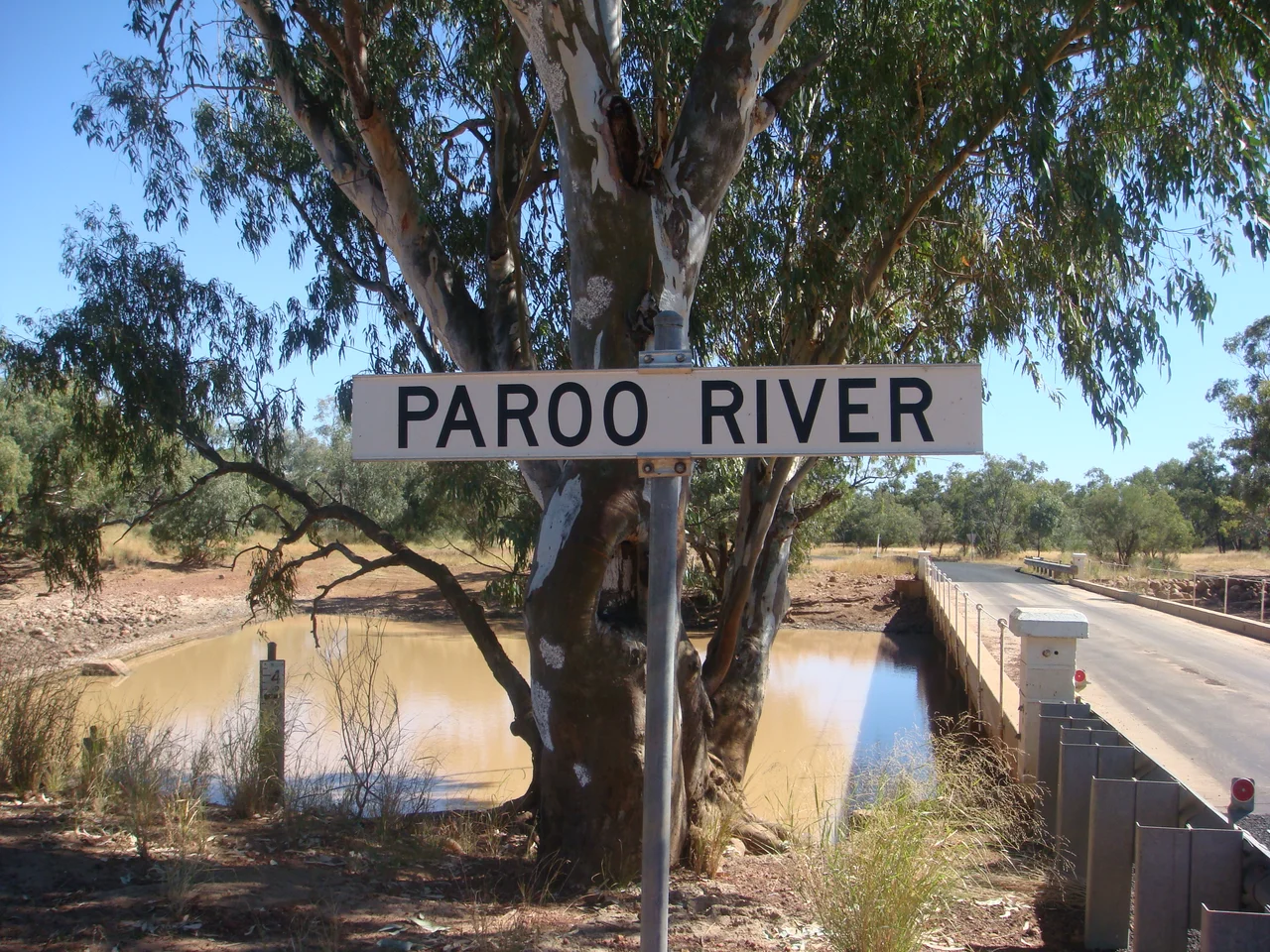
Fewer than a hundred people live at Eulo, scattered among a handful of houses on the banks of the Paroo River in Queensland's far south-west. There is one pub, one general store, a fuel bowser, and a great deal of red dust and silver-grey saltbush in every direction. It is the kind of place a traveller might pass through in ninety seconds. But Eulo punches absurdly above its weight in stories. This tiny outback town produced a flamboyant nineteenth-century woman who traded opals and ruled the district from behind a hotel bar, hosts a world championship for racing reptiles, keeps a memorial to a cockroach who died at the moment of his greatest triumph, and sits beside mineral mud springs that rise, against all logic, out of the parched ground. Small towns are supposed to be quiet. Eulo never got the memo.
The Eulo Queen
Her name was Isabel Gray, and in the 1880s and 1890s she made this remote staging post her kingdom. By 1886 she and her husband were keeping hotels at Eulo, on the busy coach road between Cunnamulla and Thargomindah, and Isabel turned the role of publican into something close to royalty. She bought opals from the rough men who gouged them out of the surrounding fields, and she wore her wealth openly - famously a girdle that alternated large opals with iridescent nautilus shells. Said to have been educated in Switzerland, married more than once, she presided over her bars with a mix of glamour and shrewd commerce, and worked too as a courtesan from the hotel's private bar. The district called her the Eulo Queen. Her story did not end in jewels: by the 1920s she was living in poverty in the town she had once dominated, and she died in 1929 at a hospital in Toowoomba, her estate worth almost nothing. The town's surviving pub still bears her name.
A Hero Named Destructo
Since 1968, Eulo has staged the World Lizard Racing Championships, run on a two-metre dirt track as part of the Cunnamulla-Eulo opal festival. The premise is exactly as wonderful as it sounds: lizards, mostly bearded dragons, sprinting for outback glory. But the town's most cherished competitor was not a lizard at all. In 1980, a New South Wales cockroach named Destructo was entered to extend the eternal Queensland-versus-NSW rivalry to a new species. Destructo covered the track in 24.5 seconds and beat the favoured lizard, a bearded dragon called Wooden Head, who had himself just defeated 87 rivals. Then tragedy struck. In the chaos of celebration, Destructo's own trainer accidentally crushed the champion to death. The town responded the only way it could: with a granite memorial beside the track, unveiled in 1981, honouring "Destructo, champion racing cockroach." As one festival organiser put it, they respect the dead around Eulo - especially a dead hero.
Mud From the Deep
Nine kilometres west of town, the ground does something strange. Mineral-rich mud, pushed up by the immense underground pressure of the Great Artesian Basin, seeps to the surface and dries into pale grey-white hillocks - natural mud mounds, fed by water that fell as rain on distant ranges and travelled underground for thousands of years before surfacing here. People come to bathe in it. At the Eulo mud baths, visitors lower themselves into clawfoot tubs filled with the mineral mud, then rinse in hot artesian water, in a setting fenced by corrugated iron under an enormous outback sky. It is part spa, part endurance test, entirely Eulo - a luxury improvised from geology in a place where the nearest day spa is several hundred kilometres away.
Old Country, Long Memory
Long before opals and coach roads, this was the country of the Kalali people, and the wider region carries the language of the Margany. The land remembers older inhabitants still: in 2011, one of Australia's richest concentrations of megafauna fossils was found near Eulo, including the bones of Diprotodon, the rhinoceros-sized marsupial that once browsed these plains. The town nods to that deep past with a Diprotodon statue at its eastern entrance. Modern Eulo carries the marks of a harder, busier era too - a World War II air-raid shelter on Leo Street, built when the town sat on the air route between Darwin and Melbourne, and a quiet airstrip that in 2023 became the first in Queensland to trial emergency lanterns so the Royal Flying Doctor Service could land here at night. Floodwater, fire and drought have all visited; the Paroo broke the town levee in 2025. Eulo absorbs it all and keeps going, a tiny dot still telling enormous stories.
From the Air
Eulo sits at roughly 28.17 degrees south, 145.05 degrees east, on the Paroo River in far south-west Queensland, about 67 kilometres west of Cunnamulla along the Bulloo Developmental Road (part of the Adventure Way). From the air the town reads as a small cluster of roofs against the dark, braided line of the Paroo and its waterholes, surrounded by tan saltbush plains. Eulo Airport (YEUO), a 2,000-metre earthen strip, lies immediately south of town. Cunnamulla Airport (YCMU) is the nearest larger field to the east. The mud springs lie roughly nine kilometres west and appear as pale patches in the scrub. Best viewing is morning or late afternoon, when low light picks out the river channels and the long shadows of the floodplain timber; arid-zone visibility regularly exceeds 50 kilometres.
Nearby Stories
- Mulga Lands 18 km away
- Currawinya National Park 34 km away
- Lake Bindegolly National Park 37 km away
- Koroit opal field 52 km away
- Zero Obelisk 59 km away
- Royal Mail Hotel, Hungerford 83 km away
- Wyandra 85 km away
- Quandamooka People 110 km away