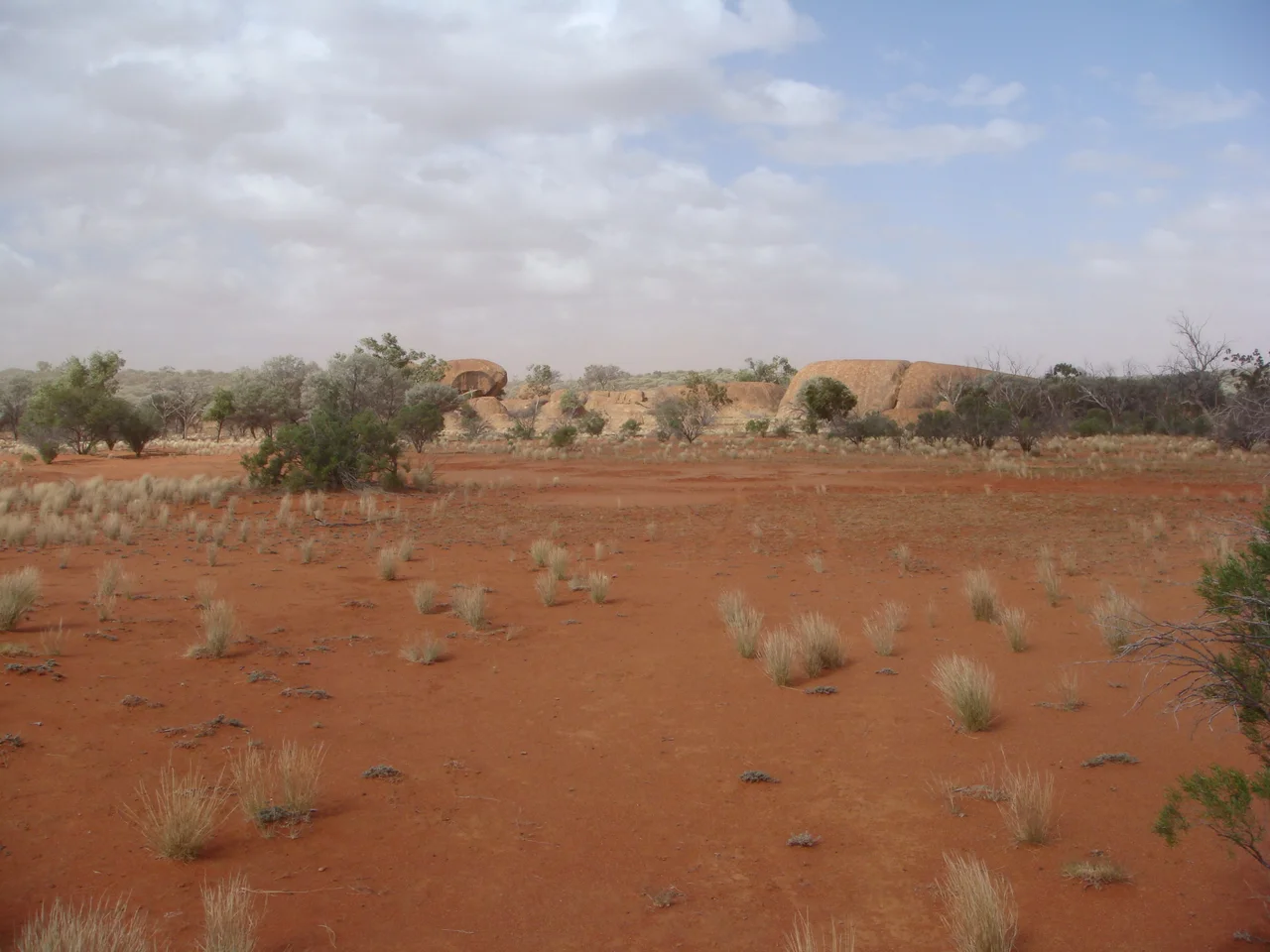

Currawinya National Park
Drive the dusty road north from Hungerford through red sandplains and mulga scrub, and nothing prepares you for what lies hidden in this corner of outback Queensland: two great lakes, side by side, one fresh and one salt, alive with waterbirds in numbers that can stagger the eye. Currawinya National Park is one of the largest parks in Queensland and one of the most important inland waterbird refuges in Australia, its lakes protected under the international Ramsar treaty. This is Budjiti Country, a cultural landscape used by Aboriginal people for countless generations, and today it shelters something rare - a fenced sanctuary where the bilby, that long-eared, burrowing marsupial pushed to the edge of extinction, has been given a chance to come home.
Two Lakes, Two Worlds
The heart of Currawinya is a pair of lakes that could hardly be more different. Lake Numalla is fresh; the slightly larger Lake Wyara is salt. They lie close together, fed by the Paroo - one of the last wild, unregulated rivers in the Murray-Darling system - yet they support different communities of life and shimmer with different light. When good rains come, the lakes fill and the birds arrive in extraordinary numbers: pelicans, ducks, swans, and shorebirds that have flown thousands of kilometres, gathering on the water in their tens of thousands. In a parched land, these wetlands are a kind of miracle, which is why they carry Ramsar listing as wetlands of international importance. Red sandplains beside dusty roads give no hint of the abundance waiting at the water's edge.
Saving the Bilby
The greater bilby once ranged across most of the continent. Foxes, feral cats and habitat loss drove it back until it clung on across only a fraction of its former country. At Currawinya, conservationists drew a line - literally. In 2001, with money raised by the Save the Bilby Fund, a predator-exclusion fence was completed around a 25-square-kilometre enclosure, and captive-bred bilbies were released inside to rebuild a wild population. The project has weathered setbacks: floods damaged the fence, feral cats broke in, and the work had to be done again. But the fence was rebuilt and strengthened, more bilbies were released, and the population has rebounded into the hundreds. Even the general store at nearby Eulo sells fluffy toy bilbies to help fund the effort - a small gesture toward saving a creature most Australians have never seen in the wild.
Country Older Than Memory
Long before it was a national park, this was - and remains - a place of deep significance to the Budjiti people, its traditional owners. The lakes, the river, and the wider landscape hold a long history of Aboriginal use, rich in archaeological, traditional and continuing cultural value. To stand here is to stand on Country that has sustained people through cycles of flood and drought for thousands of years, where knowledge of where the water gathers and the food can be found was passed down across generations. The waterbirds that astonish modern visitors were a resource and a presence in this landscape long before the first pastoral station was carved out of it, and the connection between people and place endures.
The Outback's Hard Terms
Currawinya does not make things easy, and that is part of its character. The roads are unsealed; a four-wheel drive is needed to reach Lake Wyara and the granite outcrops known as the Granites. There is no fuel in the park, no food, no reliable drinking water, and no mobile phone reception anywhere within it. Summer days can hit 40 degrees while nights drop sharply even in the warm months. The country's red soils and mulga have a sameness that disorients walkers, and a breakdown on a back track can leave you stranded overnight. Yet for those who come prepared - carrying water, fuel and a plan - the rewards are immense: kangaroos and emus on the roads, turtles in the rivers, and the unforgettable sight of a desert lake crowded with birds beneath an enormous outback sky.
From the Air
Currawinya National Park spreads across southwestern outback Queensland near the New South Wales border, centred around 28.78 degrees south, 144.48 degrees east, just north of Hungerford. From the air the park is unmistakable when the lakes hold water: Lake Numalla and Lake Wyara appear as broad sheets of blue and silver amid red sandplains, mulga and the winding Paroo River - a startling contrast in a dry landscape. The nearest sealed airstrips are Cunnamulla (YCMU) to the northeast and Thargomindah (YTGM) to the northwest, both in Queensland; Bourke (YBKE) lies well to the south in New South Wales. Visibility is typically excellent; the lakes are most spectacular after rain. Recommended viewing altitude 2,000-4,000 ft AGL to take in both lakes and the river system at once.
Nearby Stories
- Eulo 40 km away
- Lake Bindegolly National Park 53 km away
- Dr Ludwig Becker's Grave 67 km away
- Murrawarri Republic 85 km away
- Zero Obelisk 85 km away
- Quandamooka People 141 km away
- Toorale Station 176 km away
- Sturt National Park 179 km away