.jpg)
Ferryside RNLI Lifeboat Station
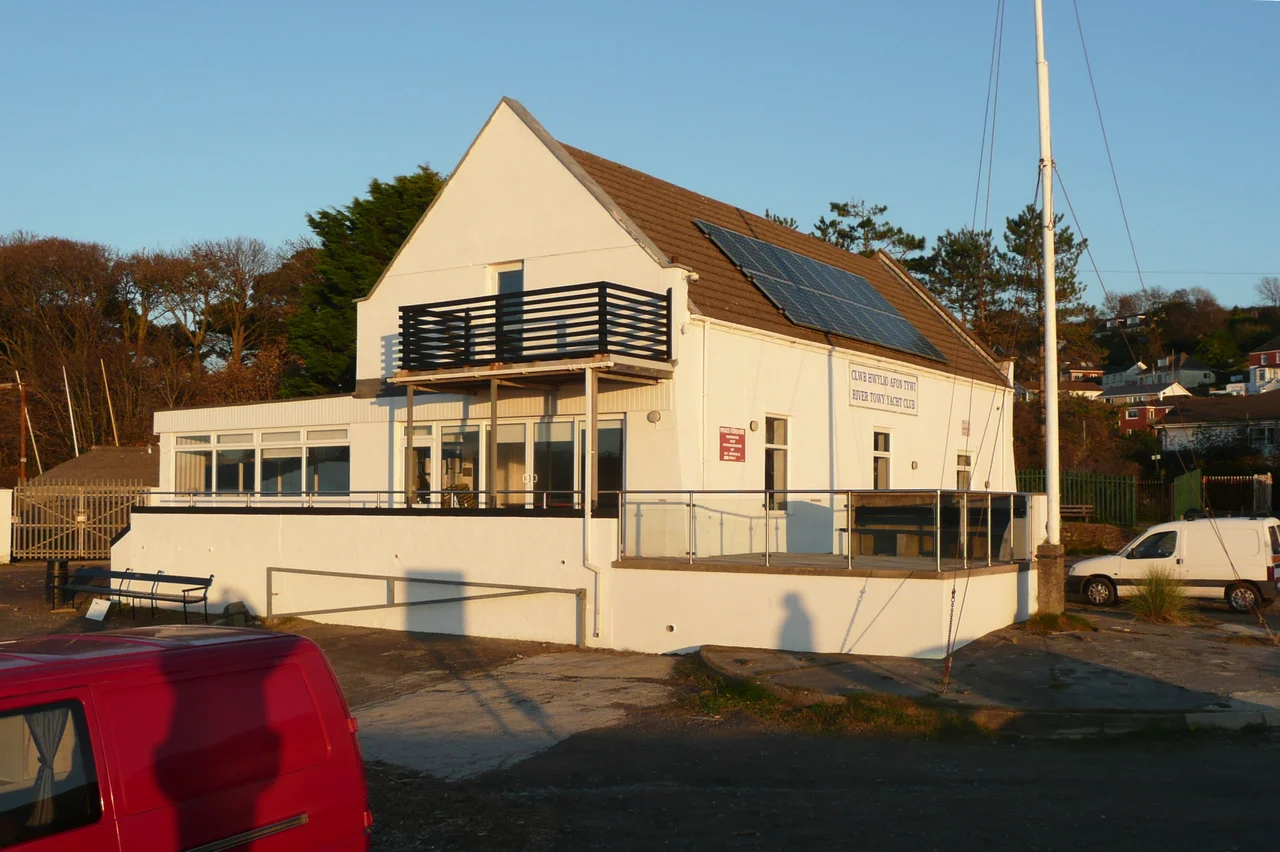
By 1960 the River Tywi was no longer a commercial waterway. Burry Port had shut. Llanelli's docks were idle. The big ports that had brought the cargo traffic through Carmarthen Bay had been replaced by lorries, motorways and Felixstowe. With the trade had gone the wrecks, or so it seemed. On 30 June 1960 the RNLI closed Ferryside Lifeboat Station after exactly a century of service. The last boat on station, Caroline Oates Aver and William Maine, was sold out of the fleet and ended her days as a fishing boat in Barmouth. The boathouse went to the River Towy Yacht Club. The crew went home. The decision turned out to be premature by exactly six years.
Laugharne First
The lifeboat service on this coast began in 1835, not at Ferryside but across the estuary at Laugharne. The Royal National Institution for the Preservation of Life from Shipwreck - RNIPLS, the unwieldy first name of what would become the RNLI - established Carmarthen Lifeboat Station there with a 26-foot rowing boat built by Harton for 65 pounds. No records of any service from the Laugharne station survive, which may mean the boat never launched, or simply that the early record-keeping was poor. The station closed in 1843. When the parent institution was relaunched as the modern RNLI in 1854 and looked at the area again, they decided the better site was Ferryside on the opposite side of the estuary.
The Manchester Boats
On 2 February 1860 the RNLI committee in London formally established Carmarthen Bay Lifeboat Station at Ferryside. A new 30-foot self-righting Pulling and Sailing lifeboat - six oars single-banked, plus a sail - cost 148 pounds, 9 shillings and 6 pence. The Great Western and South Wales railways carried it free of charge from the builders, arriving at Ferryside with its launching carriage on 21 January 1860. It was found to be already decaying after four years. A replacement arrived in 1864, paid for by a public subscription in Manchester and named City of Manchester. In total, four lifeboats serving Carmarthen Bay were funded by Mancunian donations - a quiet 19th-century example of one industrial city paying for the safety of a coast it would otherwise never see.
The Signe and the Silver Medal
On 15 March 1905, the City of Manchester (ON 56) was launched in gale-force conditions to the aid of the Norwegian barque Signe of Kristiania - now Oslo - which had been driven ashore on Cefn Sidan sands. By the time the lifeboat reached the wreck, the Signe was so far up the beach that her crew could simply walk ashore at low water. The Ferryside crew turned for home. The seas were too heavy to make Ferryside, so the coxswain decided to run for Burry Port instead. During the passage the lifeboat was repeatedly submerged. Crewmen were washed overboard and somehow managed to scramble back aboard. Everyone survived. Coxswain Superintendent David Jones was awarded the RNLI Silver Medal for gallantry. The story is typical of the era - the rescue itself almost a formality, the journey home a near-disaster, the medal not for saving the casualties but for keeping the lifeboat crew alive.
The British India
Another typical story from the station's records: on 23 December 1863, two days before Christmas, the Carmarthen Bay lifeboat launched to the vessel British India, on passage from Bombay to Liverpool, driven ashore in heavy weather on Cefn Sidan sands. The lifeboat reached the ship, gave assistance, saved both the vessel and her 27 crew, and stood by until the ship was safely re-anchored. A clean rescue, no casualties, a ship and her people saved on the eve of the holiday. The kind of service that does not make the headlines because nobody died. Most of the 57 launches in the station's 125 years were of this quieter character - undramatic, competent, lifesaving.
The Boat in the Yacht Club Roof
Across the century the boats got bigger and slower to launch, then smaller and faster again. The first motor-powered lifeboat did not arrive at Ferryside until 1941 - a 35-foot 6-inch single-engine William Maynard, already ten years old, transferred from a Northern Ireland station. By 1960 the calls had thinned to the point where the economics no longer worked, and the RNLI shut the station. The boathouse still stands on the beach. It became home to the River Towy Yacht Club and remains so today, a clinker-built memorial to a service that started in 1835 with one rowing boat at Laugharne and ended one hundred and twenty-five years later with a single old motor lifeboat at Ferryside. The independent lifeboat that took over in 1966 launches from the same beach, a couple of hundred yards along.
From the Air
The former RNLI station at Ferryside is at 51.77N, 4.37W on the east shore of the Tywi estuary; the building still stands as a yacht club. Best viewed from 1,500 to 3,000 feet to take in the wide Three Rivers estuary. EGFP Pembrey is 6 nautical miles southeast; EGFH Swansea 21 nautical miles east-southeast. Cefn Sidan Sands, scene of most of the historic rescues, stretches west of Pembrey. Check Pembrey AWR airspace status before low-level overflight.
Nearby Stories
- Teifi Valley Railway 1.2 km away
- Haverfordwest 5.1 km away
- Mumbles Lifeboat Disaster 8.1 km away
- Neath and Tennant Canal 12 km away
- Strata Florida Abbey 27 km away
- HMS H47 31 km away
- Ilfracombe Lifeboat Station 38 km away
- HMHS Glenart Castle 44 km away