
Neath and Tennant Canal
On a July evening in 1790, a meeting at the Ship & Castle public house in Neath resolved to build a canal. The men around the tables had iron and coal coming out of the valleys faster than the muddy roads could carry it, and they had just watched a neighbouring scheme - the Glamorganshire Canal - secure an Act of Parliament. By the next summer they had their own Act. Within five years the Neath Canal was open from Glynneath down to the town. Three decades later a second canal, built by one stubborn solicitor's son named George Tennant, would run alongside it and steal most of its traffic. Between them the two canals shifted a quarter of a million tons of coal a year at peak - and one of them was built without bothering to ask Parliament.
The Engineer's Canal
Thomas Dadford was the engineer the Neath proprietors hired. He came from a canal-building dynasty - his father and brother helped on the survey - and he proposed a route of 22 locks running down the Neath valley from Glynneath to Melincryddan, where it would meet the river. Construction began at the Neath end and worked north. By 1792 the line had reached the river crossing at Ynysbwllog, and Dadford resigned for a bigger job on the Monmouthshire Canal. Thomas Sheasby took over. The canal opened in 1795 with a final length of 13.5 miles and 19 locks. Subscribers had paid a total of £107.50 per share; by 1840 they were collecting dividends of £18 a year. Some 200,000 tons of coal a year moved on the canal at its peak, supplemented by iron, ironstone, and fire clay - the raw materials of a coalfield in full roar.
George Tennant's Private War
George Tennant was born in 1765, the son of a Lancashire solicitor with no canal-building experience whatever. He moved to South Wales in 1816, bought the Rhydings estate, and looked at the old disused Glan-y-wern Canal across Crymlyn Bog. The Glan-y-wern had been built in 1790 to haul coal from a colliery to the River Neath; it had closed after twenty years. Tennant leased it, enlarged it, and decided to extend it westward to the River Tawe at Swansea. He believed Swansea's docks would beat Neath's for transferring cargo to ships, and he was right. In 1818 his canal opened. Then he made the decision that earned him his nickname. To link his canal to the Neath, he would build a 5.5-mile extension to Aberdulais basin - as a private venture, without an Act of Parliament. Work began in 1821. A landowner named L. W. Dillwyn refused permission to cut through his land and obtained an injunction. Tennant sent a parade of important people to argue his case; Dillwyn called him "that terrible plague Mr. Tennant."
Quicksand and a Ten-Arched Aqueduct
Tennant's engineering problems were serious. Near Neath Abbey, a 500-yard cutting had to be driven through what appeared to be quicksand. The only solution was to build an inverted masonry arch under the canal bed, containing the sand and stopping it collapsing inward. At the northern end of the new line, the canal had to cross the River Neath itself - and Tennant's engineer William Kirkhouse built a ten-arched aqueduct 340 feet long to carry it. When the extension finally opened on 13 May 1824, total cost was about £20,000, not counting land or harbour works. Tennant had funded essentially the whole thing himself, after local landowners declined to invest. At the Swansea end, he built a sea lock into Fabian Bay and named the basin Port Tennant - a private harbour for a private canal. Once linked to Aberdulais, his canal stole most of the Neath Canal's traffic. Swansea was simply a better port.
Decline, Restoration, Rebuild
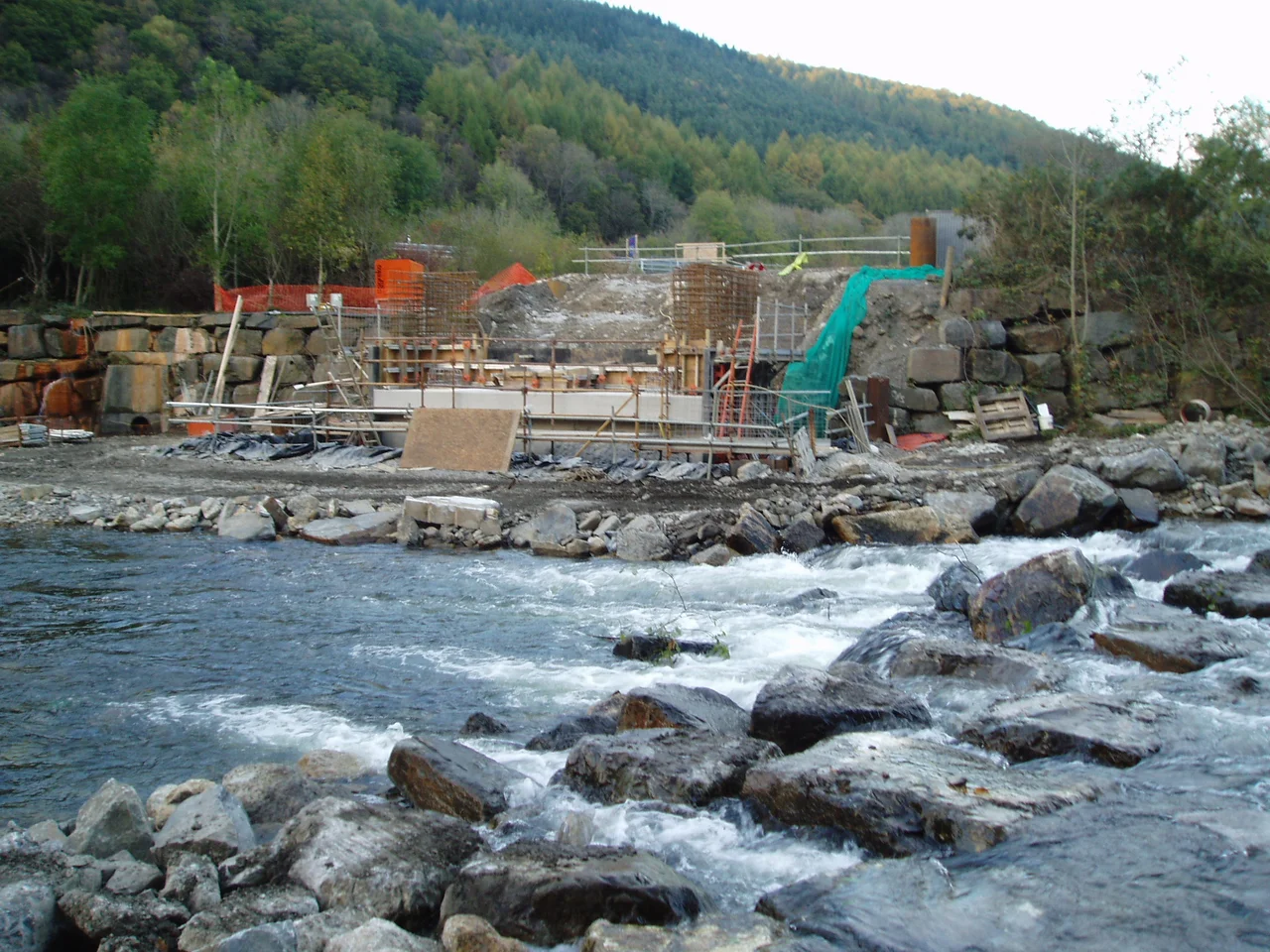
The Vale of Neath Railway opened in 1851 and the canals began their long decline. The Tennant kept tolls high while tonnage dropped - unusual for the era, when most canals were slashing rates to stay alive - and remained profitable into the 1890s. Navigation finally ceased on the Neath in 1934, on the Tennant soon after. But the infrastructure was kept up because local industries still needed the water. In 1974 the Neath and Tennant Canals Society formed. From 1974 to 1990, with help from job-creation schemes, volunteers and trainees restored 3.5 miles of canal from Resolven to Ysgwrfa, including seven locks. The project won a Europa Nostra award in 1998. A later £1.6 million EU-funded project extended the navigable section south, including the dramatic replacement of the Ynysbwllog aqueduct over the river Neath - a new 35-yard plate-girder structure that is now believed to be Britain's longest single-span canal aqueduct.
From the Air
Trace the Neath valley from the air and you can still read both canals in the landscape. The Neath Canal threads north-east from the town up the valley toward Glynneath, broken now where the 1970s bypass and the A465 culverted it, then surviving as a clean dark line through Resolven and Abergarwed. South of the town the Tennant Canal cuts west across the flatter ground toward Swansea, crossing the river on the long ten-arched aqueduct at Aberdulais and skirting Crymlyn Bog - now a Ramsar wetland and Site of Special Scientific Interest where rare slender cottongrass grows and fen raft spiders hunt. Near Swansea Docks, the canal is hard to find: roads and railways and the Prince of Wales Dock have buried Tennant's terminus. But it is still down there, supplying the dock with water through a culvert two centuries old.
From the Air
Located at approximately 51.67N, 3.81W along the lower Neath valley in south Wales. Nearest airports are Swansea (EGFH, about 6 nautical miles southwest) and Cardiff (EGFF, about 30 nautical miles east). Best viewed at 2,000-4,000 feet AGL following the valley north-east from Briton Ferry and Neath toward Glynneath. The Tennant Canal branches west from Aberdulais toward Swansea Docks; the Aberdulais aqueduct (ten arches, 340 ft) is a clear landmark where the canal crosses the river Neath. Crymlyn Bog, immediately west of the lower Tennant line, is a distinctive dark wetland visible on most days.
Nearby Stories
- Brecon and Merthyr Tydfil Junction Railway 2.4 km away
- Abergwili 3.6 km away
- Whiteford Lighthouse 7.1 km away
- Llanthony Priory 13 km away
- Hinkley Point C nuclear power station 14 km away
- Porlock 15 km away
- Brecon Beacons National Park 20 km away
- Moreton House, Bideford 35 km away