
Glyndebourne Festival Opera
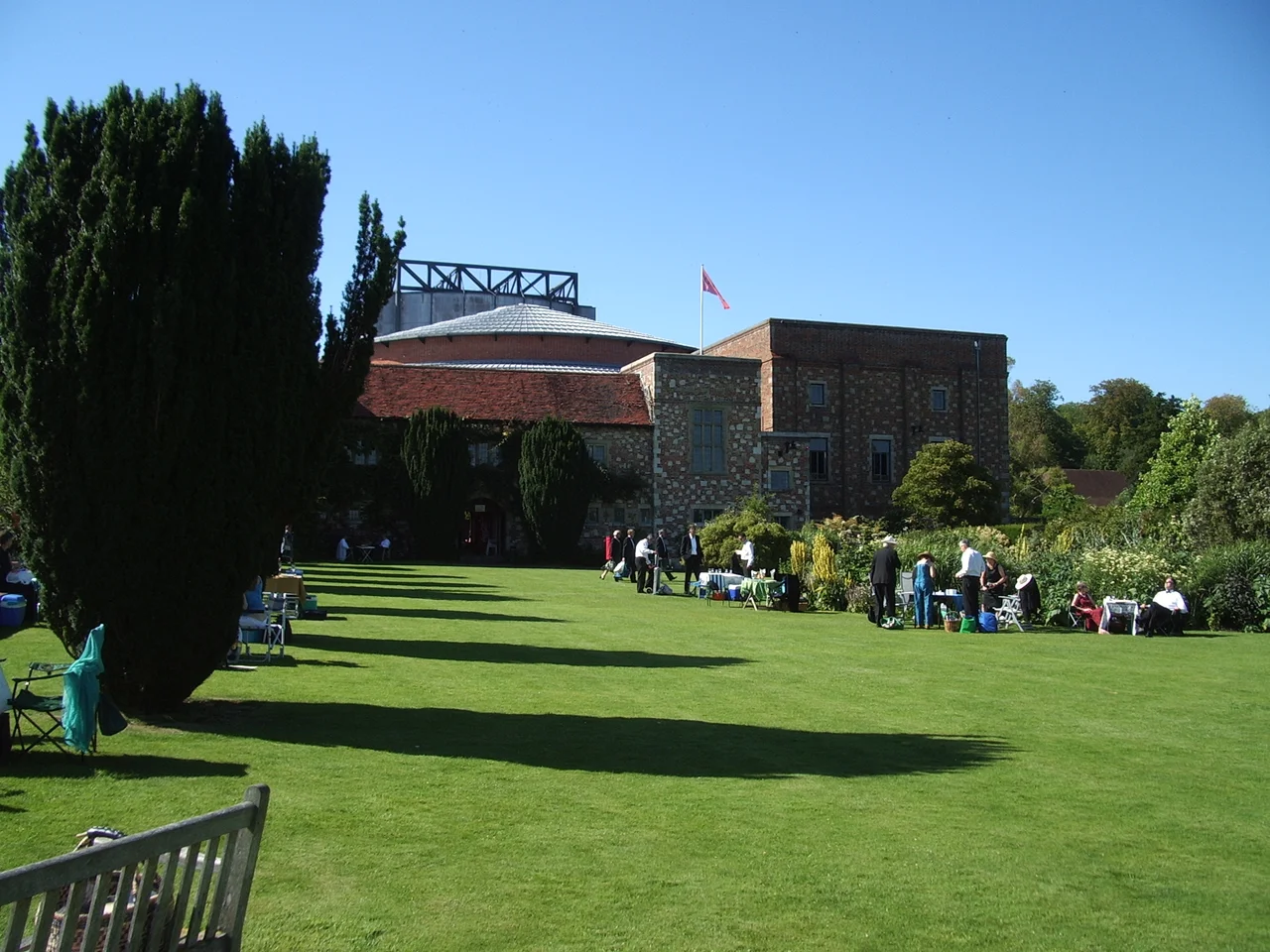
There is a moment, on a summer afternoon at Glyndebourne, when the dinner bell rings during the long interval and a thousand people in black tie and evening dresses walk out of an opera house and onto the lawn carrying picnic hampers. They open champagne. They unfold tartan rugs. The Sussex Downs rise behind them, a Henry Moore sculpture sits on the grass, and a couple in their seventies who have been coming for thirty years know exactly which patch of meadow they always claim. Then, ninety minutes later, the bell calls them back inside for the second half of *Le Nozze di Figaro*. This is one of the more peculiar institutions in British cultural life, and it exists because in 1934 a wealthy Eton-educated Mozart fanatic decided to put an opera house in the side of his Sussex country home and see if anyone would come.
Why John Christie Built It
John Christie inherited Glyndebourne, an Elizabethan and Victorian country house near Lewes in East Sussex, from his uncle in 1920. He was already a Mozart obsessive. In 1931 he married the Canadian-born soprano Audrey Mildmay, who had been singing at the Carl Rosa Opera Company; the marriage gave him a singer who could explain to him, with kindness, why his original plan - to put on amateur Mozart productions in the great hall with himself in the cast - was a bad idea. If he wanted Mozart done properly, she told him, he needed proper singers, a proper conductor, a proper theatre, and to step out of the cast himself. He took the advice. He built a small theatre next to the house, hired the German conductor Fritz Busch (recently exiled from Dresden by the Nazis) as music director, and Carl Ebert (also exiled from Berlin) as artistic director. The Glyndebourne Festival opened on 28 May 1934 with *Le Nozze di Figaro*, followed three days later by *Cosi fan tutte*. Reviews were so good that the festival has run every year since 1934 with only two breaks: 1941 to 1945 during the Second World War (when Glyndebourne sheltered evacuee children from London), and 1993 when the theatre was being rebuilt.
Mozart, Janacek, Gershwin
The festival has, from the beginning, been particularly celebrated for its Mozart. Fritz Busch's pre-war recordings of *Cosi fan tutte*, *Figaro* and *Don Giovanni* - taken from live performances in the small original house - became canonical and have been reissued many times. But the repertory has steadily widened. The 1980s saw a celebrated production of George Gershwin's *Porgy and Bess* directed by Trevor Nunn, later expanded to international tours and videotaped in 1993 - one of the great recordings of Gershwin's score and a moment when Glyndebourne, which could have remained narrowly Mozartian, demonstrated it would take twentieth-century American repertory just as seriously. Janacek's operas in Czech and Handel's in their full Baroque ornamentation have followed. The two resident orchestras - the London Philharmonic Orchestra, in the pit at Glyndebourne since 1964, and the period-instrument Orchestra of the Age of Enlightenment, used for Baroque and earlier classical repertory - give the festival exactly the technical foundation Christie originally wanted.
The New Theatre
By the late 1980s the original 1934 theatre was too small. It seated 830 people; demand was several times that. The Christie family - now under the leadership of John's son Sir George Christie, who had taken over in 1958 and would chair the festival until 2000 - made the decision to rebuild. The 1993 season was cancelled. A new theatre by the architect Michael Hopkins, seating 1,200 and built into the side of the same country house, opened in 1994. From the outside it is an act of careful brick modernism, fitted to the older country-house silhouette. Inside, it is a horseshoe of dark elm and oak wrapped around a stage that has the acoustic intimacy of a much smaller room. Gus Christie, son of Sir George and grandson of John, became chairman in 2000. The fourth-generation Christie family is, very unusually for a major arts institution in twenty-first-century Britain, still in operational charge of the festival their grandfather built.
The Tour, the Money and the Cuts
From 1968 the festival ran a touring company, Glyndebourne Touring Opera (later Glyndebourne on Tour, more recently Glyndebourne Tour). It took productions to Newcastle, Liverpool, Manchester, Sheffield, Oxford and other cities outside Sussex, and gave younger singers a chance to develop in roles that would otherwise have gone to international stars at the main festival. The Tour, unlike the main Festival, received Arts Council England subsidy - typically around £1.5 million a year. In January 2023, with Arts Council funding for the 2023-2026 National Portfolio significantly reduced, Glyndebourne announced the 2023 Tour season would not happen. In December 2023 the company appointed Adam Hickox as principal conductor of the Glyndebourne Sinfonia, the new name for the touring orchestra, signalling a partial reorganisation rather than full closure. The main festival itself operates without state subsidy at all. Its annual budget runs a little over £20 million; the money comes from ticket sales, the supporters' membership scheme, sponsorship, and major donor fundraising through the Glyndebourne Arts Trust and the American support charity. It is the only major opera season in the United Kingdom which is not state subsidised.
The Picnic and the Train
Most of Glyndebourne's audience travels down from London. The festival's daily rhythm is engineered around this fact. Performances start in the afternoon, late enough that opera-goers can finish lunch in London and catch a train from Victoria, with enough time to change into evening dress on arrival; they finish in time to catch the last train back to London Victoria via Lewes. The ninety-minute interval in the middle - which would be unthinkable at most opera houses - exists so that the audience can eat dinner in the gardens during the long break, either by picnic on the extensive lawns or in one of the on-site restaurants. The festival's music directors have been a quietly distinguished line: Fritz Busch from 1934, then Vittorio Gui, John Pritchard, Bernard Haitink, Andrew Davis, Vladimir Jurowski, and from 2014 onwards Robin Ticciati - who is, notably, the first former music director of Glyndebourne Tour to be promoted to the main festival post. The festival has also presented an annual opera performance at The Proms in London since 1953. Ninety-one years after John Christie's first season, the formal dress code persists, the picnic still happens, the singing is still world-class, and the man who started it all would, his grandson Gus says, recognise the place without much difficulty.
From the Air
Coordinates 50.8781 N, 0.0642 E, at Glyndebourne House just north of the village of Glynde and about 3 miles east of Lewes, East Sussex. Nearest airports: Brighton City Shoreham (EGKA) 11 nautical miles west-southwest, Lydd (EGMD) 28 nautical miles east-northeast, London Gatwick (EGKK) 23 nautical miles north-northwest. Recommended viewing altitude 1,500 to 3,000 feet AGL - the country house and its 1994 opera house extension sit in landscaped grounds at the foot of the South Downs north scarp; the steep chalk dome of Mount Caburn rises immediately south of the site. The A27 trunk road and the London-Eastbourne railway line both pass close, threading the gap between Caburn and the main South Downs ridge.
Nearby Stories
- Chiddingstone Castle 4.4 km away
- Kent 4.6 km away
- Camber Castle 5.4 km away
- Surrey 13 km away
- Amberley Museum & Heritage Centre 13 km away
- Swanage Lifeboat Station 113 km away
- Le Paradis Massacre 137 km away
- Wellington Clock Tower 150 km away