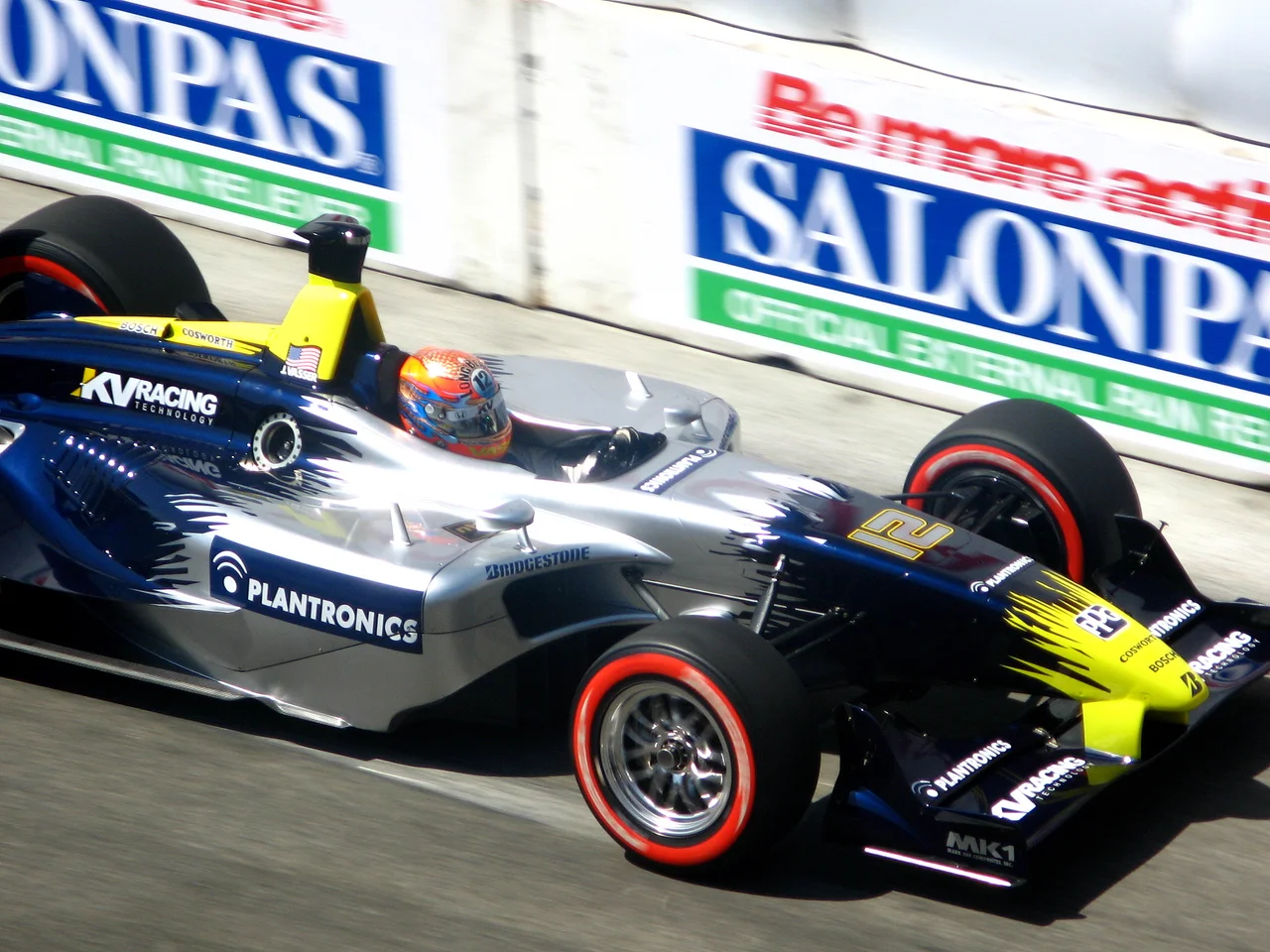

Grand Prix of Long Beach
Chris Pook had been to Monaco. The British travel agent, living in Southern California in the early 1970s, had watched the Grand Prix de Monaco thread its impossibly fast cars through the narrow streets of the principality and thought: why not Long Beach? The California port city had wide boulevards, a waterfront, a grid of streets that could be closed and temporarily converted into something extraordinary. It had an established hotel district, easy highway access, and 200,000 people within reasonable distance. What it did not have was a history of international motorsport. Pook decided to give it one.
The Race That Wasn't Supposed to Work
The first Grand Prix of Long Beach in 1975 was a Formula 5000 race — not Formula One, not the top tier, but a start. Pook had gambled that the crowds would come and the sponsors would follow. They did. The circuit wound through downtown streets and along the waterfront, with Shoreline Drive providing a long straight that let cars build genuine speed before braking hard for the hairpin. The race was loud and fast and close, and the city of Long Beach found that it liked having 200,000 visitors spend money in its hotels and restaurants over a single weekend. The formula worked. By 1976, Pook had upgraded to Formula One.
The Formula One Years
From 1976 to 1983, the United States Grand Prix West brought Formula One's full circus to Long Beach: Ferrari, Brabham, Lotus, Williams, McLaren, the whole rotating gallery of the sport's engineering aristocracy. Clay Regazzoni won the inaugural 1976 race in a Ferrari. Carlos Reutemann won in 1978. Gilles Villeneuve won a memorable 1979 race. Alan Jones won for Williams in 1980. The race that people still talk about was 1983, when John Watson drove from twenty-second on the grid to win the race, threading through slower traffic with a kind of controlled aggression that even his rivals admired. His teammate Niki Lauda finished second, having started an even more remarkable twenty-third. Watson's result remains the record for the worst starting position from which a driver has won a Formula One Grand Prix.
The Year Regazzoni Crashed
The 1980 race produced something worse than a loss. Clay Regazzoni, the veteran Swiss driver who had won the inaugural Long Beach race four years earlier, suffered a catastrophic brake failure entering the chicane at the end of the Shoreline Drive straight. His car hit the barriers at approximately 180 miles per hour. Regazzoni survived but was left permanently paralyzed from the waist down. He raced in a specially adapted car for years afterward, competed in off-road rallies, and remained a vibrant presence in motorsport until his death in 2006. The crash at Long Beach was part of the ongoing reckoning Formula One was conducting with itself about driver safety — a process that would eventually transform the sport.
IndyCar Takes Over
Formula One left after 1983, drawn away by complications with the Concorde Agreement and the economics of sanctioning fees. IndyCar stepped in, and the race has run continuously in its new form since 1984. It is now the second-oldest continuously running IndyCar event on the calendar, behind only the Indianapolis 500. The circuit has changed over the decades — various configurations have been used as the surrounding downtown area developed — but the essential character of the race has not. It remains a street circuit, with the particular tensions and rewards that implies: close walls, limited runoff, the constant possibility that a mistake will end a weekend against concrete rather than in a gravel trap.
Long Beach in April
The Grand Prix weekend transforms downtown Long Beach every April. The barriers go up in late March. Hotels book out months in advance. The noise of Indy cars — a higher, sharper sound than the V8s of the Formula One era — bounces off the glass towers of the Shoreline Village waterfront and across the harbor. More than 200,000 people attend over the race weekend, making it one of the largest annual events in Southern California. For the city that Chris Pook looked at in 1973 and decided deserved a grand prix, the race has become inseparable from Long Beach's identity — proof that a good idea, stubbornly executed, can outlast almost anything.
From the Air
Located at approximately 33.77°N, 118.19°W in downtown Long Beach, the circuit runs along Shoreline Drive and through the streets east of the convention center. Long Beach Airport (KLGB) is approximately 3 miles north-northeast. The circuit and the harbor are clearly visible from altitude; the Shoreline Drive straight runs parallel to the waterfront. Approach from the west over the harbor for best orientation to the street circuit layout.
Nearby Stories
- Ennis House 1.8 km away
- Aliso and Wood Canyons Wilderness Park 5 km away
- Amgen 9.9 km away
- Silverado Fire 12 km away
- Catalina Airport 22 km away
- Santa Barbara Island 22 km away
- Stagecoach Inn (California) 39 km away
- San Bernardino Train Disaster 40 km away