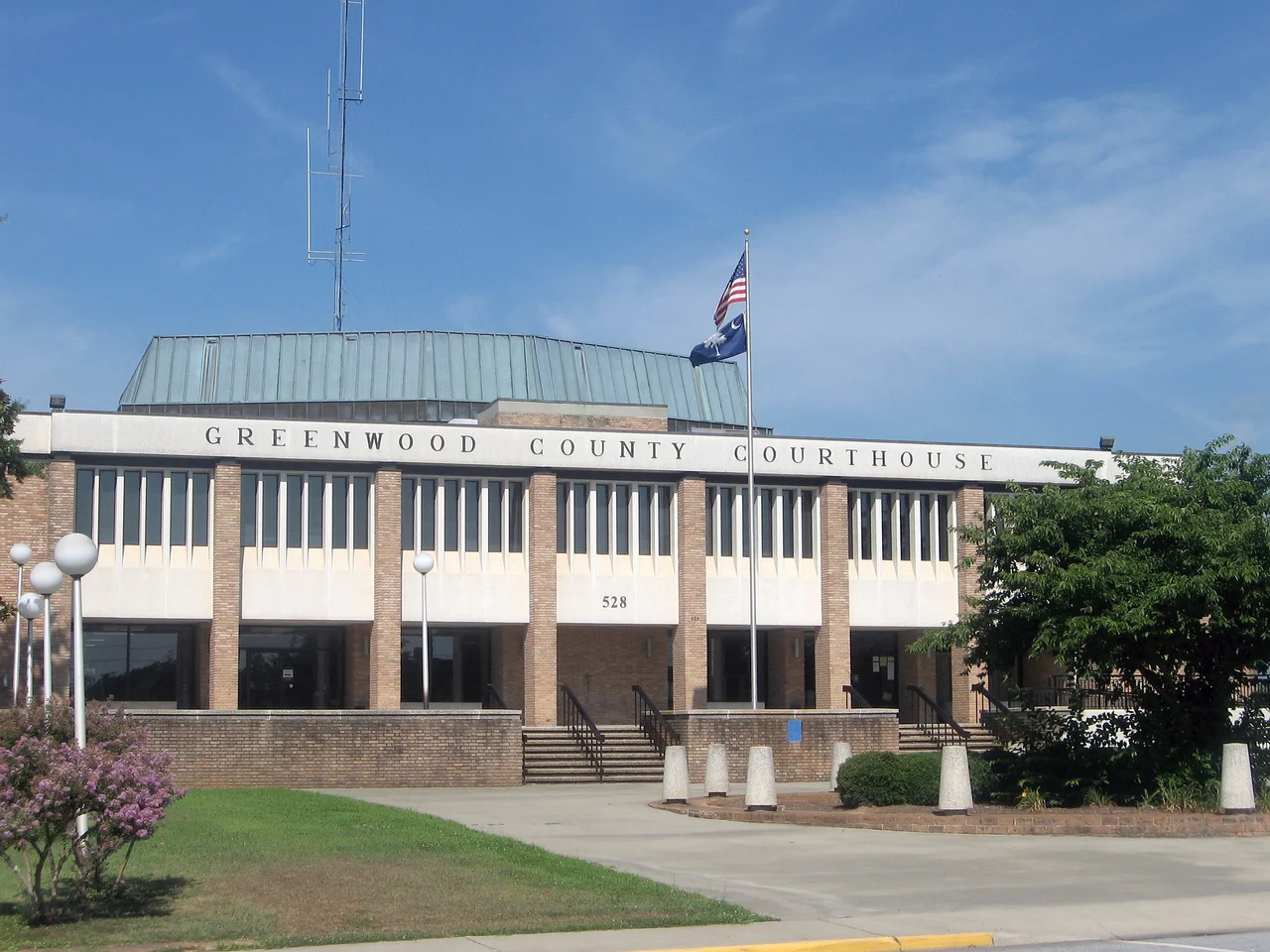

Greenwood County, South Carolina
The county is named for a cotton plantation. John McGehee planted his crop here in the 1820s, gave the place the name Greenwood, and a settlement grew up around the depot when the railroad finally arrived in the 1850s. But the county that took that name in 1897 sat on far older ground - the Cherokee Path, the trade route that traders from Charles Town followed into the back country to deal in deerskins. They counted creeks as they went, six south of the Saluda River and nine south of the Savannah, and somewhere in those counts, historians believe, lies the origin of the strangest place name in South Carolina: Ninety Six.
The Cherokee Path
Before European traders came up from Charleston, this was Cherokee territory, with major towns along the upper Savannah River and its tributary the Keowee. The Cherokee Nation extended into modern western North Carolina, eastern Tennessee, and northeastern Georgia. English and Scots traders began making regular forays in the early eighteenth century, and they kept maps of the route they used. Historian David P. George argues that the "6" and "9" the traders noted in their maps - referring to the six creeks running south from the Saluda and the nine south of the Savannah - eventually attached to the town of Ninety Six and to the colonial district that took the same name. After the Cherokee were forced from their land through treaty cessions and the broader Indian Removal era, European Americans moved in. They built cotton plantations dependent on the labor of enslaved Africans, and the upland Piedmont became one of the most profitable short-staple cotton regions in the South.
Phoenix, 1898
Reconstruction-era Black voting in this part of South Carolina ended in a sustained campaign of violence. In November 1898, the Phoenix Election Riot broke out at a polling place near the village of Phoenix. The Republican Congressional candidate, Robert R. Tolbert, came from a prominent local planter family; his brother Thomas was collecting affidavits from Black voters who had been prevented from voting. A confrontation with white Democrat Giels O. Ethridge ended with Ethridge dead. White mobs blamed Black voters and spent four days hunting suspects across the county. A crowd of 600 to 1,000 armed white men assembled at Phoenix. Several Black men were killed; at least six were lynched near Rehoboth Church. An inquest concluded the deaths were caused by "persons unknown." South Carolina's 1895 constitution had already disenfranchised most Black voters; the Phoenix riot enforced that disenfranchisement with terror.
Buzzard's Roost and the New Deal
The Great Depression collapsed what was left of the cotton economy. The boll weevil had already gutted production through the 1920s, and Black migration north and west had been steadily draining the rural workforce. New Deal programs reshaped the county. The largest project was Buzzard's Roost Dam on the Saluda River, completed in the 1930s, which impounded Lake Greenwood and powered a county-owned hydroelectric plant. The plant was eventually sold to Duke Power. The lake remains the recreational and visual center of the county, and Lake Greenwood State Park draws boaters, anglers, and campers year-round. The dam was the kind of muscular federal infrastructure project that pulled a region out of economic free fall.
Fujifilm and Fortified Industry
Since 1950, Greenwood County has built a surprisingly diversified industrial base. Fujifilm maintains a major manufacturing and distribution presence here - one of only two North American production sites - anchoring the county's economy with over 300 employees after selling and leasing back its sprawling campus in 2022. The Greenwood Genetic Center conducts nationally recognized research into developmental and genetic disabilities. Major employers include Self Regional Healthcare, Eaton Corporation, Capsugel (now Lonza), Ascend Performance Materials, and VELUX. Lander University and Piedmont Technical College train the workforce. The county's 2022 GDP was about $4.2 billion, with manufacturing accounting for roughly a quarter of all jobs. The town of Greenwood is the urban core; Ninety Six, Hodges, Ware Shoals, and Troy fill out a network of smaller communities woven across the rolling Piedmont.
From the Air
Greenwood County sits at 34.16 N, 82.13 W in west-central South Carolina, in the heart of the rolling Piedmont. Cruise at 3,500 to 5,500 feet for the full county view. Greenwood County Airport (KGRD) is the main field, near the city of Greenwood; KAND (Anderson Regional) is 28 nm north-northwest, KGMU (Greenville Downtown) 45 nm north, KCAE (Columbia Metropolitan) 60 nm east. Visual landmarks: Lake Greenwood's distinctive fingered shoreline across the northeast, the wide green sweep of Sumter National Forest patches, the Saluda River winding north, and the brick downtowns of Greenwood and Ninety Six.
Nearby Stories
- Battle of Lindley's Fort 2.7 km away
- Anderson, South Carolina 6.4 km away
- Liberty Universalist Church and Feasterville Academy Historic District 19 km away
- Edgefield County, South Carolina 21 km away
- Lake Murray (South Carolina) 26 km away
- Georgia Guidestones 26 km away
- Kettle Creek Battlefield 36 km away
- McEntire Joint National Guard Base 70 km away