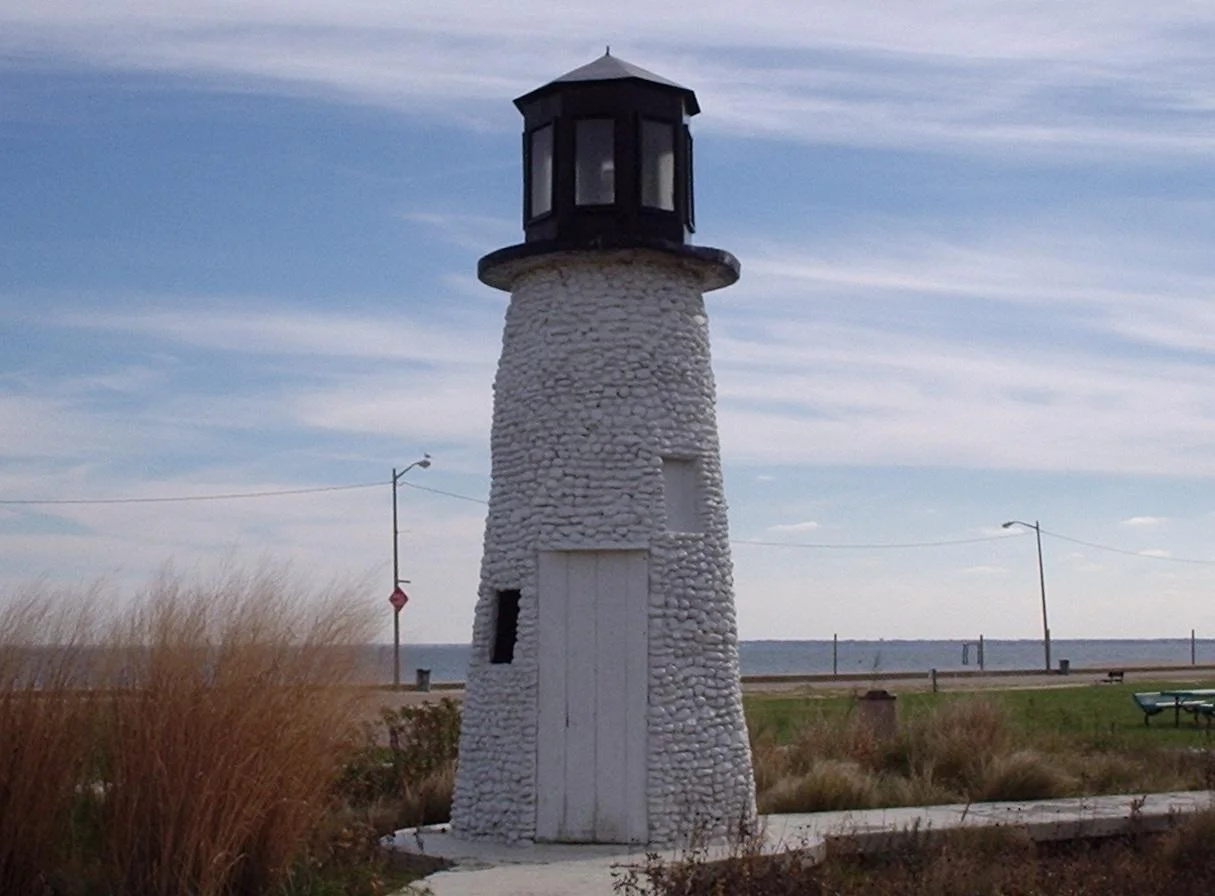

Hampton, Virginia
Hampton claims a record that sounds impossible until you do the math: it has been continuously occupied by English-speaking settlers longer than any other place in the United States. Jamestown, founded thirteen years earlier in 1607, was abandoned in 1699. Hampton, founded as a small settlement in 1610 on the seized Kecoughtan village, never emptied out. The town burned twice - once during the War of 1812 and once again at the hands of retreating Confederates in 1861 - and rebuilt both times. Population today: about 137,000. What survived through four centuries of fire and flood is a city whose history reads like a syllabus for the American story.
Point Comfort, August 1619
In late August 1619, a privateer named the White Lion limped into Point Comfort under a Dutch letter of marque. Her captain, John Colyn Jope, had stolen about twenty enslaved Africans from a Portuguese slave ship called the Sao Joao Bautista. They were Bantu people, taken from what is now Angola. John Rolfe, the widower of Pocahontas, was at Point Comfort that day and wrote about it in a letter that survives. These were the first recorded enslaved Africans to arrive in the English colonies that would become the United States. Two of them, known as Anthony and Isabella, had a child here in 1624 - the first child of African descent born in English North America. The actual landing point, the moated stone fortress called Fort Monroe, is now a national monument designated by President Obama in November 2011.
Contraband of War
Two and a half centuries later, the same fortress became a hinge in the war that ended slavery. In May 1861, General Benjamin Butler refused to return three enslaved men - Frank Baker, Shepard Mallory, and James Townsend - who had escaped to the Union-held fort. His legal argument was almost a joke: if Virginia had seceded, then Virginia was a foreign country, and slaves being used to build enemy fortifications were "contraband of war." Lincoln let the ruling stand. Within weeks, thousands of self-emancipated people arrived at the fort seeking freedom. They built the Grand Contraband Camp from the burned timbers of the town the Confederates had torched on retreat, and called the neighborhood Slabtown. Many of its street names still survive. The camp educated its own children, and that work eventually became Hampton University across the river. Confederate President Jefferson Davis was later imprisoned in a casemate of the same fortress; the Casemate Museum is open to visitors today.
The Mercury Seven Trained Here
In 1917, with America's entry into World War I imminent, the National Advisory Committee for Aeronautics chose a flat patch of Elizabeth City County for a new joint Army-Navy-NACA airfield. They named it Langley Field after aerodynamic pioneer Samuel Pierpont Langley. It is the oldest continuously active air force base in the world. NACA's Langley Research Center, opened in 1920, eventually became NASA's Langley Research Center - and beginning in 1959, this is where the original Mercury Seven astronauts trained. Alan Shepard, John Glenn, Gus Grissom, Wally Schirra, Scott Carpenter, Gordon Cooper, and Deke Slayton all walked these halls. So did the mathematicians, including Katherine Johnson, Dorothy Vaughan, and Mary Jackson, whose calculations sent them safely to space and back. The Virginia Air and Space Center downtown tells the story to visitors, and a research wind tunnel still hums on the Langley campus.
Waiting for Word
Some of Hampton's harder history is recent. During the Vietnam War, Langley Air Force Base served as a designated waiting base. Air Force families and Navy families with husbands and fathers flying combat missions over Southeast Asia were transferred to Hampton from posts all over the world to wait. Some types of aircraft suffered casualty rates above 50 percent. Naval river patrol crews on the Mekong Delta faced similar odds. Over the years, Hampton accumulated a concentration of families whose missing loved ones were never accounted for - POWs and MIAs whose status would remain unresolved for decades, in some cases forever. Beach Roads runs across Buckroe Beach and the names of streets in the older neighborhoods read like a roll call of military service. The Virginia War Museum on the peninsula covers American military history and includes a section of the Berlin Wall and an outer wall section from Dachau.
Tidewater Voice
People who grew up in Hampton sound like nowhere else in the South. The Tidewater accent stretches vowels long, slides certain consonants soft, and predates the more familiar Deep South sound by a couple of centuries. The 1952 merger of the City of Hampton, the town of Phoebus, and Elizabeth City County created the modern independent city, 136 square miles of which 62 percent is water. The Hampton Coliseum, opened in 1970, has seated everyone from Bruce Springsteen to the Grateful Dead to Phish to the WWE. Allen Iverson grew up here. Hampton High School, which traces back to the Syms and Eaton free schools chartered in 1634 and 1659, claims to be the oldest public school in the United States. Buckroe Beach faces the rising sun across the bay, and the air at dawn smells like salt and pine.
From the Air
Hampton is centered near 37.04N, 76.34W on the southeastern tip of the Virginia Peninsula. From altitude, look for the distinctive hexagonal star shape of Fort Monroe at Old Point Comfort, the runways of Langley AFB inland, and the bridge-tunnel islands of the Hampton Roads Bridge-Tunnel reaching south toward Norfolk. Langley AFB (KLFI) and Newport News/Williamsburg (KPHF) are the nearest airports; Norfolk International (KORF) sits across the water. Watch for restricted airspace around Joint Base Langley-Eustis.
Nearby Stories
- Battle of Gloucester Point (1861) 3 km away
- Coast Guard Station Cobb Island 3 km away
- Flowerdew Hundred Plantation 11 km away
- Great Dismal Swamp 11 km away
- Cape Charles Lighthouse 14 km away
- False Cape State Park 17 km away
- Cactus Hill 29 km away
- Chowan University 35 km away