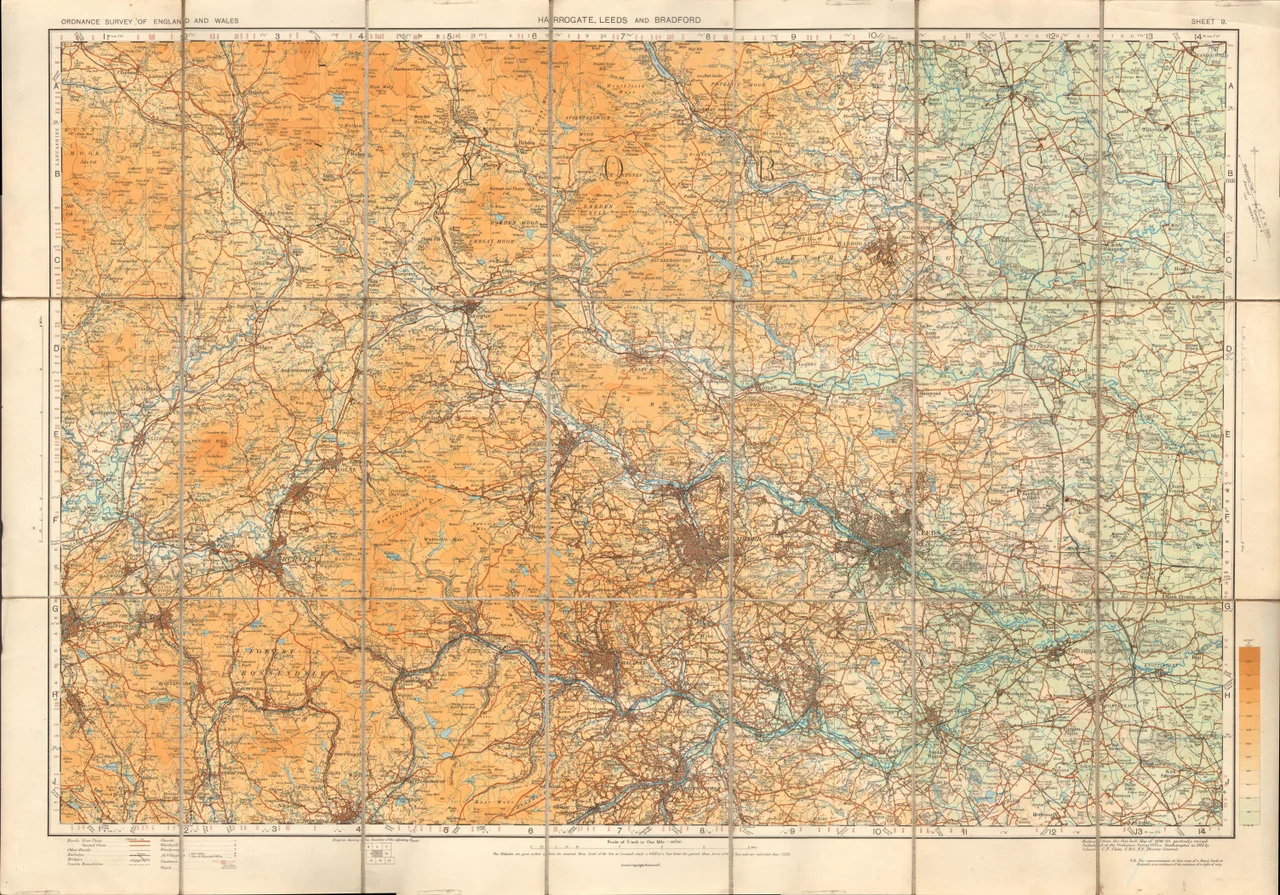

Harrogate
In December 1926, the most famous mystery novelist in England disappeared. Agatha Christie was reported missing for eleven days while the entire country searched. The police dragged ponds. Sir Arthur Conan Doyle consulted a medium. She was found at the Old Swan Hotel in Harrogate, registered under another name, calmly taking the spa waters. She never explained what happened. Harrogate has been a place to disappear into for four centuries - a Regency-Victorian spa town in North Yorkshire where the waters were once thought medicinal, the hotels were once full of the wealthy and sickly, and the gardens were always immaculate enough to drown a scandal in.
Where the Cairn Met the Spring
The name itself is Old Norse: hǫrgr gata - street to a heap of stones. A cairn marked the path where a town would later grow. Harrogate stayed a cluster of separate villages until 1571, when William Slingsby discovered chalybeate spring water at the Tewit Well in High Harrogate. He noticed it tasted similar to the springs in the Belgian town of Spa - which gave the world the word "spa" itself. Edmund Deane published Spadacrene Anglica in 1626, advertising the medicinal properties. By the 18th century, wealthy and sickly visitors were pouring in. Cold, pungent, mineral-laden water became an industry. Hotels were built, then theatres, then gardens. The Stray - 200 acres of protected common reserved by Parliamentary act in 1778 to keep the springs accessible - still defines the town centre. The whole place is, in a way, a city of cure built around water nobody really wanted to drink.
Strolling Through the Period Piece
Harrogate's heyday was the 19th century, and the town wears its Regency-Victorian bones beautifully. The local council long ago recognised what mattered: protect the old centre, accept that the period charm is the product. Walk the central streets and arcades and you find Bettys Tea Rooms - established by Frederick Belmont in 1919 and still owned by the same family - serving Fat Rascals (a Yorkshire scone-meets-rock-cake) and tea poured with stately ceremony. The Royal Pump Room of 1842 stands at the head of the Valley Gardens, the town's main park where the historic springs once bubbled (most are now capped or bottled). The Royal Hall of 1903, an Edwardian theatre designed by Frank Matcham, sits opposite the Harrogate Convention Centre - which makes the town, improbably, one of Europe's largest conference destinations.
Where Spies and Detectives Gather
Harrogate's character is harder to read than its architecture suggests. The Crime Writing Festival each July fills the Old Swan Hotel - Christie's hotel - with novelists who make their living from murder. The Literature Festival follows in October. The International Festival of June and July brings classical music. The Great Yorkshire Show in July - on the showground two miles east of town - draws hundreds of thousands to celebrate everything from prize bulls to sheep dog trials. And on Cheltenham Parade, where pubs alternate with curry houses, the small town reveals its larger ambitions. Indian, Thai, Italian restaurants line streets where the spa-takers once walked. Harrogate Spring Water is bottled commercially nearby; the breweries are Harrogate Brewing, Daleside, and Rooster's; Sing Gin is distilled seven miles west in Kettlesing. The town drinks better than most of England.
What to See Near Town
Harrogate makes an excellent base. Four miles east, Knaresborough perches above the gorge of the River Nidd - a 12th-century castle ruin, Mother Shipton's Cave (England's oldest tourist attraction by some accounts), a famous viaduct. Just north toward Ripon waits Fountains Abbey, the largest monastic ruin in Britain and a UNESCO World Heritage Site. Almscliff Crag rises beside the road to Bradford. Plumpton Rocks lie off the road to Wetherby. Brimham Rocks - dramatic gritstone outcrops sculpted by ice and wind - are a short drive north. The Yorkshire Dales National Park begins thirteen miles away. York's walled medieval streets are an hour east. And the Yorkshire Museum in York holds the Harrogate Hoard - nearly 700 Viking coins discovered locally in 2007, which is the kind of detail this region drops casually into a footnote.
From the Air
Harrogate sits at 53.992°N, 1.538°W in North Yorkshire, England, on the eastern edge of the Yorkshire Dales. The nearest airport is Leeds Bradford (ICAO: EGNM), 10 miles south-west. From altitude, Harrogate appears as a compact urban centre surrounded by 200 acres of open green (The Stray), with Valley Gardens on the western side. The town sits at an altitude of 100-150 metres on the eastern slopes overlooking the Vale of York, with the Pennines rising to the west. Leeds is 13 miles south, York 18 miles east, and Ripon 11 miles north. Look for the distinctive Royal Hall and Pump Room in the town centre and the Great Yorkshire Showground two miles east.
Nearby Stories
- Elland Road 1.4 km away
- Gordale Scar 2.6 km away
- Sheriff Hutton Castle 5.1 km away
- Selby Rail Crash 6.6 km away
- Battle of Catraeth 7.5 km away
- Rosedale Abbey 12 km away
- Murder of Sophie Lancaster 12 km away
- Hawes Junction Rail Crash 14 km away