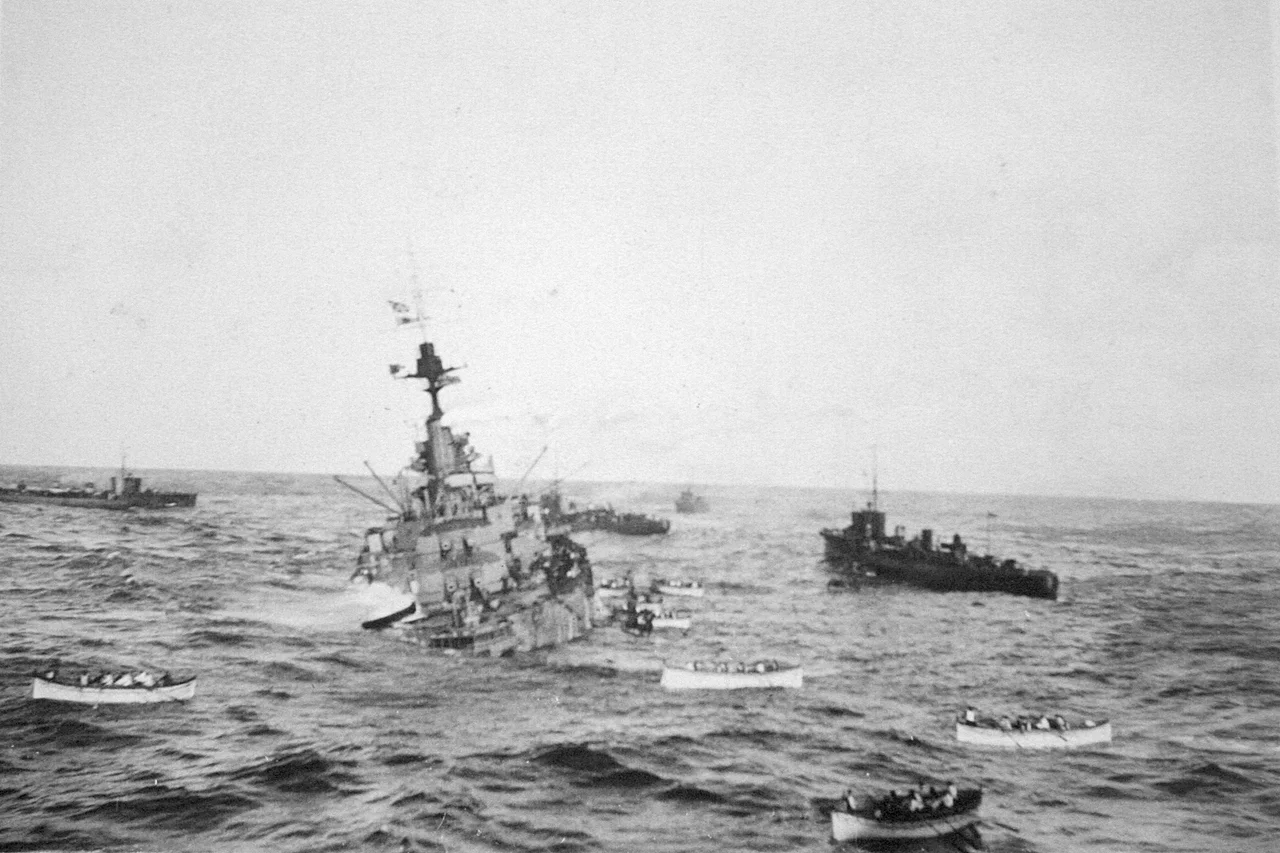

HMS Audacious
On 27 October 1914, twelve weeks into the First World War, the King George V-class dreadnought HMS Audacious sailed out of Loch na Keal on the Scottish coast bound for gunnery practice off Tory Island, off the north-west tip of County Donegal. At 8:45 in the morning, she struck a German mine laid days earlier by the auxiliary minelayer SMS Berlin. Captain Cecil Dampier, thinking he had been torpedoed, hoisted the submarine warning. The other dreadnoughts of the squadron immediately departed the area, as their orders required. Audacious, the newest battleship in the British fleet, was left to be saved by the smaller ships. She would not be saved. She would, however, become a secret.
A Dreadnought in Slow Motion
The explosion happened sixteen feet below the ship's bottom, ten feet forward of the rear bulkhead of the port engine room. Water rushed in. Audacious took a fifteen-degree list to port within minutes, which was reduced to nine degrees by counter-flooding starboard compartments. The light cruiser HMS Liverpool stood by. Admiral Jellicoe ordered every available destroyer and tug to the scene but kept the other battleships clear because of the suspected submarine threat. Then, into this slow-motion disaster, came an unexpected witness. The White Star ocean liner RMS Olympic, sister to the Titanic, had intercepted the distress calls and arrived to help. On her decks were American tourists with cameras. They photographed everything. One of them filmed it.
The Tow That Would Not Hold
Captain Dampier turned Audacious south and tried to make the twenty-five miles to Lough Swilly under her own power. She managed about nine knots and covered fifteen miles before rising water forced her crew to abandon the centre and starboard engine rooms. She drifted to a stop at 10:50. Boats from Liverpool and Olympic began taking off non-essential crew. By two in the afternoon only 250 men remained aboard. At 1:30, Captain Herbert Haddock of Olympic offered to take Audacious in tow. A line was passed. The ships began moving. Then the line snapped as Audacious turned into the wind. Liverpool and a collier tried in turn. Their lines also broke. Vice-Admiral Sir Lewis Bayly arrived to take command. By 6:15 in the evening, only the captain, the admiral, and a handful of men remained on the dying battleship.
The Explosion at 9pm
At 8:45 in the evening, just as the pre-dreadnought HMS Exmouth was approaching with another tow attempt, Audacious heeled sharply, paused, and capsized. She floated upside down with her bow raised for fifteen minutes. Then, at 9pm, an explosion threw wreckage three hundred feet into the air, followed by two more. The blasts had come from B magazine, probably caused by high-explosive shells falling from their racks and igniting the cordite. A piece of armour plate flew eight hundred yards through the dark and struck a petty officer aboard HMS Liverpool. He was the only casualty of the day. The largest warship ever sunk by naval mines, with the entire crew rescued, had killed one man at the end.
The Cover-Up
Jellicoe immediately proposed that the sinking be kept secret. The Board of Admiralty agreed. The British Cabinet agreed. For four years, Audacious's name remained on all public lists of ship movements and naval activities, as if she were still steaming somewhere on patrol. The Americans aboard Olympic, being beyond British jurisdiction, talked freely. By 19 November the loss was accepted in Germany. Reinhard Scheer, Jellicoe's opposite number, wrote after the war that he approved of the English attitude of not revealing a weakness to the enemy. The official acknowledgement appeared in The Times only on 14 November 1918, three days after the Armistice. By then everyone who needed to know had known for almost the whole war. The secret had been mostly cosmetic, a fiction maintained chiefly for British readers.
What the Disaster Taught
A Royal Navy review board found that Audacious was not at action stations when she struck. Water-tight doors were not locked. Damage-control teams were not ready. Engine-circulating pumps used as bilge pumps were overwhelmed. Water spread through bulkheads via faulty pipe seals and improperly closed hatches. Naval historian John Roberts later argued that the loss exposed deep design flaws in the King George V-class and other recent dreadnoughts. Two months later, the Royal Navy ordered additional bilge pumps and piping retrofitted to all surviving dreadnoughts. How much of this was actually done is uncertain. What is certain is that Audacious, lost on her second mission of the war, taught the Royal Navy more about damage control than most of the ships that survived the conflict.
From the Air
Wreck site near 55.54N, 7.41W, off Tory Island in the north-western waters of County Donegal. Nearest airport is Donegal (EIDL) about 35 nm south. From cruising altitude, look for Tory Island as a flat green slab in the Atlantic ten miles offshore, with the Donegal mainland coast stretching to its south and east. The Audacious lies in deep water well off the island, marked only on dive charts. North Atlantic weather here is unforgiving year-round; clear conditions are unusual.
Nearby Stories
- Lough Swilly 4.8 km away
- Falcarragh 6.7 km away
- 1993 Castlerock killings 16 km away
- Tory Island 23 km away
- SS Athelstane (1941) 26 km away
- Greencastle Lifeboat Station 28 km away
- Bruichladdich Distillery 42 km away
- German submarine U-318 59 km away