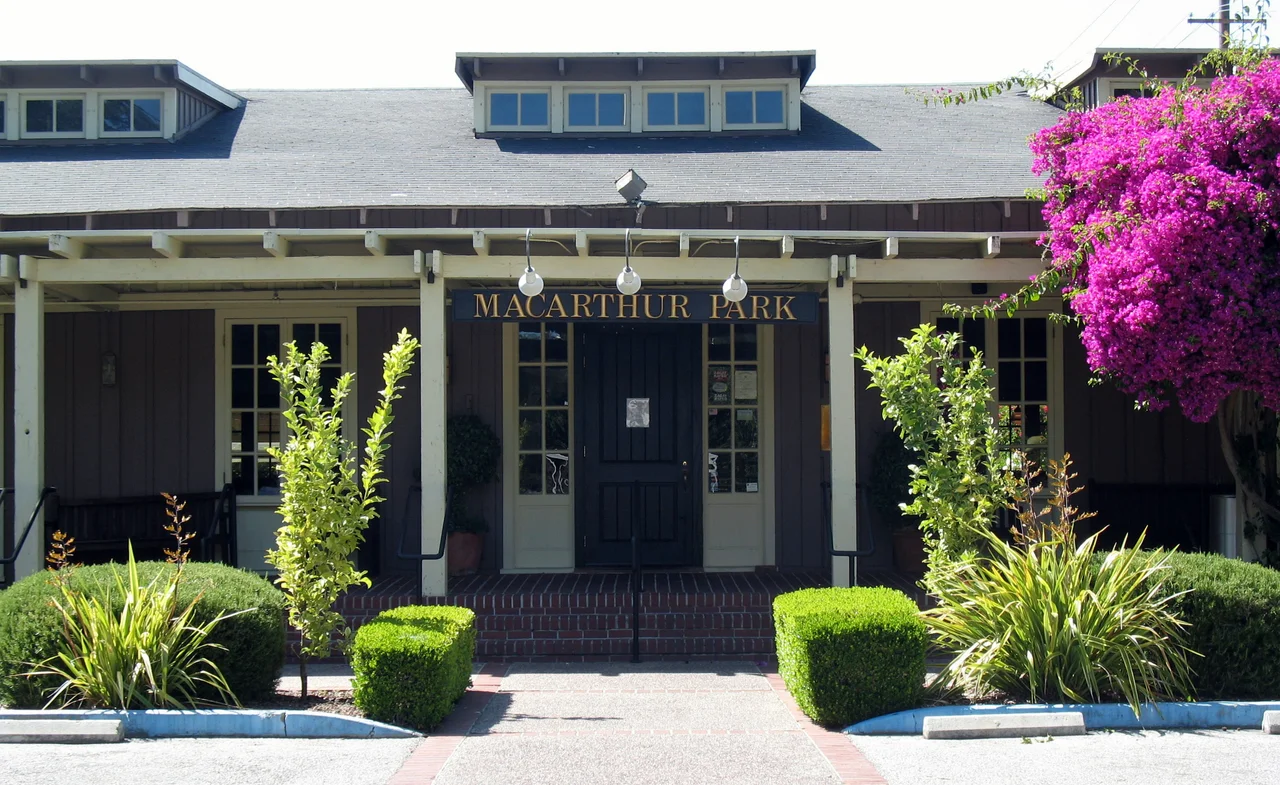

Hostess House
When Camp Fremont was training soldiers for the Western Front, the YWCA built a comfortable house where servicemen could receive visits from their families. The Hostess House, constructed in 1918 in Palo Alto, was designed to provide a dignified meeting place during a time when military discipline kept soldiers confined to base. When Camp Fremont was demolished after the war, the Hostess House survived -- one of the very few physical traces of the Peninsula's World War I military presence.
A Place for Families
The concept was simple and humane: soldiers stationed at Camp Fremont needed a space to see their wives, parents, and children that was neither a barracks nor a public street. The YWCA designed and built the Hostess House as that space -- warm, welcoming, and appropriate for family gatherings. It served this function for the two years of Camp Fremont's existence, providing a small measure of normalcy in a community defined by the urgency of wartime mobilization.
The Last Trace
After Camp Fremont closed in 1919, its wooden buildings were quickly dismantled. The Hostess House endured, eventually becoming a historic landmark in Palo Alto. It now stands as a tangible connection to a military chapter that most Peninsula residents have forgotten -- a reminder that before Stanford Research Park and Silicon Valley, this land served a very different national purpose.
From the Air
Hostess House is at 37.443°N, 122.165°W in Palo Alto. The historic house is a small structure not visible from altitude. Nearest airports: Palo Alto (KPAO) 2 nm northeast.
Nearby Stories
- Joaquin Miller Park 2.8 km away
- The Kilns That Never Burned 22 km away
- South Pacific Coast Railroad 23 km away
- Altamont Free Concert 24 km away
- The Farallon Islands: California's Forbidden Rock 33 km away
- Cleveland Elementary: The Shooting That Changed the Law 37 km away
- Kesterson National Wildlife Refuge 66 km away
- ʻAkaka Falls State Park 3686 km away