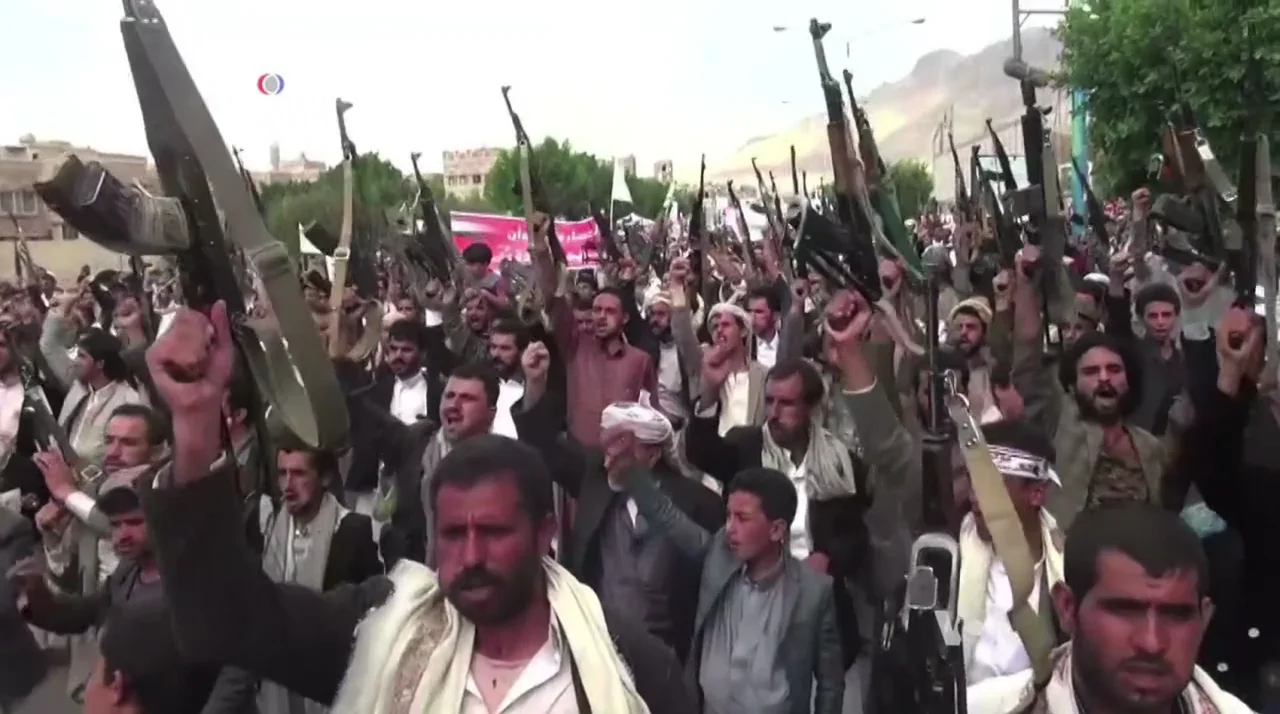

Houthi insurgency
On 10 September 2004, Yemeni soldiers killed Hussein Badreddin al-Houthi in the mountains of Sa'dah, Yemen's northernmost governorate. He was a Zaidi religious leader and a former parliamentarian. The government had placed a $55,000 bounty on him three months earlier and sent in troops to collect. Hundreds to a thousand died in that first fight. The war went on. Al-Houthi's brother Abdul-Malik took over the movement. His followers became known as the Houthis - Ansar Allah, Supporters of God, in their own telling - and over the next decade and a half they would roll down from Sa'dah through Sana'a and into a conflict that would draw in Saudi Arabia, Iran, the United States, and leave millions of Yemenis hungry.
The North That Fell Off the Map
In 1962, a revolution in North Yemen ended over a thousand years of rule by Zaidi Imams, a branch of Shia Islam whose spiritual leaders had claimed descent from the Prophet's family. Sa'dah, the imams' old stronghold, never recovered economically after their fall. During Yemen's 1994 civil war, Wahhabis - Sunni religious conservatives backed by Saudi Arabia - helped the Sana'a government defeat southern secessionists. Afterward, they stayed. Zaidis complained that the government had let Wahhabism push their own tradition to the margins in Sa'dah, where Saudi-funded schools taught a creed hostile to their own. The Houthi movement grew from that friction. Its original demand was not the overthrow of the government but protection for a Zaidi religious and cultural identity under pressure. Hussein al-Bukhari, a Houthi insider, told the Yemen Times the movement did not want a clerical state modeled on Iran: "We cannot apply this system in Yemen because the followers of the Shafi doctrine are bigger in number than the Zaydis."
Six Rounds of War
The Sa'dah Wars unfolded in phases. The first round, June-September 2004, killed 500 to 1,000 before al-Houthi's death. The second, March-June 2005, added 1,500 more. Rounds three through five from 2005 to 2008 displaced tens of thousands and killed hundreds of government soldiers alongside Houthi fighters. On 2 May 2008, 15 worshippers were killed and 55 wounded in a bombing at the Bin Salman Mosque in Sa'dah as crowds left Friday prayers. The government blamed the Houthis; they denied it. The sixth phase, "Operation Scorched Earth," began in August 2009 and drew Saudi Arabia directly into the war. By the time it ended with a fragile truce in February 2010, at least 119 Yemeni government troops, 263 Houthi fighters, and - critically - 277 civilians had been killed. Hundreds of thousands were displaced. Whole villages in Sa'dah had been leveled by artillery and air strikes, with Saudi warplanes joining Yemeni ones.
From Revolution to Civil War
The Arab Spring came to Yemen in 2011. On 27 January, over 16,000 demonstrators filled Sana'a's squares. Nobel-laureate-to-be Tawakkol Karman called a Day of Rage on 3 February. President Ali Abdullah Saleh, 33 years in power, announced he would not run again. On 27 February the Houthis endorsed the pro-democracy protests. Abdrabbuh Mansur Hadi was elected in February 2012 with 99.8% of the vote - an election meant to consolidate a transition, not a real contest. The Houthis rejected the Gulf Cooperation Council deal that Saleh signed in exchange for immunity. In August 2014 they began demonstrations against fuel price hikes; by September they had taken Sana'a itself, forcing Prime Minister Mohammed Basindawa to resign. At least 340 people had died in the week of fighting on the capital's outskirts. The Sa'dah insurgency was now a Yemeni civil war.
The Civilians in the Middle
The 2015 UN report on Yemen counted 277 civilian deaths from just the 2009-2010 Saudi bombing campaign; that figure is a floor, not a ceiling, and much later counts describe the war's civilian toll in the hundreds of thousands when starvation, cholera, and collapsed medical systems are included. A February 2015 Newsweek report noted that, whatever the Houthis' sectarian identity, their rank-and-file were fighting "for things that all Yemenis crave: government accountability, the end to corruption, regular utilities, fair fuel prices, job opportunities for ordinary Yemenis and the end of Western influence." Yemeni civilians suffered regardless of whose forces were passing through their villages - Saleh's soldiers in 2004-2010, Saudi warplanes from 2015 onward, Houthi checkpoints in territory they held, al-Qaeda in the Arabian Peninsula filling the vacuums. The 2017 cholera epidemic alone sickened over a million people, many of them children who had never known a Yemen at peace.
Iran, Saudi Arabia, and the War That Will Not End
The Yemeni and Saudi governments both accused Iran of arming and training the Houthis, citing intercepted ships, Revolutionary Guard advisors, and Hezbollah operatives allegedly embedded in Yemen from 2013. Iran denied direct involvement; independent verification was difficult in a war zone where every claim served a narrative. The Saudis, for their part, assembled a coalition - Egypt, Jordan, Sudan, Bahrain, the UAE - to reinforce the Yemeni government after 2015. The United States provided intelligence and logistics. A 2018 UN report documented North Korean arms sales to the Houthis in violation of sanctions. Two decades after Hussein al-Houthi died in the mountains, his movement controls much of northern Yemen including Sana'a. The country is divided, its people exhausted. What began as a local quarrel about a Zaidi cleric and a $55,000 bounty has become one of the defining humanitarian catastrophes of the 21st century - a war that draws attention in sporadic news cycles but whose Yemeni dead have never stopped counting themselves.
From the Air
Centered on Sa'dah Governorate in far northern Yemen at approximately 16.94°N, 43.76°E, with the broader conflict spanning most of the country. Yemen's airspace is heavily restricted and partitioned; civilian overflight is routed around most of the country. Nearest safe airports are in Saudi Arabia (Abha - OEAB, Najran - OENG). The Red Sea corridor west of Yemen is heavily trafficked commercial airspace and is a separate active zone of Houthi missile and drone activity toward shipping.
Nearby Stories
- Al-Okhdood 40 km away
- Abu 'Arish 47 km away
- Battle of Port Midi 74 km away
- Jazan Province 80 km away
- Battle of Amran 136 km away
- Mundafan 170 km away
- Marib Dam 193 km away
- Sheba 218 km away