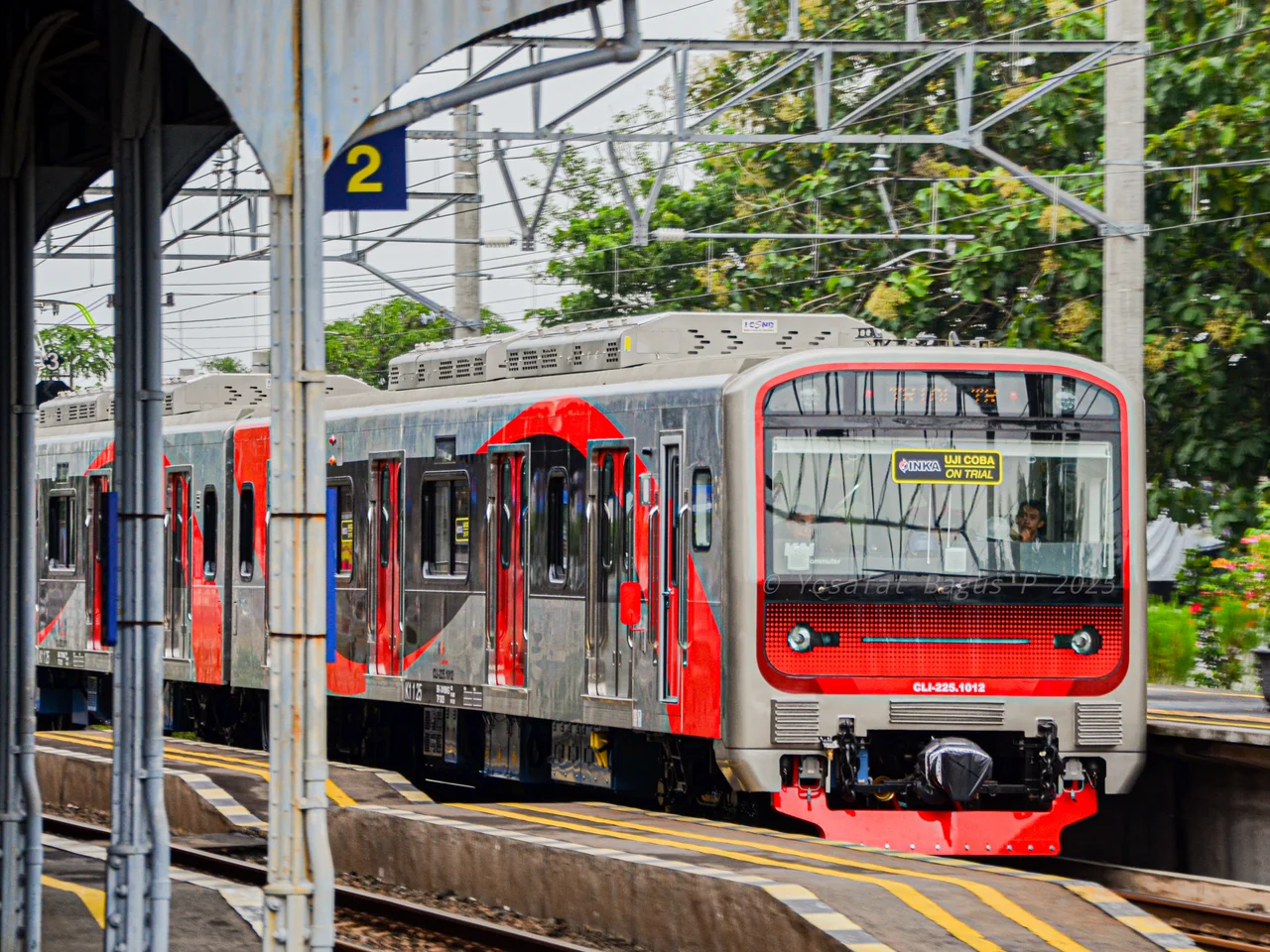
_baru_buatan_PT._INKA,_EA205.jpg)
The Train Builders of Madiun
The workshop smelled of steam and grease long before it built anything new. For decades, the locomotive depot in Madiun, a quiet city in East Java, existed solely to overhaul aging steam engines for Indonesia's colonial-era railway. Then, in May 1981, the Indonesian government turned that repair shed into something far more ambitious: PT Industri Kereta Api, or INKA, a state-owned company tasked with building an entire nation's trains from scratch. On August 29 of that year, the old railway authority formally handed over the keys. Within months, the first Indonesian-made freight boxcars rolled off the line, and a country that had always imported its rolling stock began learning to manufacture its own.
From Repair Shed to Production Line
INKA's early years followed the pattern of industrial ambition common to Suharto-era Indonesia: grand strategic plans, international partnerships, and a fierce determination to prove that a developing nation could master advanced manufacturing. The company's first passenger coaches, air-conditioned executive-class cars built in 1985, were a uniquely Indonesian design that set the template for generations of rolling stock. Two years later, INKA assembled its first electric multiple unit in partnership with Japan's Nippon Sharyo, a rheostatic EMU that marked Indonesia's entry into electric train production. Full domestic manufacturing of EMUs began in 1994, using lightweight stainless steel bodies and modern VVVF inverter traction control. By the mid-1990s, INKA was building the Argo Bromo and Argo Gede, long-haul express trainsets for Java's busiest rail corridors.
Tracks Beyond the Archipelago
What began as a domestic supplier soon became an exporter. In 1991, INKA shipped its first freight wagons to Malaysia. Five years later, a joint venture with General Electric produced locomotives that were exported to the Philippines. When the Asian financial crisis hammered Indonesia in 1998, INKA responded by sending a batch of ballast hopper wagons to Thailand's state railway, a gesture of industrial resilience in the midst of national upheaval. The export roster kept growing: car bodies to Australia in 2004, 50 passenger coaches to Bangladesh in 2006, another 150 units to Bangladesh in 2016, diesel multiple units to the Philippine National Railways, and 133 flat wagons to New Zealand's KiwiRail in 2023. Each contract pushed the company further from its origins as a converted repair depot.
The Age of Light Rail
INKA's most visible recent achievements run on electricity. In 2018, the company delivered light rail vehicles for the Palembang LRT, built to serve the Asian Games. A year later, it completed the first trainsets for the Jabodebek LRT connecting Jakarta with its sprawling satellite cities. The airport rail link serving Soekarno-Hatta International Airport runs on INKA-built EA203 series EMUs. In 2024, the company partnered with the Bandung Institute of Technology to trial a battery-powered autonomous tram on the streets of Surakarta. Equipped with cameras, radar, LiDAR, and a 200-kilowatt-hour battery pack good for 90 kilometers of range, the tram represents INKA's push into AI-driven transit, a long way from the steam depot where it all started.
Buses, Cars, and Sideways Ambitions
Trains are not the only things to emerge from INKA's factories. The company has built CNG-powered articulated buses for Jakarta's TransJakarta system under the Inobus brand, supplied with Cummins Westport engines and Voith automatic transmissions. In 2011, it produced the Kancil, a tiny 404cc vehicle intended to replace auto-rickshaws, though regulations kept it from reaching the market. More recently, INKA has turned to electric buses, producing units that now operate on routes in Bandung and Surabaya. A new joint venture with Swiss manufacturer Stadler Rail has established a second rolling stock factory in Banyuwangi, complete with crash-test and roll-over testing facilities built to International Union of Railways standards.
A Factory on the Equator
From the air, Madiun does not announce itself as an industrial city. The landscape is dominated by rice paddies and the dark green canopy of teak forests, with the volcanic peaks of East Java rising to the south. But the long, low factory buildings near the railway tracks tell a different story. INKA's Madiun plant has produced or refurbished every batch of passenger cars for Indonesia's national railway since 1985. Its workforce has mastered the transition from carbon steel to stainless steel, from rheostatic braking to IGBT inverters, from diesel to electric propulsion. In 2019, the company formed a consortium with three other state enterprises to pursue railway development contracts in Africa, signaling ambitions that now stretch far beyond Java's rail corridors.
From the Air
INKA's main factory is located in Madiun, East Java, at approximately 7.62S, 111.52E. From cruising altitude, Madiun sits in the broad Solo River valley between the volcanic highlands to the south and the northern Java plain. The nearest major airport is Iswahyudi Air Force Base (WARI), about 8 km south of the city. Surabaya's Juanda International Airport (WARR) is approximately 110 km to the east. The factory complex is visible near the railway tracks running through the city.
Nearby Stories
- Surawana: The Temple That Reads Like a Compass 14 km away
- Penataran: Where Rama Walks in Stone 14 km away
- The School That Gave Itself Away 14 km away
- Cepu Forest Railway 26 km away
- Fort Vastenburg 30 km away
- Kedung Ombo Dam 32 km away
- Forty Thousand Hills 38 km away
- Battle of Gegodog 56 km away